About Print Engines
Print Engines works with print professionals who need the right head, board or engine for a working machine, not a vague guess. From our Randburg base we help sign shops, print rooms and integrators match parts properly and keep wide-format equipment producing clean output.
The work on our bench
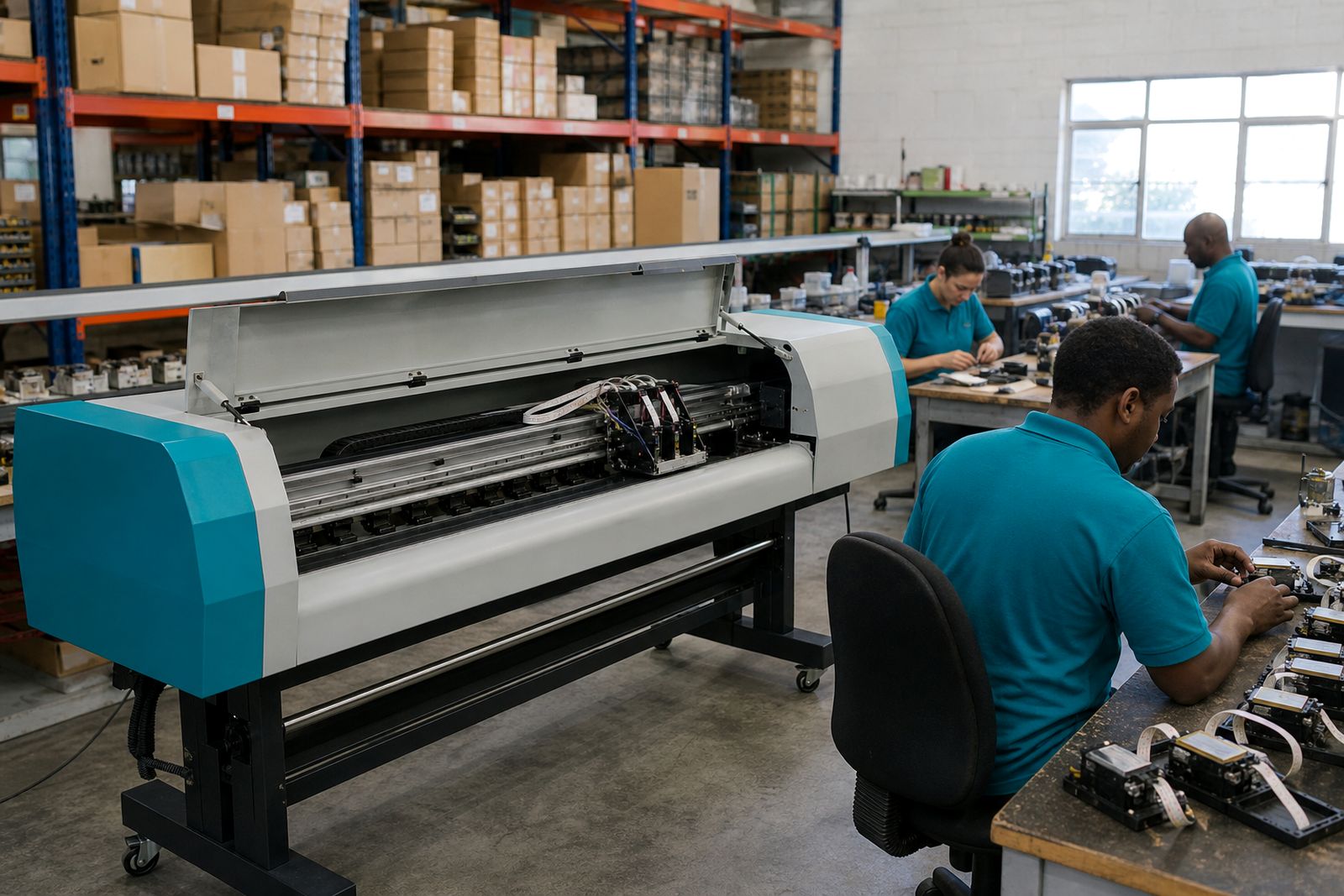
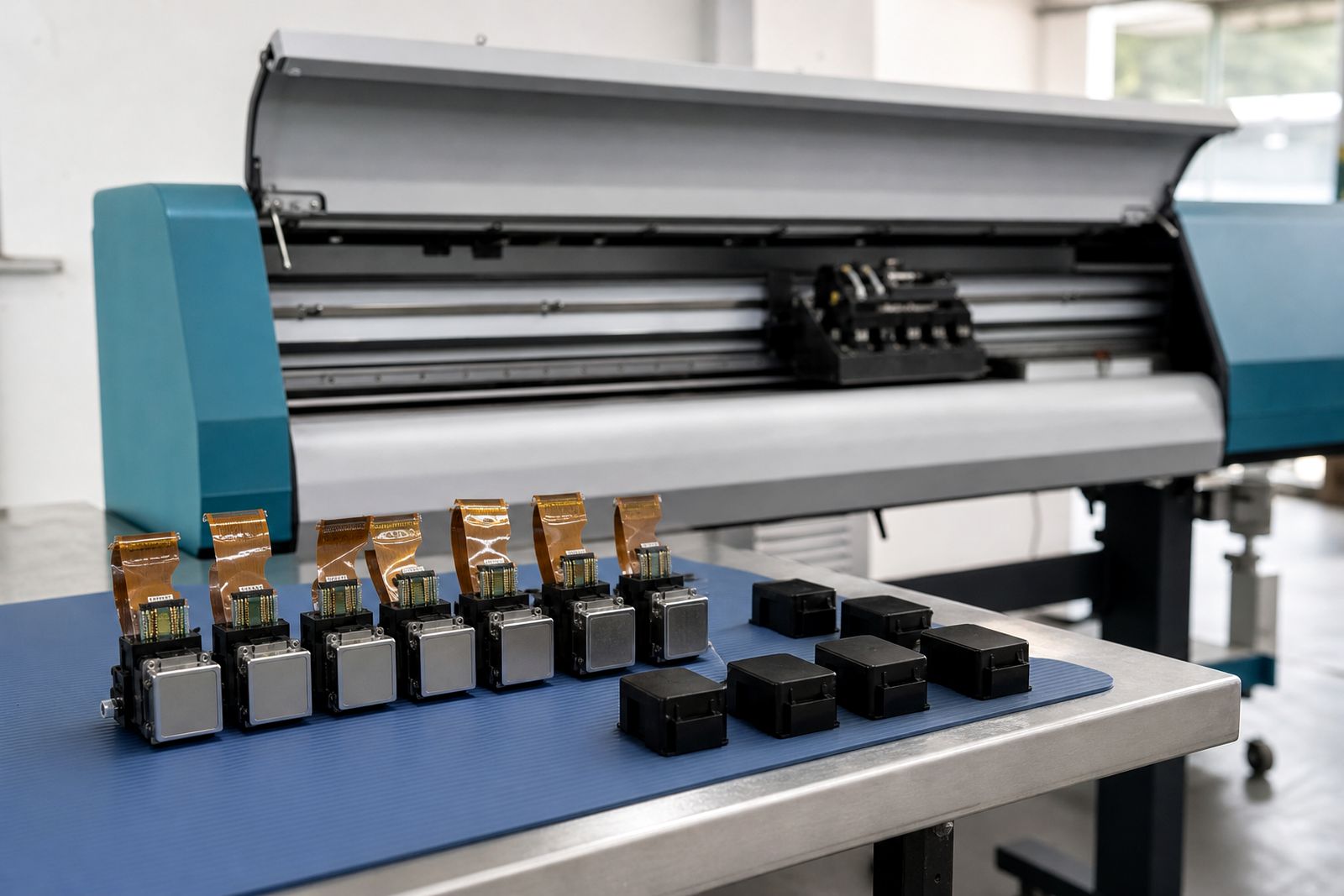
Print Engines focuses on replacement printheads and inkjet engine assemblies for wide-format equipment used on signage, banners, vinyl, display graphics and artwork. We also handle the related parts that affect head life and print stability, including head boards, capping parts, dampers and wipers. The work is technical and quite specific, because a head that suits one ink set or carriage arrangement may be wrong for the next machine standing a metre away.
We do not sell complete printers and we are not a print shop taking client artwork. The team deals with the parts inside the print path and the checks around them: head matching, fitting guidance, alignment, flushing, storage practice and nozzle-health support. That keeps the conversation practical from the start, and it helps customers avoid ordering a part that does not belong in their setup.
- Replacement printheads for solvent, eco-solvent, UV and water-based systems
- Complete inkjet print engines with head, carriage and electronics assemblies
- Head boards and related electronics for compatible machine builds
- Capping stations, dampers and wipers tied to head maintenance
- Advice on flushing, storage and handling before and after fitting
Who we work with on a normal week
Most enquiries come from sign shops, in-house print rooms and technical buyers keeping production machines running. Some customers need one replacement head for a familiar unit. Others are builders and integrators working on custom transport systems, special media paths or retrofits where the head, carriage and control side must all line up correctly. In each case the team starts with the actual machine use, the ink family and the condition of the service station parts rather than treating every request as the same.
Customers outside Johannesburg are part of the daily flow as well. Parts move out from Randburg by courier to every province, with support done around photos, test patterns, machine details and the symptoms seen on the print. Coastal humidity, workshop dust and long idle periods all affect head condition, so the advice changes with the environment and not only with the part number.
- Sign shops producing banners, vinyl graphics and boards
- Print rooms handling posters, displays and artwork output
- Integrators building or refitting wide-format transport systems
- Maintenance teams looking for the source of deflection, dropout or poor sealing
How the team is set up
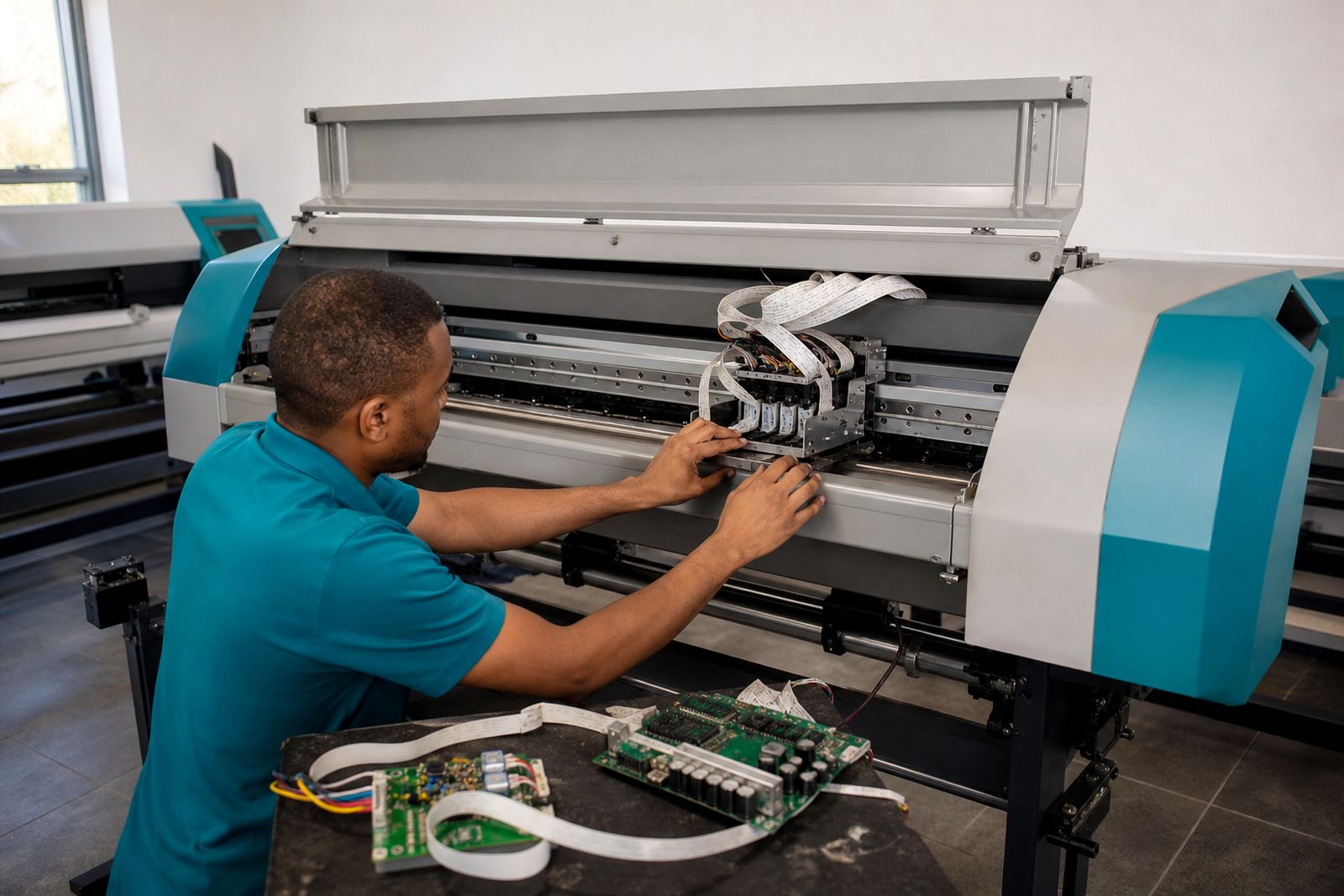
The team is built around technical roles rather than sales scripts. An applications adviser handles first matching questions and checks the printer type, ink chemistry and current fault pattern. A parts coordinator works through the supporting items around the head, because a worn cap top or a weak damper can spoil the result even when a fresh head is fitted. On the service side, the fitting technician and electronics technician help with installation points, carriage alignment and board-related checks where needed.
That division matters. A printhead problem is often part mechanical, part fluid handling and part electronic drive, so one person guessing at all three can miss the real cause. By splitting the job between roles we keep the discussion grounded in what the machine is actually doing, not what it ought to be doing on paper.
Our Randburg shop and working method
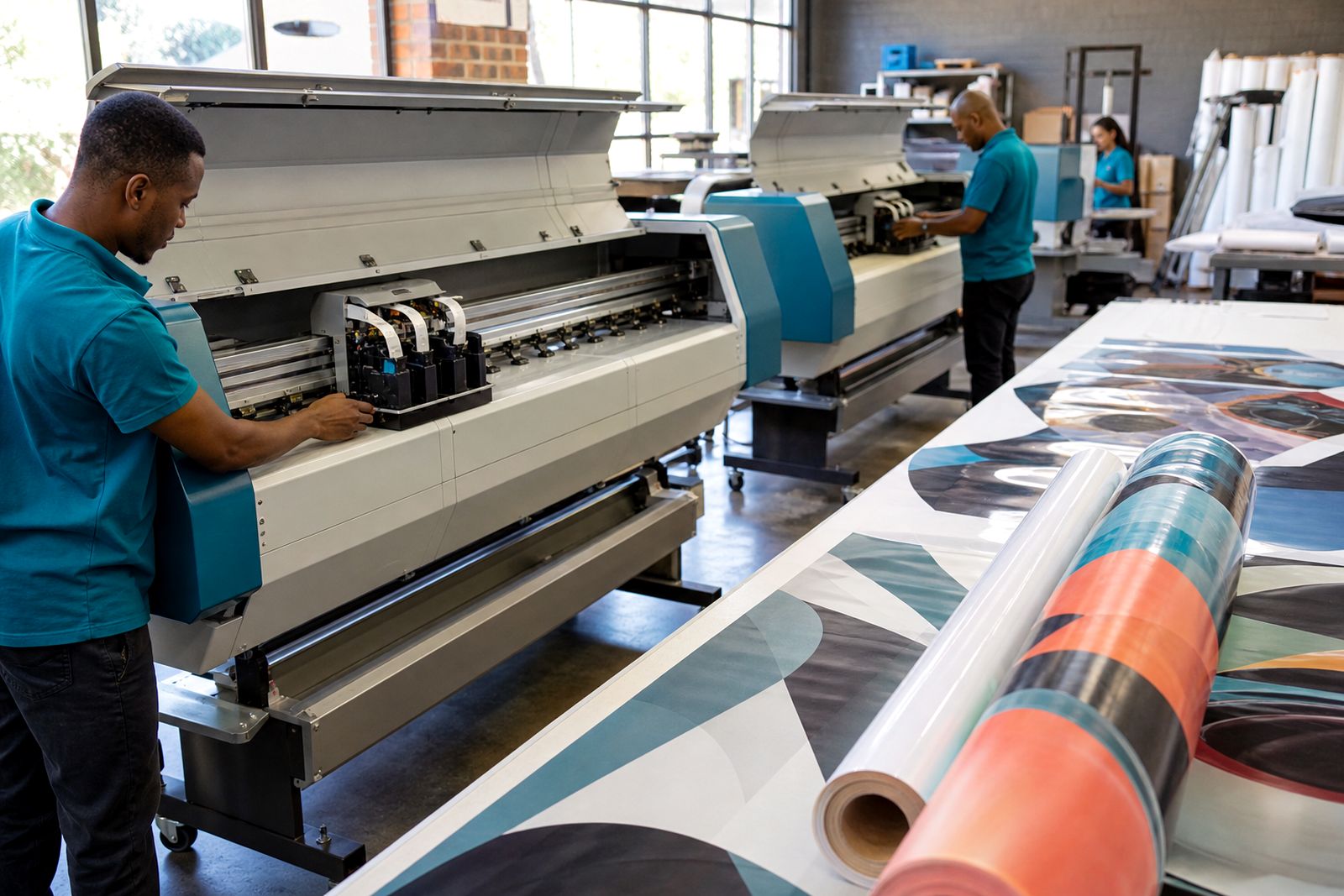
We operate from Randburg in Johannesburg, with a shop setup suited to technical part handling rather than walk-in printing. Incoming parts and outgoing orders are checked against the machine information supplied, and sensitive components are handled with storage and packing conditions in mind. Customers collecting from Johannesburg can arrange around the shop, while national orders are packed for courier dispatch to regional centres and smaller towns.
The premises are where matching, pre-dispatch checks and service preparation happen. It is also where the team reviews photos of nozzle tests, carriage layouts and cabling before a fitting job proceeds. That saves a lot of unnecessary swapping later on and makes the job cleaner when the machine is opened up.
From first enquiry to aftercare
A job usually starts with machine details, ink type, current symptoms and what has already been changed. From there the team narrows the likely head family or engine arrangement, checks whether supporting parts should be replaced at the same time, and sets out the fitting considerations. If the customer is handling installation in-house, we guide the sequence for unpacking, flushing, mounting and initial checks. If fitting support is needed, the service side helps with alignment and nozzle-health follow-up.
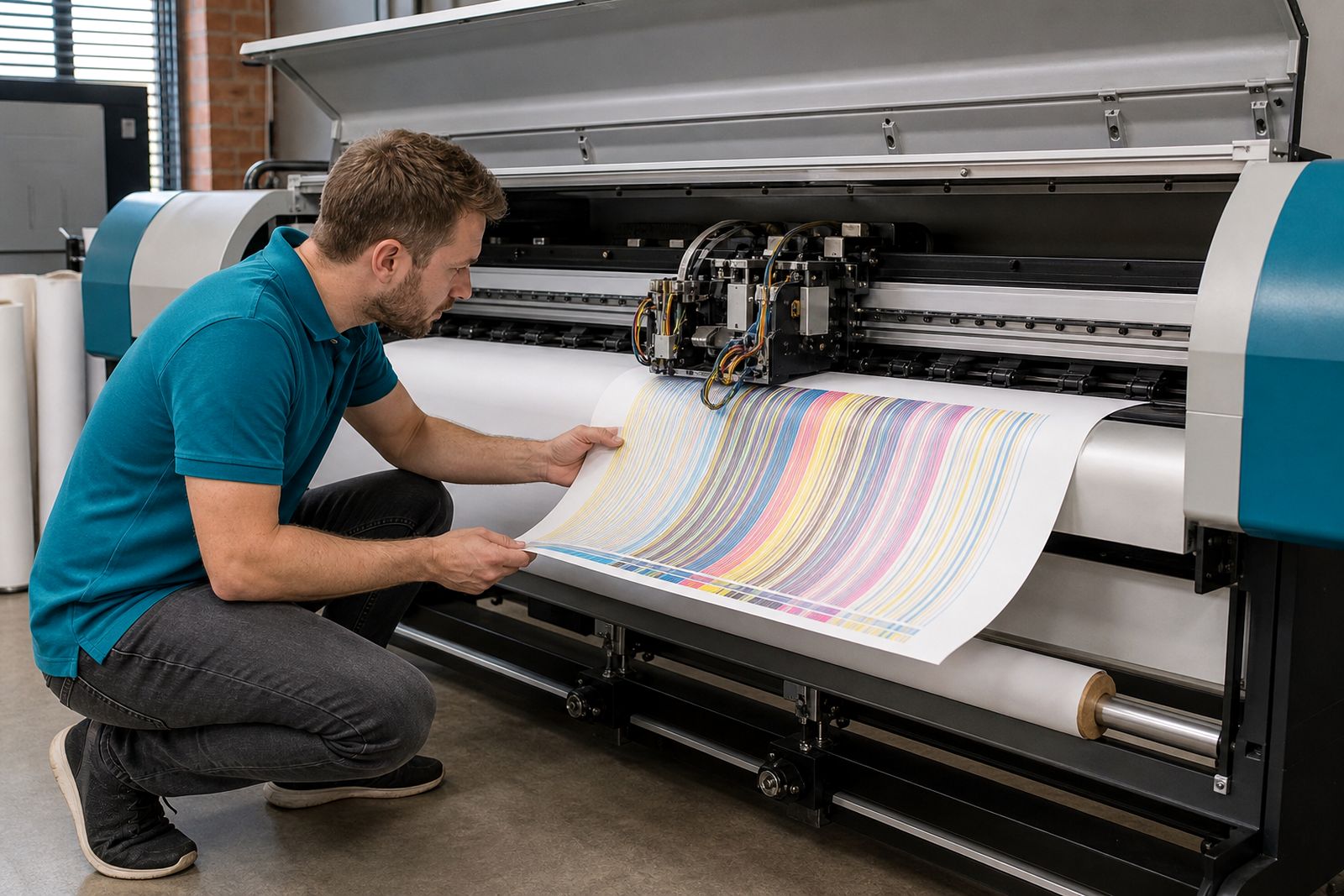
After the part is in, the conversation does not stop at whether ink comes out. The team looks at sealing, meniscus stability, test pattern behaviour and whether the machine has underlying issues such as poor capping pressure, contamination or an electronics fault. Sometimes the head was only half the story, and catching that early prevents another failure not long after.
- Match the head or engine to the printer platform and ink family
- Check for related wear parts that may affect the result
- Advise on fitting, alignment and initial nozzle checks
- Review flushing and storage practice where idle time is a factor
- Support fault finding if the print is still unstable after replacement
What matters to us on every job
The standard we work to is straightforward: send out the right component, explain the fitment clearly and stay focused on print quality in real production conditions. That matters just as much for a single head in a busy sign room as it does for a complete engine used by an integrator. Good output depends on more than one part, and we say so plainly even when the answer is less convenient.
If you need help identifying a replacement printhead, checking an engine assembly or working through nozzle loss and flushing practice, send the machine details through our contact form. The more exact the symptoms and setup notes are, the better the technical discussion tends to be.
Questions we get asked
Do you sell complete wide-format printers?
No. Print Engines focuses on replacement printheads, inkjet engines, head boards and related service parts for existing wide-format equipment.
Can you help if I am not in Johannesburg?
Yes. We work from Randburg and courier parts to every province, with technical guidance based on the machine details and print symptoms you send through our contact form.
Do you only supply heads, or can you help with fitting issues too?
We help with both. The team can assist with head matching, fitting guidance, alignment, flushing practice and checks around capping, dampers and nozzle health.
Also worth a look
Tell us about the job
Send sizes, materials and where you are through our contact form, and we will come back with the practical options.
Open the contact form