

Fitting and support
A new head or engine only performs properly when the fit, ink path and alignment are handled with care. This section covers the support work around replacement printheads and inkjet engines, from swap-out decisions to flushing, testing and nozzle health.
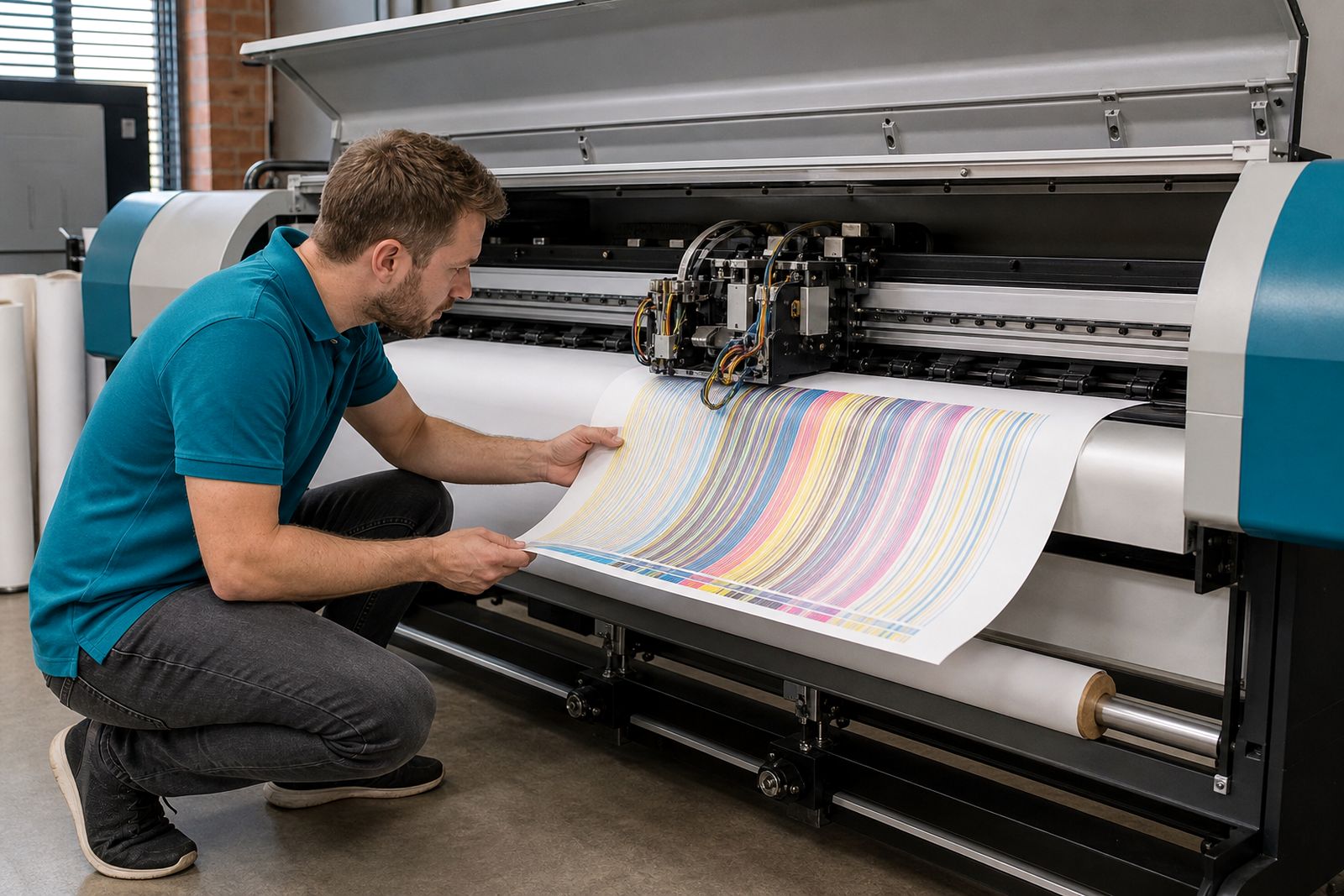
Support around the part, not just the box
Wide-format print hardware is sensitive to handling, storage and setup, so the part itself is only one part of the job. Our fitting and support work is aimed at sign shops, print rooms and equipment builders that need a replacement head, a complete engine assembly, or related service parts fitted in a way that protects print quality and reduces waste.
We work across solvent, eco-solvent, UV and water-based platforms used for banners, vinyl, graphics and artwork. That includes help with head matching, pre-fit checks, capping and damper condition, carriage alignment, basic electronic checks and post-fit nozzle assessment. In many cases the fault is not only the head, and that matters a lot before a customer opens a sealed part.
When a full head replacement makes sense
Some faults point clearly to a head swap, while others suggest a cleaning or support-part issue first. If a printer has repeated deflection, persistent missing channels, physical strike damage or internal leakage, replacement is often the sensible route. Where there is dried ink, poor parking or contamination in the ink train, recovery work may be the better first step.
- Choose head replacement when there is mechanical damage, electrical failure or nozzle loss that does not stabilise after proper maintenance.
- Choose nozzle recovery and flushing when the head has been standing, the capping station has failed, or ink has thickened in the channels.
- Look at support parts at the same time if dampers, wipers or caps are worn, because a fresh head can fail early on a neglected ink path.
- Check board and cable condition where firing issues appear intermittent, especially on machines that have had previous field repairs.
A print room can spend a lot on a new component and still end up with weak output if the root cause sits elsewhere, so this comparison matters before fitting starts.
What is covered in fitting support
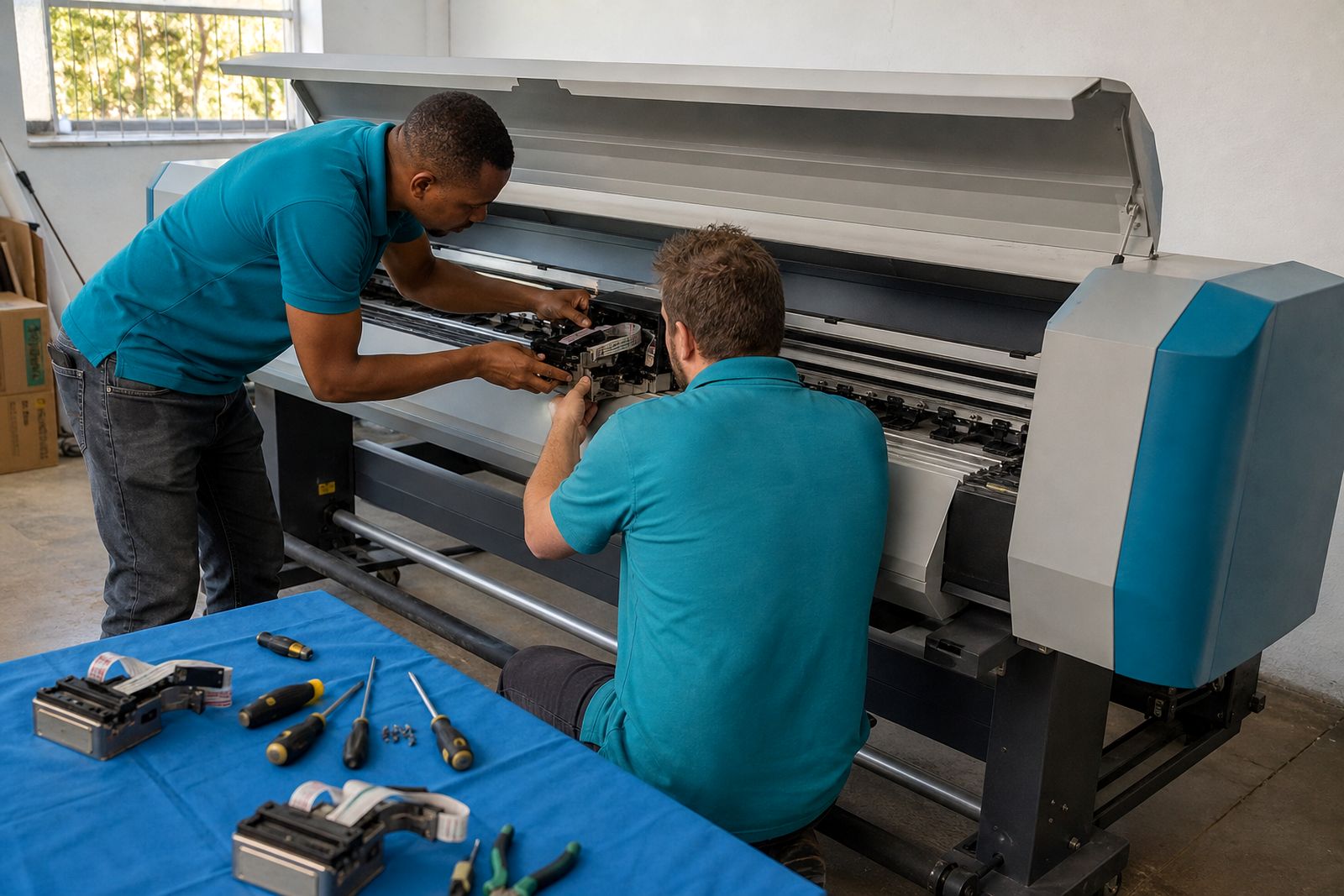
Fitting support is not only the physical swap. It includes the checks before removal, safe handling during installation and the verification steps once ink is flowing. Head faces are delicate, carriage settings can shift, and small alignment errors show up quickly on text edges, gradients and solid colour work.
- Guidance on confirming the correct replacement head or engine for the machine and ink set.
- Pre-fit checks on caps, dampers, wipers, tubing and the parking area.
- Clean handling steps for unpacking, mounting and connecting the new part.
- Alignment support for carriage height, direction, bi-directional setup and media-related checks.
- Nozzle-health review after priming, test patterns and early production output.
This section links to the two most common support paths: full printhead replacement service and nozzle recovery work. One deals with fitting a new part, the other with saving a head that may still be usable.
Alignment affects output more than many teams expect
Even with a correct head installed, poor alignment can make a machine look as if the part is faulty. Fine banding, fuzzy text, shadowing on directional passes and uneven solids often come from setup drift rather than a defective component. Media thickness, carriage height and vacuum behaviour can all play a role, especially on wider machines or units moved between jobs often.
For artwork and close-view signage, those small errors are easy to spot under shop lighting. UV systems can show it on layered work and white ink passes, while solvent units often reveal it on long banner runs. A careful setup routine saves ink, film and operator time, and it stops a new head being blamed for a mechanical setting that was already out.
Nozzle health, flushing and storage practice
Heads fail early when old ink, poor parking or careless storage are ignored. Nozzle health depends on regular cleaning habits, suitable flushing fluid where applicable and proper sealing when a part is off the machine. Coastal humidity can help in some rooms, but dust, heat and inconsistent shutdown routines still create trouble. Inland sites around Johannesburg often deal with drier air, so capped storage and a clean service station matter even more.
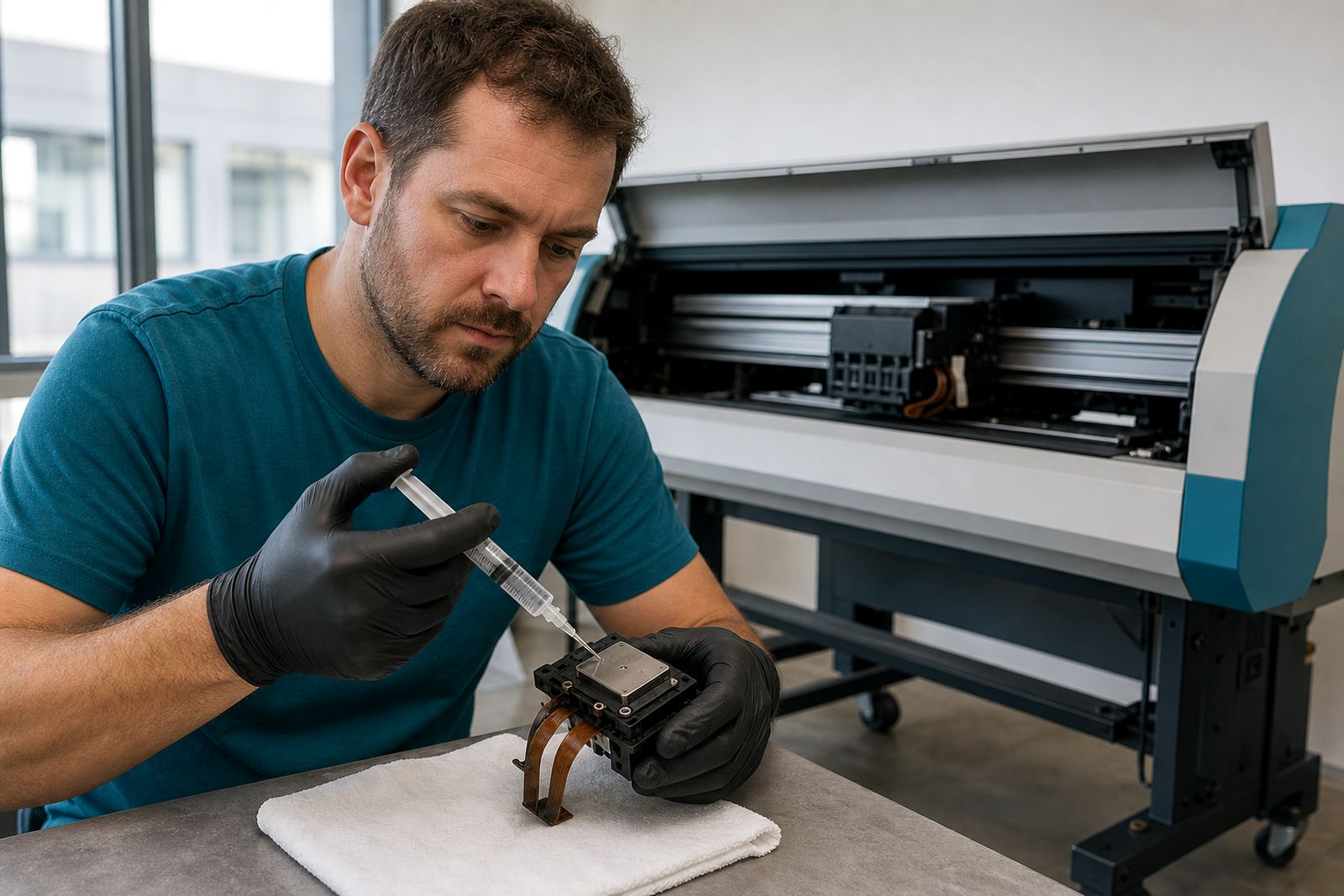
When a machine has been standing, a measured recovery attempt can be worthwhile before replacement. The goal is to restore stable firing without forcing fluid through the head in a way that causes internal damage. Gentle flushing and a check of capping pressure usually tells you far more than repeated aggressive cleans.
Choosing between the support pages in this section
If the machine needs a new head fitted, start with the printhead replacement service page. That page is for situations where the old unit is beyond recovery or where the risk of continued downtime is too high for more trial cleaning. If the head may still be recoverable, the nozzle recovery and flushing page is the better place to begin.
Where an integrator or builder is working with a complete carriage and electronics assembly, support may also involve board checks and matching the engine to the intended ink type and application. If you are uncertain which route applies, send the printer type, ink family, symptom pattern and any recent maintenance history through our contact form so the team can point you to the right path. A few clear test photos helps too, even if the fault seems obvious at first glance.
Explore the range
What our Printhead customers say
Verified Google reviews
Questions we get asked
Can you help if we are not sure whether the head is faulty?
Yes. Many print problems come from capping parts, dampers, contamination, cables or alignment drift rather than the head alone. We help customers narrow that down before they commit to a replacement.
Do you only support complete print engines?
No. Support covers individual replacement printheads, related service parts such as capping and damper items, and complete inkjet engine assemblies where the head, carriage and electronics are supplied together.
What details should we send for fitting advice?
Include the printer type, ink type, the material being printed, a short note on the fault, and clear photos of nozzle tests or visible print defects. If parts around the head have already been changed, mention that as well.
Tell us about the job
Send sizes, materials and where you are through our contact form, and we will come back with the practical options.
Open the contact form