

Nozzle recovery and flushing
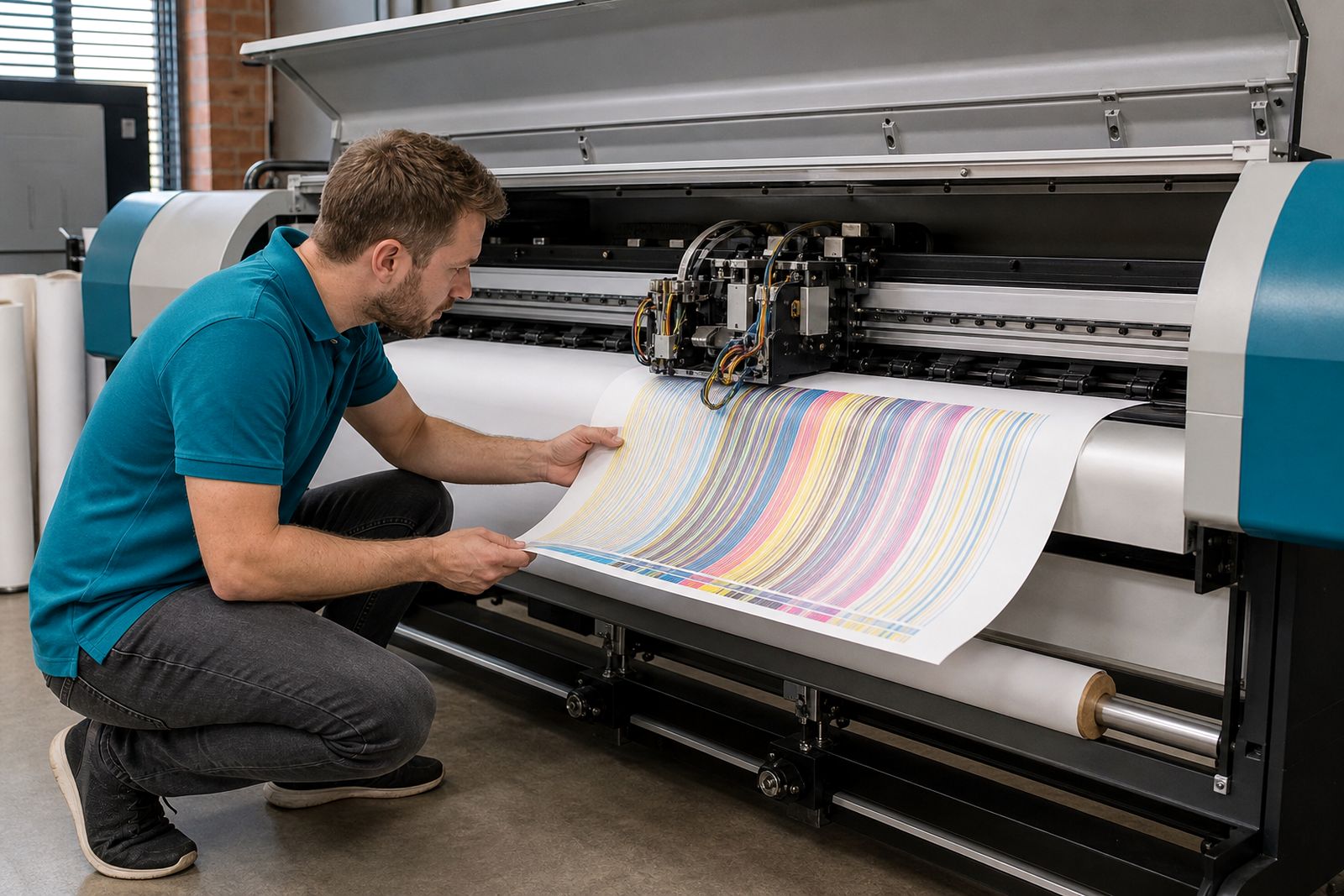
When a wide-format head starts dropping jets, deflecting lines or banding across colour, recovery work can often save useful service life. We assess the head, clean it with the correct fluid path in mind, and advise frankly when recovery is worthwhile and when replacement is the better route.
When recovery work makes sense
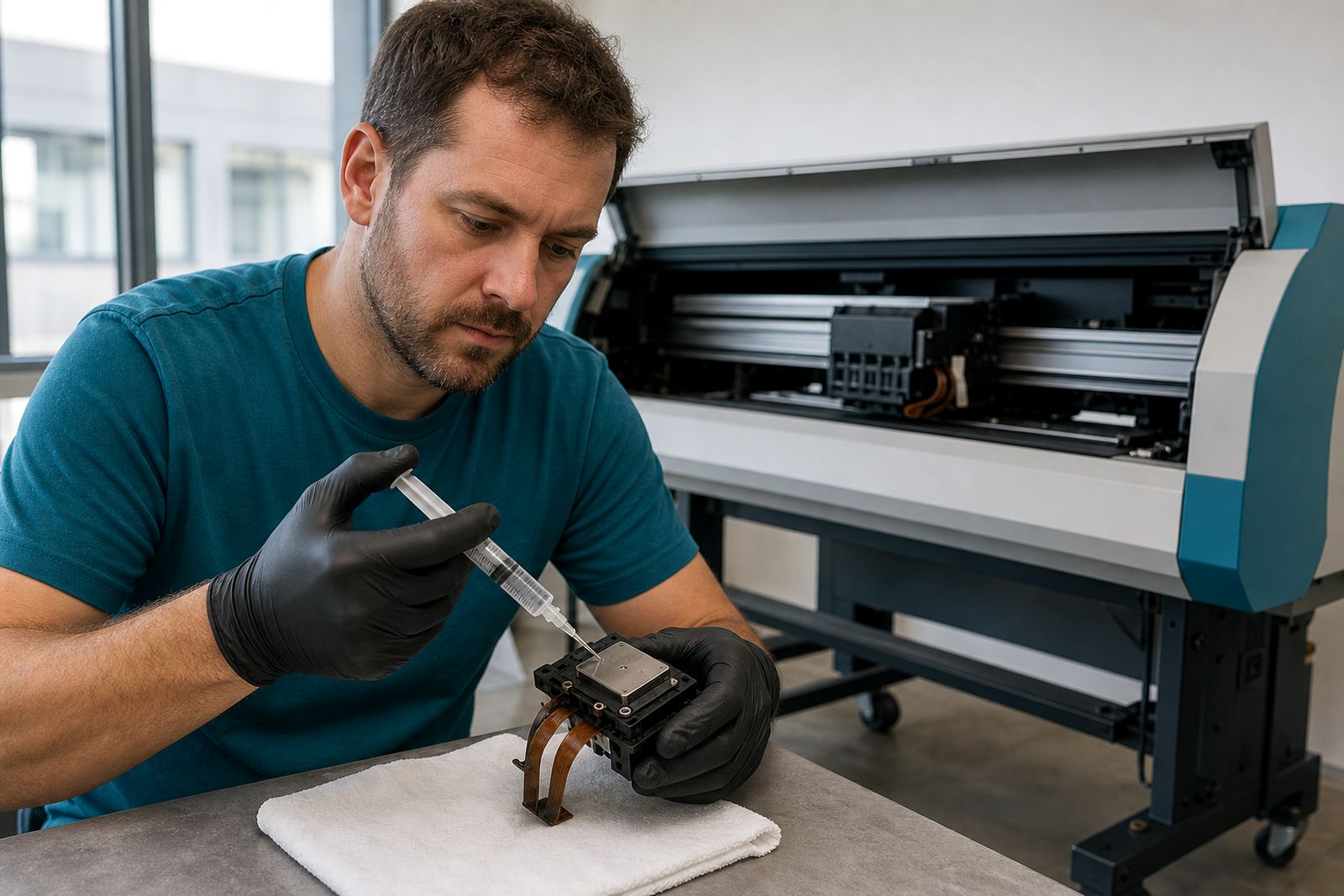
Nozzle recovery is aimed at heads that have lost performance through ink drying, contamination, poor parking, weak capping pressure or long idle periods. It suits many solvent, eco-solvent, UV and water-based systems used for signage, vinyl graphics, banners and art output, provided the fault is in the fluid path rather than a failed electronic channel. A head that still fires but shows missing jets, uneven colour laydown or misting may be a candidate for recovery.
We start by looking at the print symptom, the ink set, the printer type and how the head has been stored or parked. That tells us whether controlled flushing is likely to help or whether the signs point to internal electrical damage, a cracked manifold or a badly worn face plate. Not every tired head can be saved, and it is better to say that early than waste time on a part that is already past useful service.
- Suitable for isolated or progressive nozzle loss
- Useful after short to medium idle periods
- Helps where contamination has entered dampers, caps or feed lines
- Less suitable where channels have failed electrically
- Often paired with capping, damper or wiper replacement advice
What is included in the service
The service covers inspection, controlled flushing, nozzle-face cleaning, seal and manifold checks where applicable, and a practical reading of the likely cause. Where a complete engine assembly is involved, we look at the head in relation to carriage condition, feed stability and the electronics path as far as the symptoms allow. If the job needs fitting support afterwards, we can guide alignment and nozzle-health checks once the part goes back into the machine.
We use cleaning steps that match the chemistry involved. Solvent residue, UV ink build-up and water-based sediment do not behave the same, so the flushing route and soak method must suit the head construction and the fluid it has seen. Over-cleaning can do harm, and a head can look cleaner than it really is, so each stage is measured rather than rushed.
- Visual inspection of nozzle plate and ink path entry points
- Assessment of capping history, parking condition and storage method
- Manual or controlled flushing with the appropriate cleaning fluid
- Basic nozzle-health evaluation before and after cleaning
- Advice on related parts that may have caused the blockage
How the recovery process runs
First, we identify the head type, the ink family and the fault pattern. A head with a clean row of missing jets behaves differently from one with scattered drop-out across several colours. We then check whether the part arrived capped, drained, wet, dry or contaminated by mixed fluids. That starting condition matters more than many operators realise.
Next comes the cleaning stage. We remove dried ink and residue from the face with safe methods, then flush through the correct ports using pressure that suits the internal structure. If the blockage is stubborn, a staged soak may be used before a second pass. On UV systems we are especially careful where cured fragments may have formed near the nozzle face, becuase forcing those deeper into the path can make the fault worse.
After cleaning, we reassess jet behaviour and overall stability. If the head has improved enough to justify reinstallation, we note the aftercare steps needed to keep it that way. If results are marginal, we say so plainly. In some cases recovery restores production use, while in others it only confirms that replacement is the sounder spend.
- Identification and condition check
- Cleaning plan matched to ink chemistry
- Controlled flush and, where needed, soak cycle
- Recheck of nozzle condition and firing behaviour
- Recommendations for refit, related parts and care
What to prepare before sending a head or engine
A clean, accurate brief saves guesswork. Tell us what ink family the head has been running, what the print defect looks like, whether the machine stood idle, and whether any flushing fluid has already been used. If the issue followed a head strike, power event or board fault, include that as well. Recovery depends on the real history, not only the visible symptom.
Protect the nozzle face properly for transit and keep fluids from leaking into packing material. Do not scrape the face, wipe it with household cloths or flood the electrical side. If a complete print engine or carriage assembly is being sent, include clear notes on cable positions and any known faults in the carriage path. A short written fault log is often enough.
- Ink type used: solvent, eco-solvent, UV or water-based
- Fault description: missing jets, deflection, banding, colour loss or misting
- How long the printer stood idle, if relevant
- Any prior flushing or cleaning already attempted
- Whether the problem may involve dampers, caps, wipers or boards
You can send the details through our contact form before dispatch so we can match the recovery approach to the head and ink system.
How pricing is worked out
Recovery pricing is based on the type of head or engine assembly, the ink chemistry involved, the condition it arrives in and how much bench work is needed. A lightly blocked water-based head that was stored correctly is a different job from a UV head with cured contamination and related feed issues. Where electronics faults are suspected, the assessment may point away from flushing and towards boards or a full replacement path.
Related parts affect the total picture. If the real cause is a collapsed cap top, weak sealing, contaminated damper or poor negative pressure control, recovery on the head alone may not hold. We therefore price with the wider system in mind rather than pretending the head lives on its own. That keeps the advice practical even when the answer is not the cheapest one on paper.
For a checked-in assessment and the right route for your part, send the symptom notes through our contact form.
Aftercare once the head is back in service
A recovered head needs decent housekeeping or the same blockage can return quickly. Park the machine correctly, keep capping parts clean, and do not leave ink channels half full of mixed fluid. Where a printer is used only a few days a week, a planned maintenance routine matters more than heroic cleaning after the fact. This is often where avoidable nozzle loss starts.
We also advise on safe storage, flushing intervals and the signs that tell you a feed problem is building. If a head was recovered from drying or contamination, replace worn support parts before they drag the fault back into the system. A tidy cap, a healthy damper and stable ink supply usually matter more than repeated aggressive cleans, its a point many shops only learn after losing a second head.
- Keep parking and capping surfaces clean and sealing evenly
- Use the correct flush fluid for the ink family in service
- Avoid unnecessary manual wiping of the nozzle face
- Address damper, cap and wiper wear before print quality slips badly
- Store removed heads sealed, labelled and protected from dust
What our Printhead customers say
Verified Google reviews
Questions we get asked
Can every blocked printhead be recovered?
No. Heads with electrical channel failure, cracked internal parts or severe physical damage may not respond to flushing. The inspection stage is there to judge whether recovery is sensible before more bench work is done.
Should I flush the head myself before sending it in?
Only if you already know the correct fluid and method for that head and ink family. Mixing the wrong fluid or using too much pressure can turn a recoverable blockage into a failed head.
Do you need the whole printer for nozzle recovery?
Usually not. Many jobs can be assessed from the printhead or engine assembly plus clear fault notes. Where the problem appears linked to carriage electronics or ink supply behaviour, we may recommend a wider check of the related parts.
Also worth a look
Tell us about the job
Send sizes, materials and where you are through our contact form, and we will come back with the practical options.
Open the contact form