

Printhead guides
This guide section pulls together the practical points that matter before you order a replacement printhead or print engine assembly. It is written for sign shops, print rooms and integrators who need clear care notes, matching advice and fewer avoidable failures.
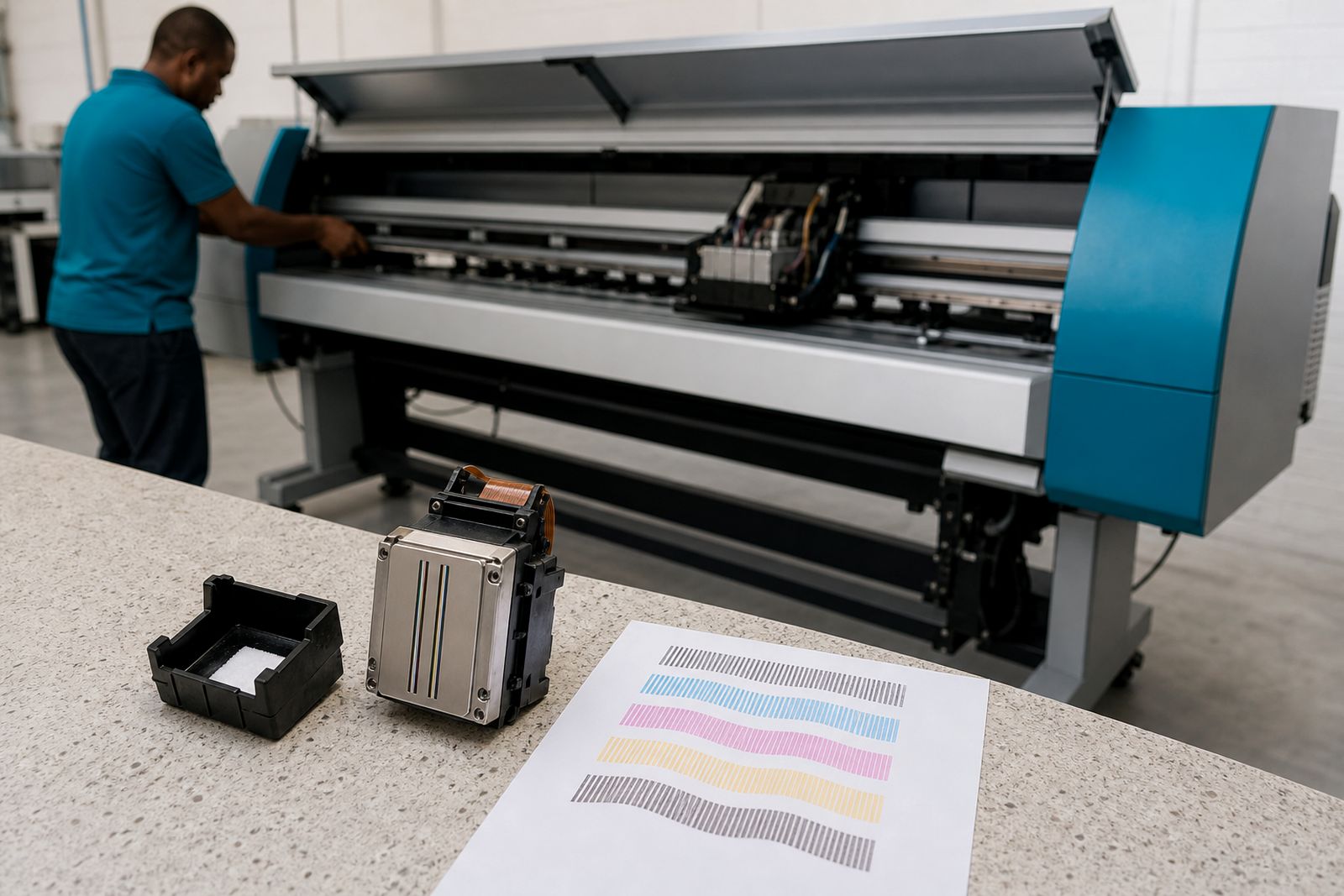
What this guide section covers
These pages focus on two jobs that affect output more than most operators expect: choosing the right head for the printer and looking after it once it is fitted. A replacement head can be mechanically compatible yet still be wrong for the ink set, the drive electronics or the duty pattern in the shop. The aim here is to help you narrow that down before a part is ordered and before a carriage is stripped.
You will also find support notes around the parts that sit around the head itself. Capping parts, dampers, wipers and head boards often decide whether a new head lasts well or starts with poor nozzle health. In Randburg we speak to print rooms that need a direct replacement, and to builders who need a complete engine assembly for a custom machine or retrofit.
Choosing between head types
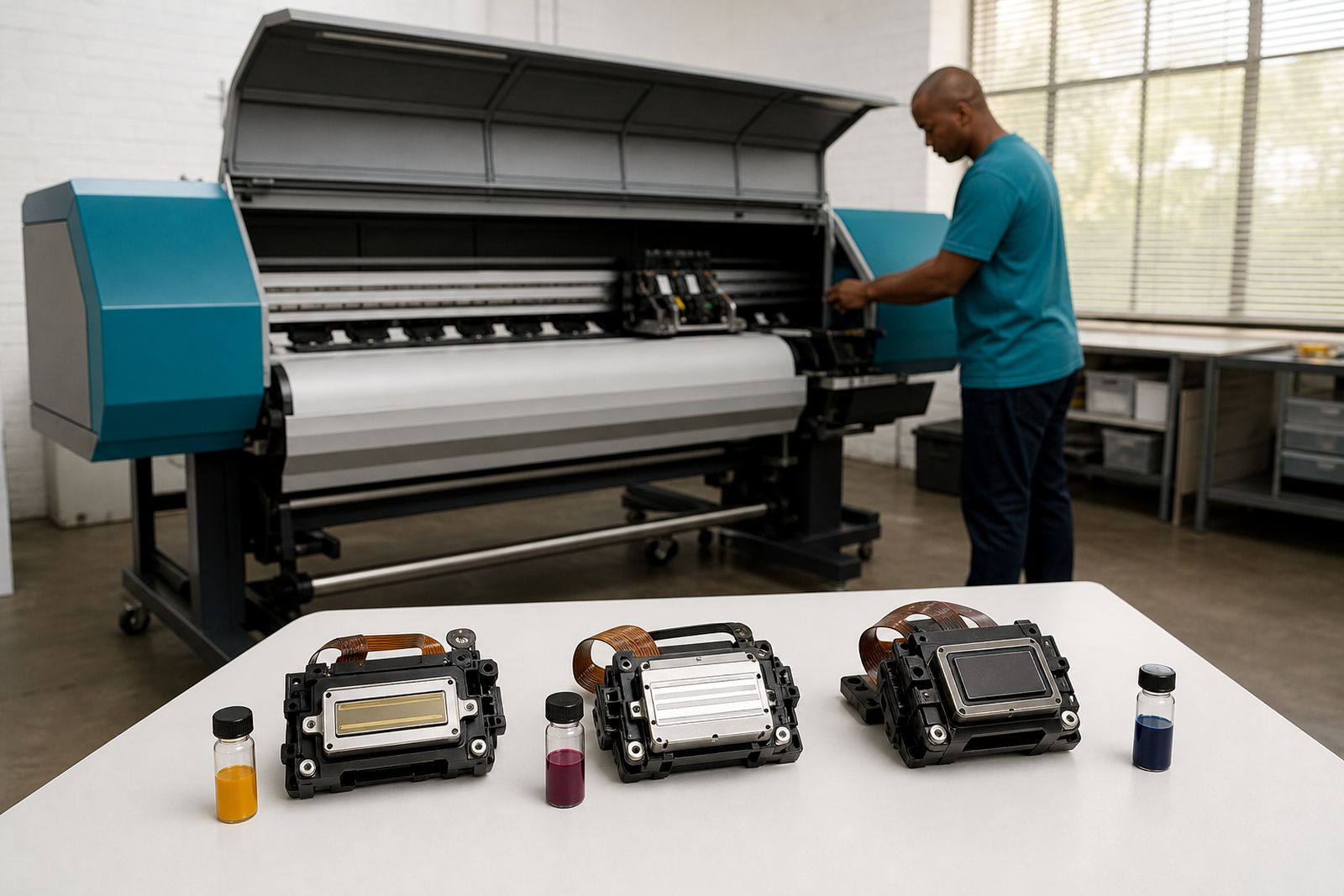
The first split is usually the ink family and the way the printer is used. Solvent and eco-solvent machines for vinyl and banner work have different demands from UV systems used on rigid media, and both differ from water-based setups for artwork and display output. Matching the head only by shape or cable position is where expensive mistakes start.
- Solvent and eco-solvent heads suit shops running vinyl, banners and general signage where ink chemistry, cleaning fluid choice and capping condition all matter.
- UV heads need attention to ink circulation, curing setup and idle periods, because cured residue near the face can turn a minor blockage into a permanent loss.
- Water-based heads are often chosen for artwork and indoor display work where fine droplet control and clean storage practice count for more than brute throughput.
- Complete print engines are the route for integrators and rebuilds where the head, carriage and electronics need to work as one assembly rather than as separate parts.
If you are unsure where your machine fits, our contact form is the best place to send the printer type, ink family and the parts currently installed.
Signs that the head is not the only problem
A weak test pattern does not always point to a failed head. We often see printers where the real fault sits in ink delivery, sealing pressure at the cap, air leaks around dampers, or board-level issues. Swapping a head into that environment can waste a good part and leave the same print fault in place.
- Missing nozzles after a long idle period can point to drying at the face, poor capping pressure or contaminated flushing fluid.
- Deflected jets may come from residue on the nozzle plate, incorrect wiping practice or media strikes.
- Intermittent firing across channels can suggest head-board faults, ribbon issues or unstable carriage connections.
- Rapid nozzle loss after fitting often means the printer needed deeper flushing, cleaner lines or better storage control before the change.
That is why the guide pages sit alongside our fitting and support section. In many cases a careful flush and inspection saves a head that looked finished, or it shows that a board or service part should be changed at the same time.
Handling and storage notes that matter
Printheads are sensitive components and small handling errors can shorten their life quickly. In Johannesburg inland air can be dry, while coastal deliveries may arrive in more humid conditions, so storage discipline matters from receipt to installation. A sealed head should stay sealed until the machine is ready, and a half-prepared fitting bay is asking for dust, wrong fluid or static damage.
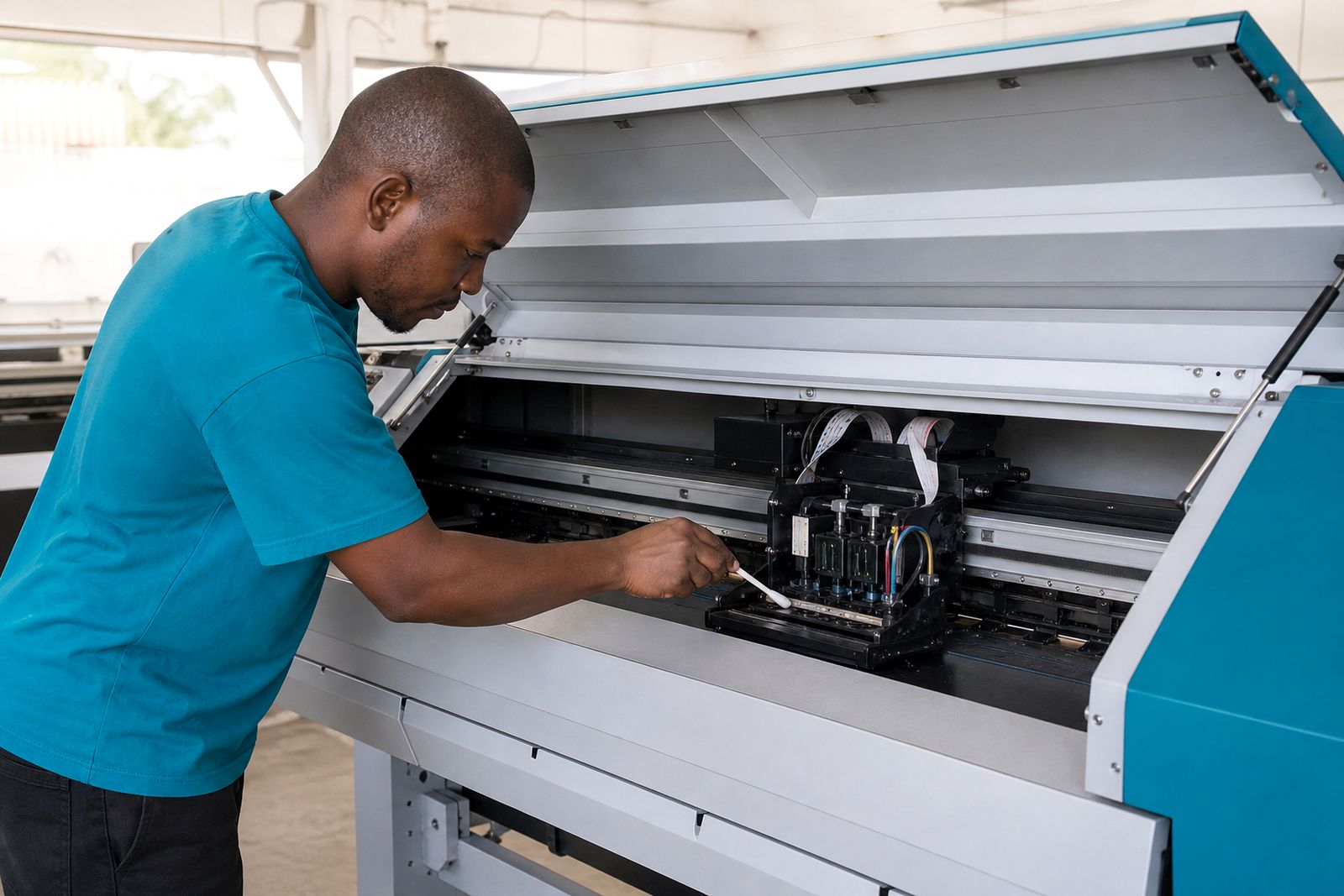
Before fitting, keep the work area clean and keep the required flushing fluid, lint-free materials and alignment procedure ready. Do not leave the head open on a bench while other maintenance carries on. Once the old part is out, inspect the cap top, dampers and wiper rather than assuming they are fine because they still move. One tired service part can ruin the first day of a new head, and then the operator is left chasing faults that were there all along.
When a complete engine assembly makes more sense
Some jobs are better served by a full inkjet print engine rather than a loose head. This is common where an integrator is building a machine around a known carriage system, or where a damaged printer has failures across the carriage, head mount and electronics chain. A complete assembly can remove guesswork around compatibility between the head, motion setup and firing electronics.
- Choose a replacement head when the printer platform is sound and the surrounding service parts can be restored properly.
- Choose head boards or related electronics when firing faults, communication issues or channel instability point away from the head face itself.
- Choose capping, damper and wiper parts when maintenance items have aged and nozzle health drops after parking.
- Choose a complete engine assembly when a build, retrofit or major carriage rebuild needs matched mechanical and electronic parts.
That distinction is especially useful for printer builders working across different media widths and ink sets, where component matching needs to be right from the start.
Using these pages to narrow your next step
The articles in this section are arranged to answer the most common decision points. Start with the choosing guide if you are matching a replacement part to an existing machine. Move to the care guide if the head is already fitted and the aim is to reduce drying, poor parking or avoidable nozzle loss. If the fault sits wider than the head itself, the support pages cover replacement service and nozzle recovery in more detail.
For shops outside Gauteng, we courier to every province and the same practical checks still apply before parts leave the bench. Send the printer application, ink type, the symptoms on test prints and any recent service work through our contact form, and we can point you to the most relevant section before you commit to the wrong part.
What our Printhead customers say
Verified Google reviews
Questions we get asked
Can I replace only the printhead if nozzle loss is getting worse?
Sometimes yes, but it is worth checking capping pressure, dampers, wipers, flushing condition and firing electronics first. A head fitted into a poor service environment can show the same faults straight away.
Do these guides apply to sign printers and custom-built machines?
Yes. The care notes are useful for sign shops running day-to-day production and for integrators fitting head assemblies into new or rebuilt machines.
What details help when I need matching advice?
Send the printer application, ink family, the part you believe is fitted now, and a short note on the fault pattern. Test print photos and any recent service work are helpful too.
Tell us about the job
Send sizes, materials and where you are through our contact form, and we will come back with the practical options.
Open the contact form