Inkjet print engines
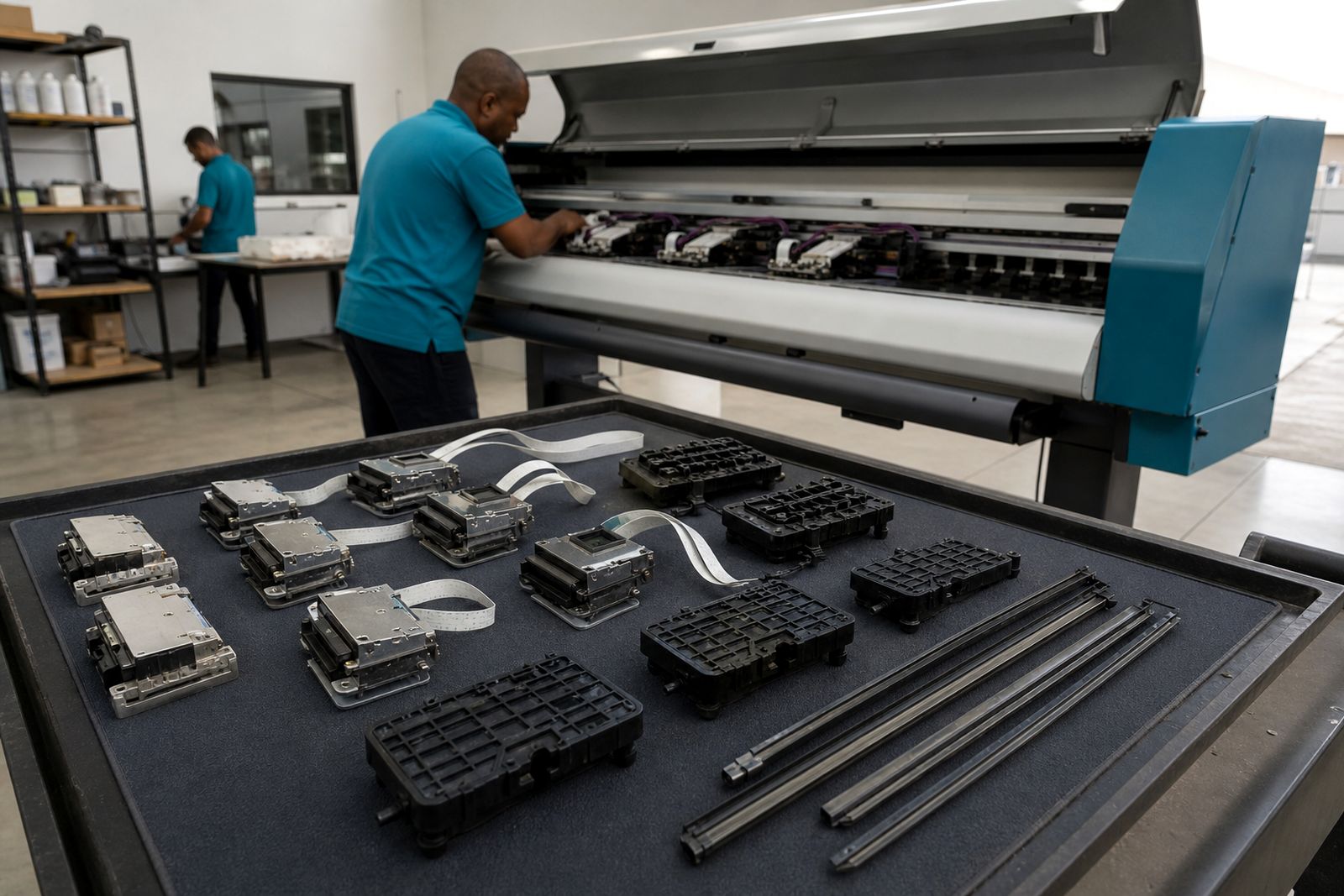
Inkjet print engines combine the head mount, carriage parts and control electronics that make a wide-format printer lay down ink properly. We help print rooms, rebuild teams and machine integrators match the assembly to the print process, media width and ink set they are working with.
Built for rebuilds, retrofits and new machines
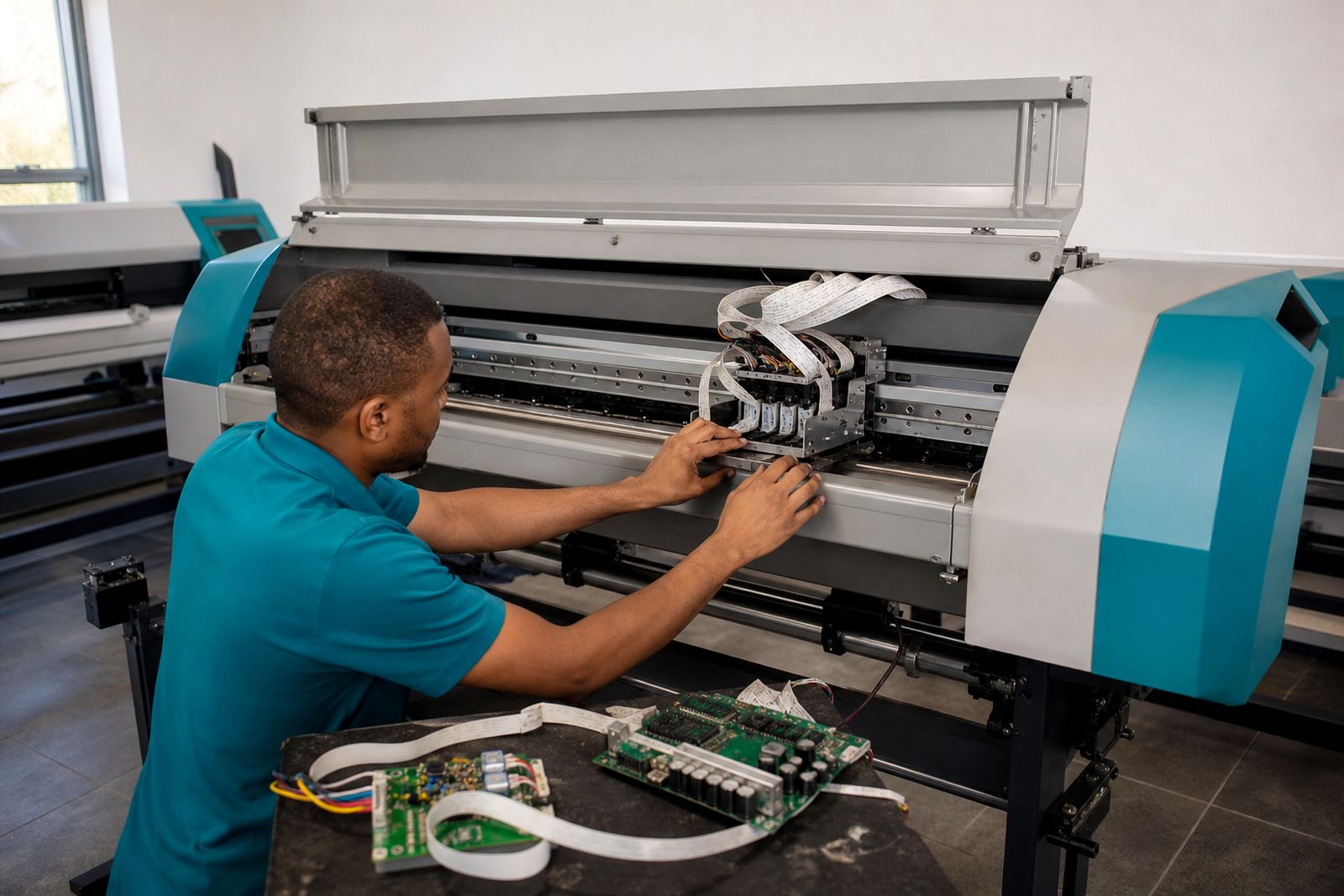
Our inkjet print engine range is aimed at the part of the job where a single replacement head is not enough. When the carriage assembly is worn, the mounting geometry is wrong, or the drive electronics no longer suit the head and ink combination, a complete engine makes more sense than piecing the machine together one bracket at a time. These assemblies are used in wide-format equipment for signage, banners, vinyl graphics and artwork, across solvent, eco-solvent, UV and water-based setups.
From Randburg we supply print engines to workshops in Johannesburg and to teams in every province by courier. The focus is on practical matching: carriage arrangement, cable routing, control boards, head fitment, and whether the machine is a rebuild of an existing platform or a fresh integration job.
What sits inside an inkjet print engine
An engine is more than a printhead on a rail. The assembly normally brings together the mechanical and electronic parts that let the head travel, fire and stay in alignment under production conditions. That matters when you are trying to stabilise colour laydown across long banner runs or hold fine detail on artwork media.
- Head mounting hardware matched to the intended printhead family and ink chemistry.
- Carriage components that keep travel steady and maintain the required print gap.
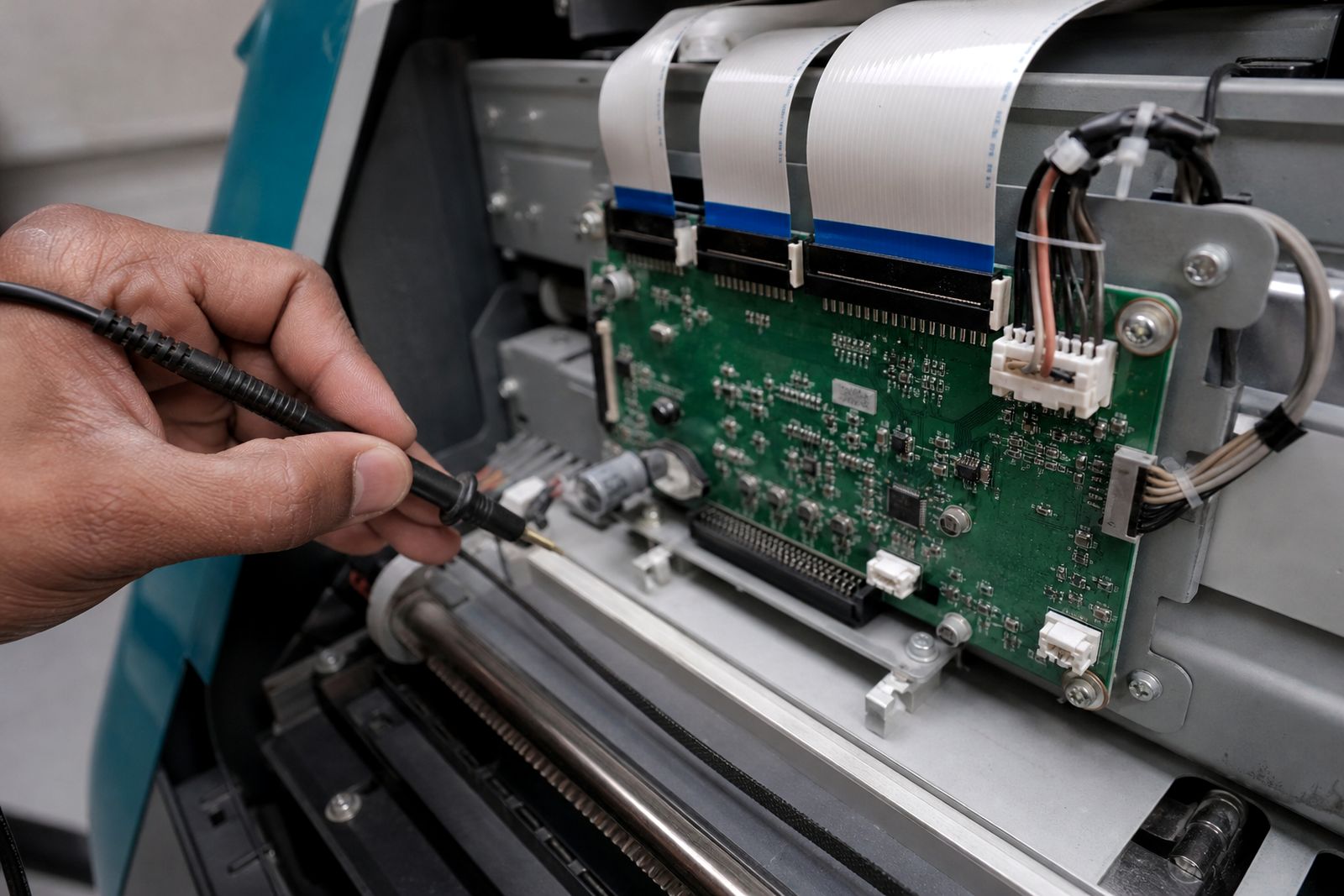
- Drive electronics and interface boards for controlled firing and data handling.
- Cable sets and related parts that suit repeated carriage movement.
- Provision for service parts such as capping, dampers and wiping where the machine design calls for them.
Where a customer already has part of the platform in place, we can advise on whether a full engine or a board-level replacement is the better route.
Choosing between a complete engine and board-level parts
The right option depends on what has failed and how much of the printer architecture still makes sense. Some machines need a fresh print engine because the mechanical wear and electrical issues are tied together. Others only need head boards or carriage electronics to get the existing engine working properly.
- Choose a complete engine when the carriage assembly, mounting position and electronics all need to work as one matched set.
- Choose head boards and electronics when the frame and carriage are still sound but signal delivery or control has become unreliable.
- Choose capping, damper and wiping parts when print quality faults point to ink management or poor sealing rather than the engine core.
- Choose a single replacement head when the rest of the motion and control system is still stable and correctly matched.
This comparison matters because buying too little often leaves the original fault in place, while buying too much can complicate a straightforward repair.
Points that matter before you match an engine
Most print engine problems are solved on paper before a box is packed. The key is to match the engine to the actual duty of the machine, not the label that was once stuck on the side panel. Ink type, carriage speed, media width and the way the printer is being used all affect the decision. A sign shop pushing vinyl and banner stock has different demands from an integrator building a UV flatbed attachment or a water-based artwork unit.
- Ink family: solvent, eco-solvent, UV or water-based.
- Application: signage, vinyl graphics, banner work or artwork output.
- Current fault: head damage, carriage wear, board failure, poor firing stability or repeat alignment drift.
- Build status: new integration, retrofit, field rebuild or workshop repair.
- Site conditions: dust, heat and coastal humidity can all change service planning a bit.
If you send clear machine details through our contact form, we can help narrow the choice before parts are fitted.
Support around fitment, alignment and nozzle health
Fitting an engine is only part of the work. Once the assembly is in place, the machine still needs careful alignment, proper cable dressing and sensible ink-path preparation. We assist with printhead fitting guidance, basic alignment checks and nozzle-health troubleshooting so the engine has a fair chance of performing properly from the start.
That can include advice on flushing, safe storage before installation, and how to handle a machine that has been standing with ink in the system. In many cases the trouble is a mix of old service parts and poor fluid condition, not just the engine itself so it helps to look at the whole print path.
Common applications for these assemblies
Inkjet print engines are used where builders or repair teams need a stable print platform without sourcing every moving part separately. On South African production floors that usually means wide-format machines doing day to day commercial work rather than once-off prototypes.
Typical examples include solvent and eco-solvent systems for outdoor signage, UV platforms for rigid media, and water-based units aimed at artwork and indoor display. We do not sell complete printers, but we do help with the print engine section that makes those machines viable during a rebuild or integration project.
What our Printhead customers say
Verified Google reviews
Questions we get asked
Can you help me choose between an engine and a replacement head?
Yes. If you share the printer type, ink family, current fault and what has already been replaced, we can advise whether the issue points to the head alone, the carriage assembly, or the control electronics around it.
Do you only supply engines for one ink type?
No. We work across solvent, eco-solvent, UV and water-based wide-format applications, and the right assembly depends on the ink chemistry and the job the machine is expected to do.
Can you assist with fitting and setup after supply?
We can help with head-fitting guidance, alignment checks, flushing and nozzle-health support, especially where a rebuild includes service parts and electronic matching as well as the print engine itself.
Tell us about the job
Send sizes, materials and where you are through our contact form, and we will come back with the practical options.
Open the contact form