
Head boards and electronics
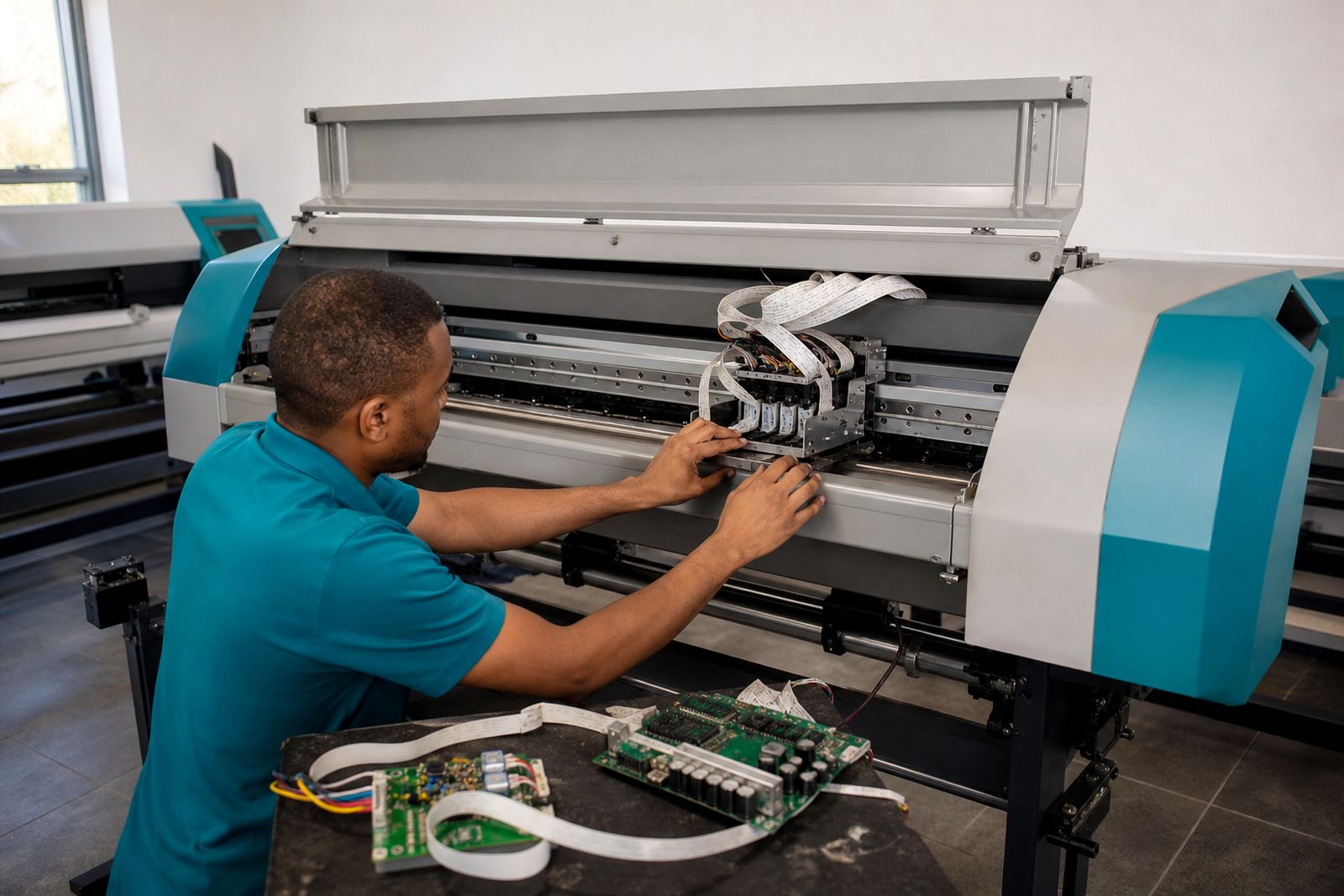
Head boards and carriage electronics keep a wide-format print engine firing correctly, reading position properly and driving the printhead without unstable output. We supply matched replacement boards, cables and related electronic parts for solvent, eco-solvent, UV and water-based systems used in signage and artwork production.
What these electronic parts do inside a print engine
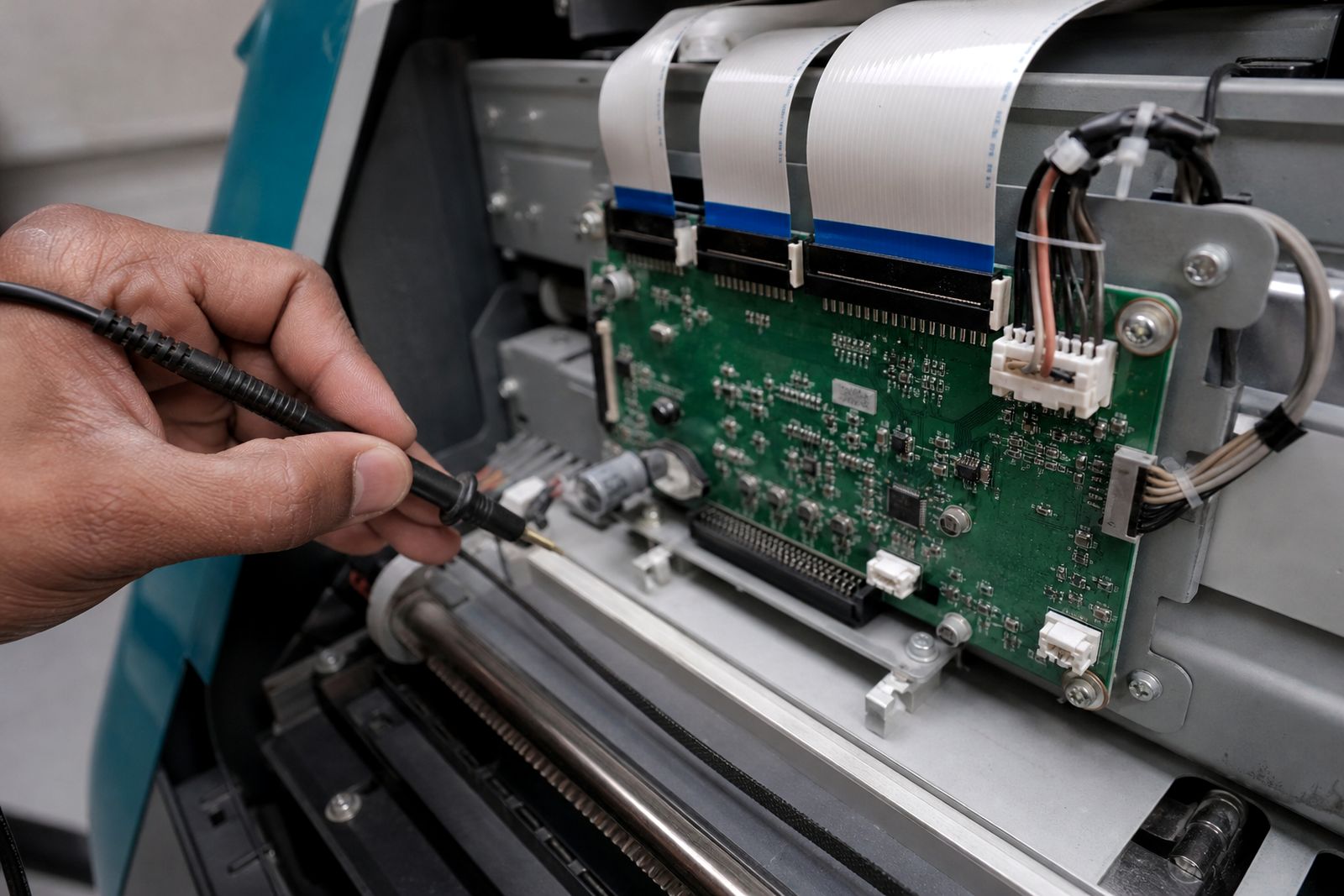
A print engine depends on more than the printhead itself. The carriage board, head driver circuits, encoder connections and flex cables carry firing signals, read carriage movement and link the head assembly back to the main control electronics. When one part in that chain starts failing, the symptoms often show up as missing channels, random nozzle loss, carriage errors, skewed passes or a head that tests fine then drops out during production.
We supply replacement electronic parts for head carriages and engine assemblies where the machine owner or integrator needs a like-for-like match, not a guess. In many cases the board revision, cable length and connector layout matter just as much as the head type, so we check those details before a unit is sent.
- Carriage boards for single-head and multi-head assemblies
- Driver and interface boards linked to wide-format print engines
- Head flex cables and interconnect looms
- Encoder-linked carriage electronics where applicable
- Associated fittings used during head board replacement
Board formats, cable options and working limits
These parts are not universal. A board that physically fits the carriage may still be wrong for the firing voltage, connector pinout or waveform expected by the head and ink system. Some assemblies are built for slower scanning sign work, while others are configured for heavier production loads or tighter droplet control on artwork and fine colour areas.
We help match the electronics to the print engine layout already in the machine. That includes checking the number of heads on the carriage, the ink family in use, the scan width and whether the assembly is part of a retrofit or an original engine package. Cable choice matters too. Flexes that are too short can pull at the connectors, and over-length cables can create routing issues inside a compact carriage.
- Single-head, dual-head and larger carriage arrangements
- Different cable lengths and bend orientations
- Solvent, eco-solvent, UV and water-based compatibility checks
- Electronics suited to sign printing, banner output, vinyl work and coated media artwork
- Replacement parts for complete print engines with head, carriage and control assemblies
Working limits usually relate to heat, ink contamination, static discharge and poor cable handling rather than the board alone. A clean board installed into a carriage with wet connectors or damaged grounding will not run properly, and that catches some shops out.
Where these parts suit production well
Head boards and carriage electronics are a good fit where the rest of the machine is mechanically sound and the fault has been narrowed down to signal delivery or carriage control. Sign shops often need them after repeated cable strain, liquid ingress around the carriage, or a board failure following incorrect head swaps. Integrators and printer builders also use them when assembling or repairing custom wide-format systems.
They suit operations producing banners, self-adhesive vinyl, posters, display panels and art reproductions where stable firing and predictable scanning matter over long runs. They are less suitable where the machine has multiple unresolved faults across power supply, motion control and ink delivery, because replacing the carriage board alone may not solve the real cause. If the frame has heavy vibration, the encoder system is dirty, or the capping area has been leaking for some time, those issues need attention at the same time.
Installation points that matter on site
Electronic replacement on a print carriage needs a steady hand and a clean work area. Flex cables crease easily, connector locks can crack if rushed, and one mis-seated plug can damage a new board on power-up. We can advise on fitting sequence, head removal where needed, cable routing and first-start checks after installation.
On site, the machine should be isolated before work begins and the carriage area should be dry and free of ink mist. Static control is worth taking seriously, especially in inland winter conditions around Randburg where very dry air can make sensitive boards vulnerable. If the printer has had a head strike, inspect the carriage plate and mounting points first because a distorted carriage can put the new electronics under strain from the start.
- Clean, dry carriage area before opening connectors
- Photos of cable routing before removal help a lot
- Check grounding and earthing paths before power-up
- Inspect connector pins for ink residue or corrosion
- Run alignment and nozzle-health checks after fitting
Care after fitting and faults we see often
Once fitted, the main job is keeping ink and cleaning fluid away from the electronics. A small leak from the cap, damper or manifold can migrate onto the carriage board over time and create intermittent faults that look like head failure. Keep wipers in decent condition, watch for overspray around the carriage, and deal with ribbon cable rubbing before it cuts into the insulation.
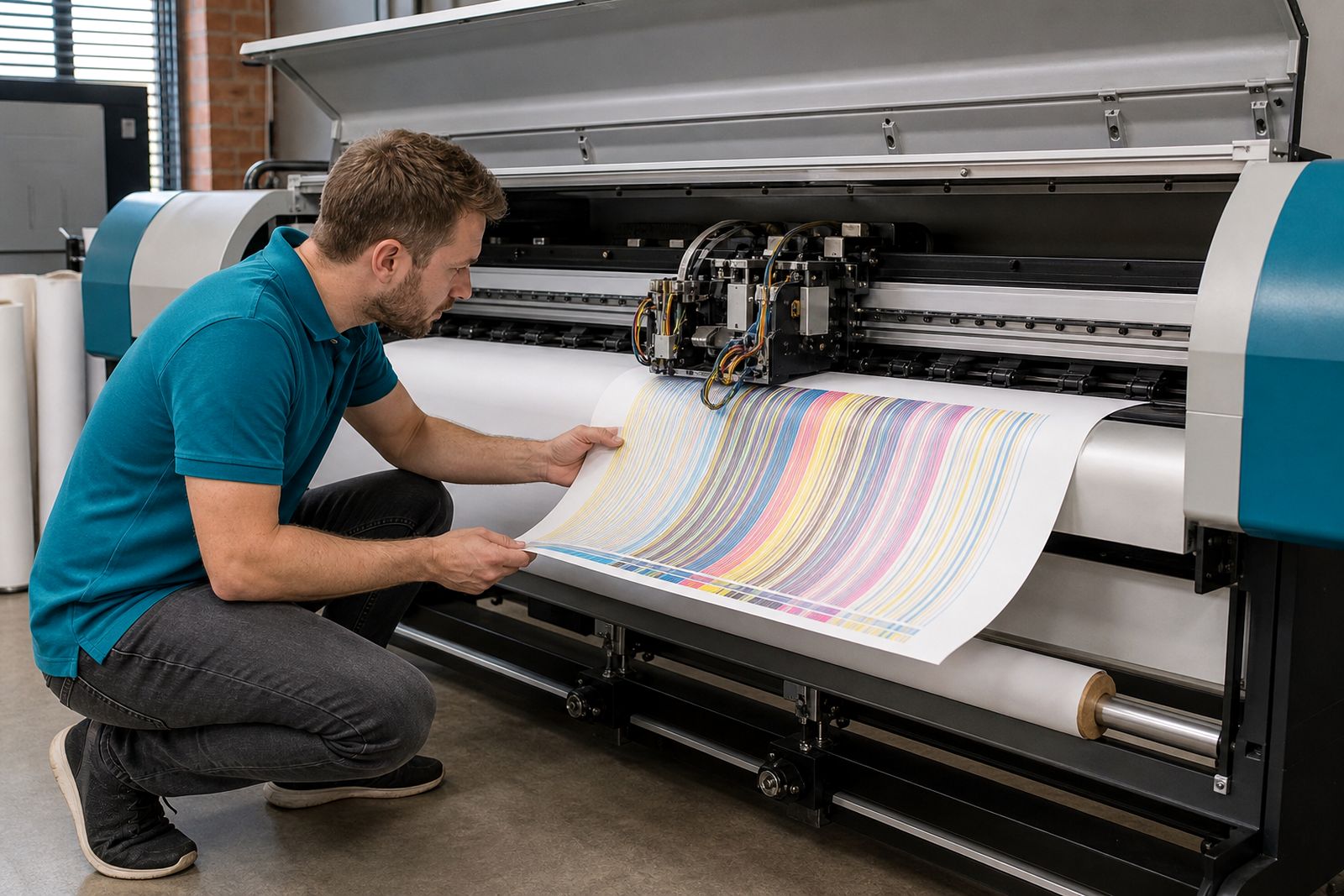
Another common issue is repeated unplugging of head cables during trial-and-error fault finding. The connectors are not made for rough handling, and a board can be blamed when the real problem is a worn cable end. If nozzle loss appears in regular blocks, or only on certain passes, that pattern can help separate an ink-path problem from an electronic one. We can help interpret those signs, even when the printer has been limping through jobs for a while and the fault seems to move around a bit.
What to send when you ask us to match a board
Good matching starts with accurate machine information and clear photos. Because wide-format carriages differ by layout, revision and connector style, we need enough detail to avoid sending a part that only looks close. If the printhead has already been removed, include that information too, along with the ink type and the fault pattern seen during printing or nozzle testing.
Please send the details through our contact form on the contact page so the team can review the carriage layout and support needs together.
- Printer make and exact model description if available
- Photos of the existing board, both sides if possible
- Photos of cable ends, connectors and carriage layout
- Printhead type and ink family in use
- Fault symptoms such as missing channels, carriage errors or unstable firing
- Whether you need the part only, or fitting and alignment support as well
What our Printhead customers say
Verified Google reviews
Questions we get asked
Can I replace a head board without changing the printhead?
Sometimes yes, if the head is still healthy and the fault is clearly on the board or cable side. It helps to compare nozzle behaviour, error patterns and any visible damage on the connectors before deciding.
Do you sell complete printers or only engine parts?
We supply replacement printheads, engine assemblies and related electronic and service parts for wide-format equipment. We do not sell complete printers or offer client printing.
What usually causes carriage electronics to fail?
Common causes include ink or cleaning fluid reaching the board, cable fatigue, static discharge, incorrect fitting, head strikes and corrosion on connectors. In some machines the fault starts outside the carriage, so a proper match and fault check matters.
Also worth a look
Tell us about the job
Send sizes, materials and where you are through our contact form, and we will come back with the practical options.
Open the contact form