
Capping stations, dampers and wipers
Capping stations, dampers and wipers do the quiet work that keeps a printhead stable between jobs and through cleaning cycles. When these parts are worn, swollen or badly matched, good heads start showing drop-out, deflection and poor sealing.
What these parts do in a working printer
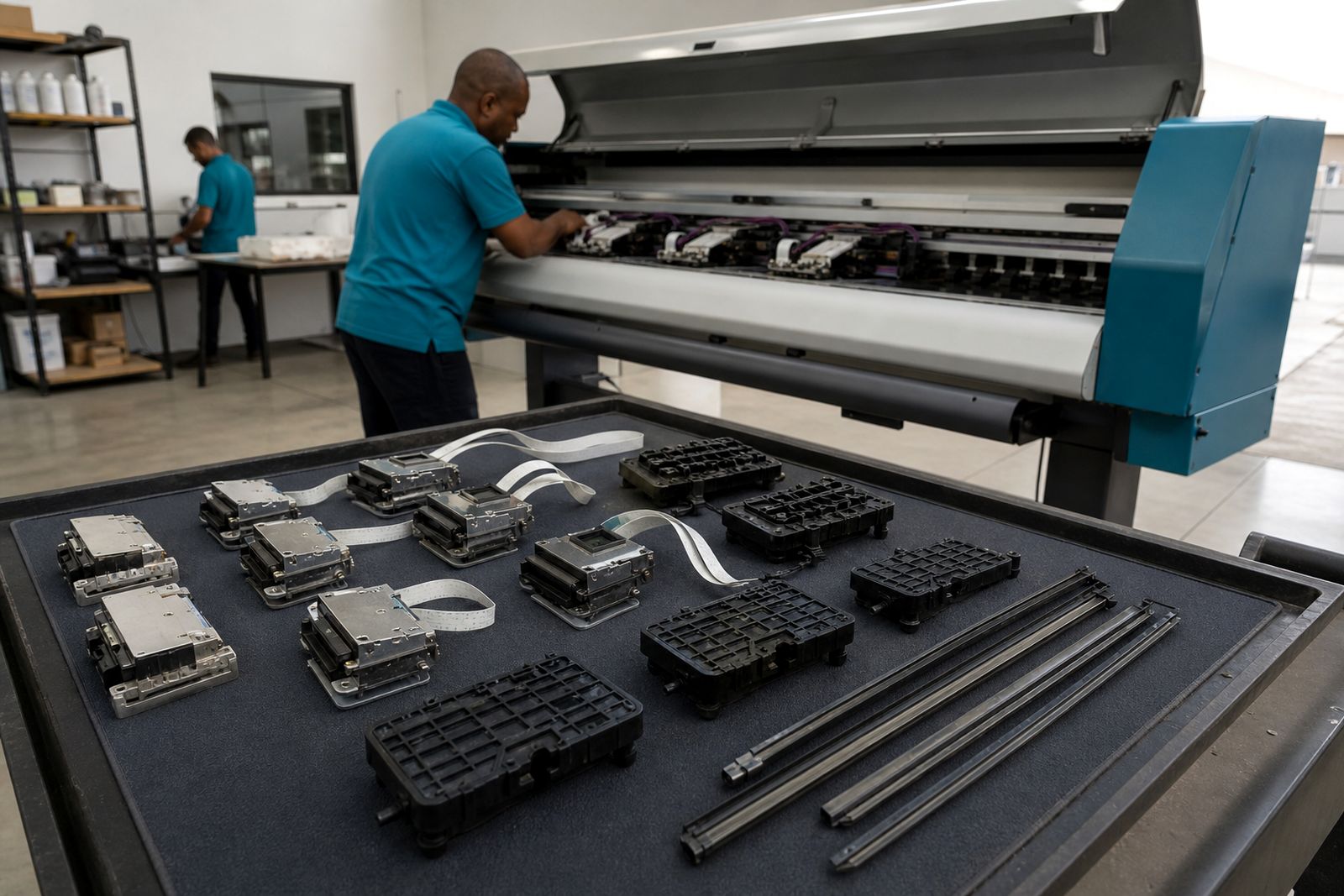
A capping station seals under the head when the machine parks, helping the nozzles stay wet and letting the pump pull cleaning fluid through the face when needed. Dampers steady ink flow between the supply line and the head, reducing pressure swings and trapping small contaminants before they reach the manifold. Wipers clear loose ink, dust and mist from the head face so cleaning cycles do not just move debris around.
On solvent, eco-solvent, UV and water-based platforms, these small service items affect daily print quality more than many operators expect. A weak seal, a collapsed damper or a swollen wiper can show up as missing jets in the morning, colour drift after long passes, or repeated cleans that never quite fix the issue.
- Capping assemblies for single-head and multi-head layouts.
- Dampers matched to ink chemistry, flow demand and connector style.
- Wipers in materials chosen for the cleaning fluid and head face condition.
- Ancillary items such as cap tops, tubes, seals and pump-side consumables where applicable.
Options, sizes and their working limits
We match capping and damping parts to the printer layout rather than sending a look-alike item and hoping it fits. Cap dimensions, spring height, lip material, venting and tube position all matter. Dampers need the right port style, body volume and membrane behaviour for the ink set and firing pattern, while wipers must be firm enough to clean without rolling or nicking the face plate.
In practical terms, shops usually choose from compact caps for narrow carriage footprints, medium service stations for common signage widths, and larger assemblies used on heavier carriage systems with wider park areas. Dampers vary from low-volume units suited to lighter duty heads up to higher-flow versions for broader swath work. UV setups often need materials that resist swelling, while water-based systems can need better control of drying at the cap.
- Ink compatibility: solvent, eco-solvent, UV and water-based.
- Mounting style: screw-down, slide-in, clipped or bracket-mounted.
- Head arrangement: single, staggered pair or wider multi-head banks.
- Service limit concerns: cap lip hardening, membrane fatigue, tube flattening and wiper edge wear.
Where the printer stands in a hot room, near a roller door, or in dusty sign production, service parts often age faster. Coastal humidity can soften some materials over time, while dry Highveld air makes poor parking habits more punishing on the head face.
Where these parts suit, and where they do not
These components suit wide-format printers used for banners, vinyl, boards, posters and artwork where the printhead parks onto a cap station and ink delivery relies on dampers between line and head. They also suit integrators building or refurbishing carriage systems that need matched service consumables for stable priming and maintenance.
They are not a cure for every print fault. If the carriage height is wrong, the pump is weak, the manifold is cracked, the lines are contaminated or the head has electrical damage, fresh caps and dampers will not put the machine right on thier own. In the same way, a wiper cannot fix scratches or baked-on UV residue that already damaged the nozzle plate.
- Well suited to scheduled maintenance on active sign rooms.
- Useful during head changes, line flushes and carriage refurbishments.
- Less suitable where the printer has unknown mechanical faults that have not been checked.
- Not intended as universal parts for every chassis that uses a similar looking cap top.
Installation points that matter on site
Most fitting issues come from alignment, not from the part itself. The cap has to sit square under the head, rise evenly and seal without pushing the face too hard. Dampers need clean orientation, secure clips and line routing that does not kink when the carriage travels. Wipers must meet the head at the correct angle and pass cleanly without snagging cable loops or dried ink ridges.
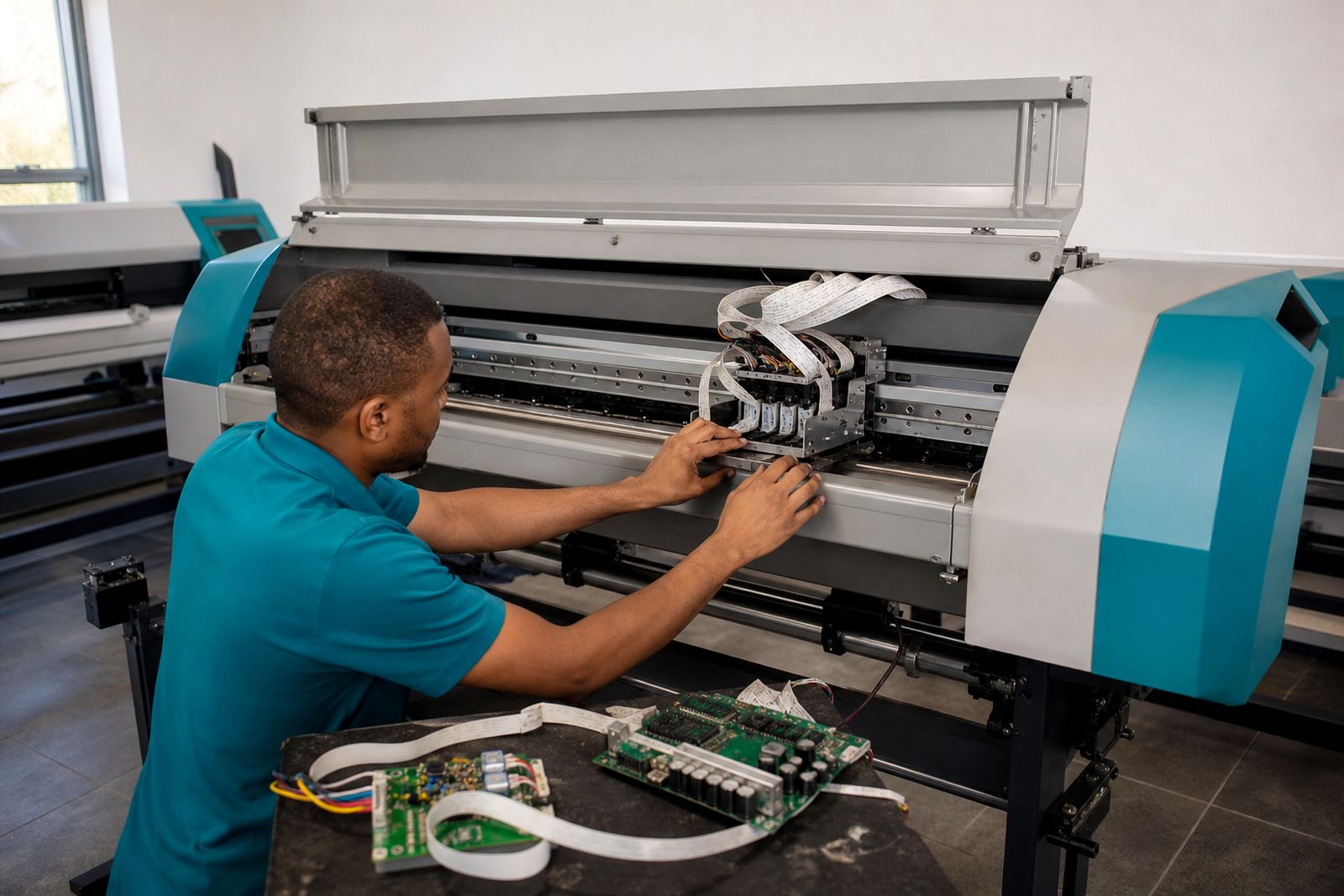
If your print room does head fitting in-house, we can help you match the part set before you strip the station. It helps to know whether the machine is a single-head setup or a wider carriage, whether the pump is original or changed before, and whether the ink train was flushed recently. On some systems a fresh cap and damper change is best done together so the cleaning side and the feed side are not fighting each other.
- Photos of the parked head area from above and side-on.
- A clear image of the old cap, damper or wiper beside a ruler.
- Ink type in use and whether the machine runs daily or intermittently.
- Any recent head replacement, strike, flood or long shutdown.
Care between services
Good service parts last longer when the parking area is kept clean and the machine is not left with dried ink building up around the cap lip. Wipers should be checked for nicks, curling and embedded grit. Dampers should be watched for air build-up, staining that suggests backflow, and slow refilling after a clean. These are early warning signs that save a head from harder trouble later.
For solvent and eco-solvent rooms, evaporation around the cap area is a common cause of poor morning starts. UV shops often need more frequent checks because cured mist can collect where operators do not notice it at first. Water-based lines benefit from careful shutdown routines, especially over weekends or public holidays when the machine will stand.
- Keep the cap lip and surrounding station free of thick residue.
- Do not reuse heavily swollen or distorted dampers.
- Replace wipers that leave smears instead of a clean pass.
- Store spare service parts sealed, clean and out of direct heat.
What to send with your enquiry
Because these parts are often visually similar, the best match starts with clear identification of the printer layout and service side components. A short note with photos usually gives enough detail for us to narrow the options and point out anything else that should be checked before fitting.
Please send your machine type, ink family, number of heads on the carriage and photos of the existing cap station or damper. If a fault triggered the change, tell us whether you are seeing overnight nozzle loss, poor suction during cleans, ink starvation on long runs, or a wiper that is dragging. You can send those details through our contact form and we will guide the match from there.
What our Printhead customers say
Verified Google reviews
Questions we get asked
Do worn dampers really affect print quality that much?
Yes. A damper that no longer holds pressure properly can cause intermittent starvation, air intake or uneven ink delivery, especially on longer passes and higher coverage work.
Can I replace only the cap top and keep the rest of the station?
Sometimes, provided the holder, lift action, tubing and pump side are still sound. If the station has uneven travel or poor suction, replacing only the top may not solve the fault.
Are these parts universal across wide-format printers?
No. Many look close at first glance but differ in height, port position, membrane behaviour or material. The safer route is to send photos and machine details through our contact form for a proper match.
Also worth a look
Tell us about the job
Send sizes, materials and where you are through our contact form, and we will come back with the practical options.
Open the contact form