

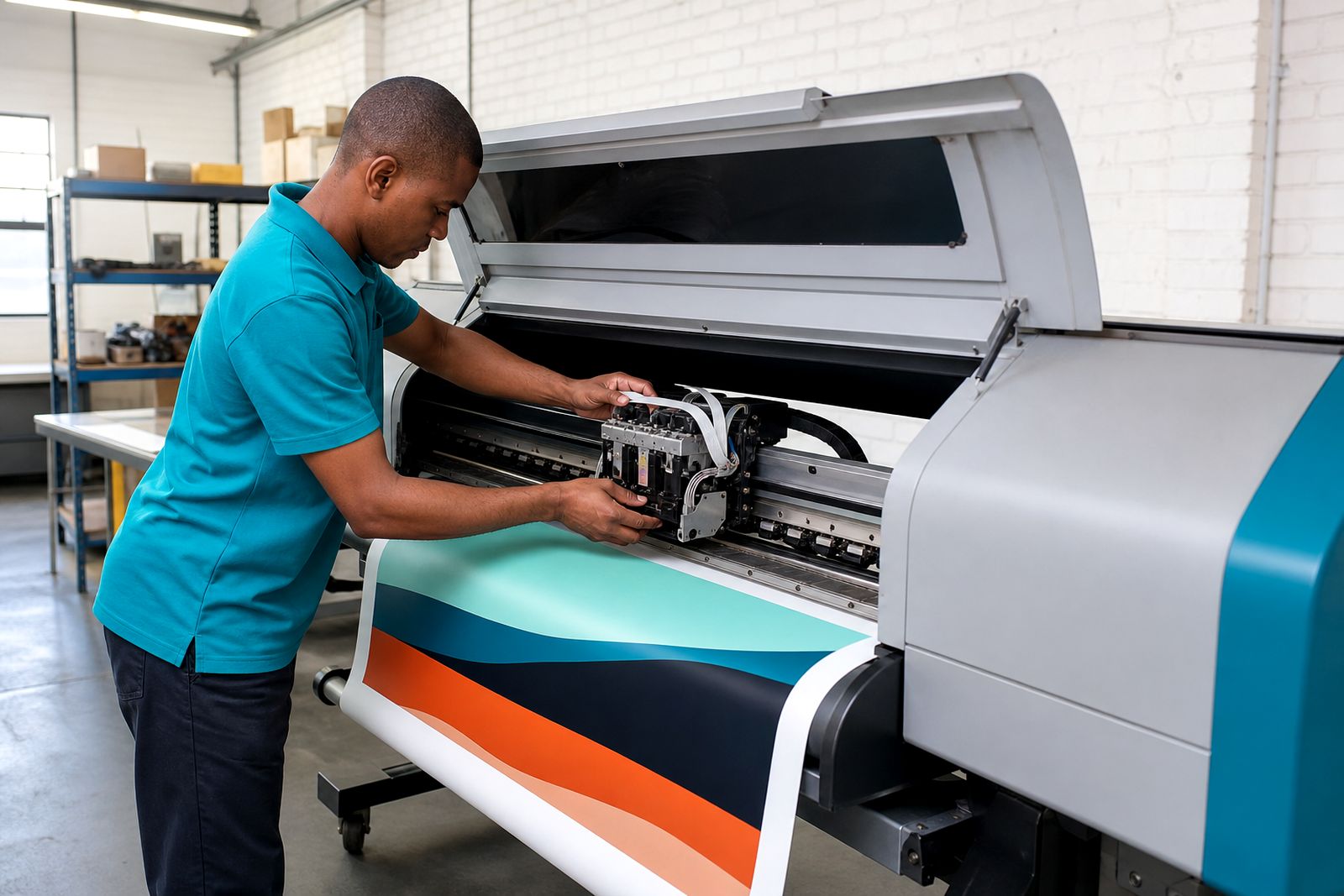
Replacement printheads and inkjet engines
Print Engines supplies replacement printheads, head boards and complete inkjet print engines for wide-format printers used in signage, banners, vinyl and artwork. From Randburg, we help South African print teams match the right component to the printer, ink set and job on the floor.
Parts that keep a wide-format line printing
Our work centres on the moving and service parts that matter most when print quality drops or a machine build needs a proven head assembly. We supply replacement printheads for solvent, eco-solvent, UV and water-based systems, along with the supporting parts that often sit behind poor firing, deflection, leaks or unstable starts. Where a single part swap is no longer the sensible route, we also supply complete inkjet print engines with the head, carriage and electronics grouped as one assembly.
That range suits sign shops running daily banner and vinyl output, artwork studios that need cleaner colour laydown, and integrators building or refurbishing machines around a known print platform. We do not sell complete printers, and we do not position ink as a main line. The focus here is the print path itself and the parts around it that determine whether a machine lays down a clean, stable image.
- Replacement printheads for wide-format solvent, eco-solvent, UV and water-based printers
- Printhead boards and related electronics for controlled firing and communication
- Capping stations, dampers and wipers for ink delivery and daily maintenance points
- Complete inkjet print engines including head, carriage and electronics assemblies
- Practical help with fitting, aligment, nozzle checks and running condition
Where to start
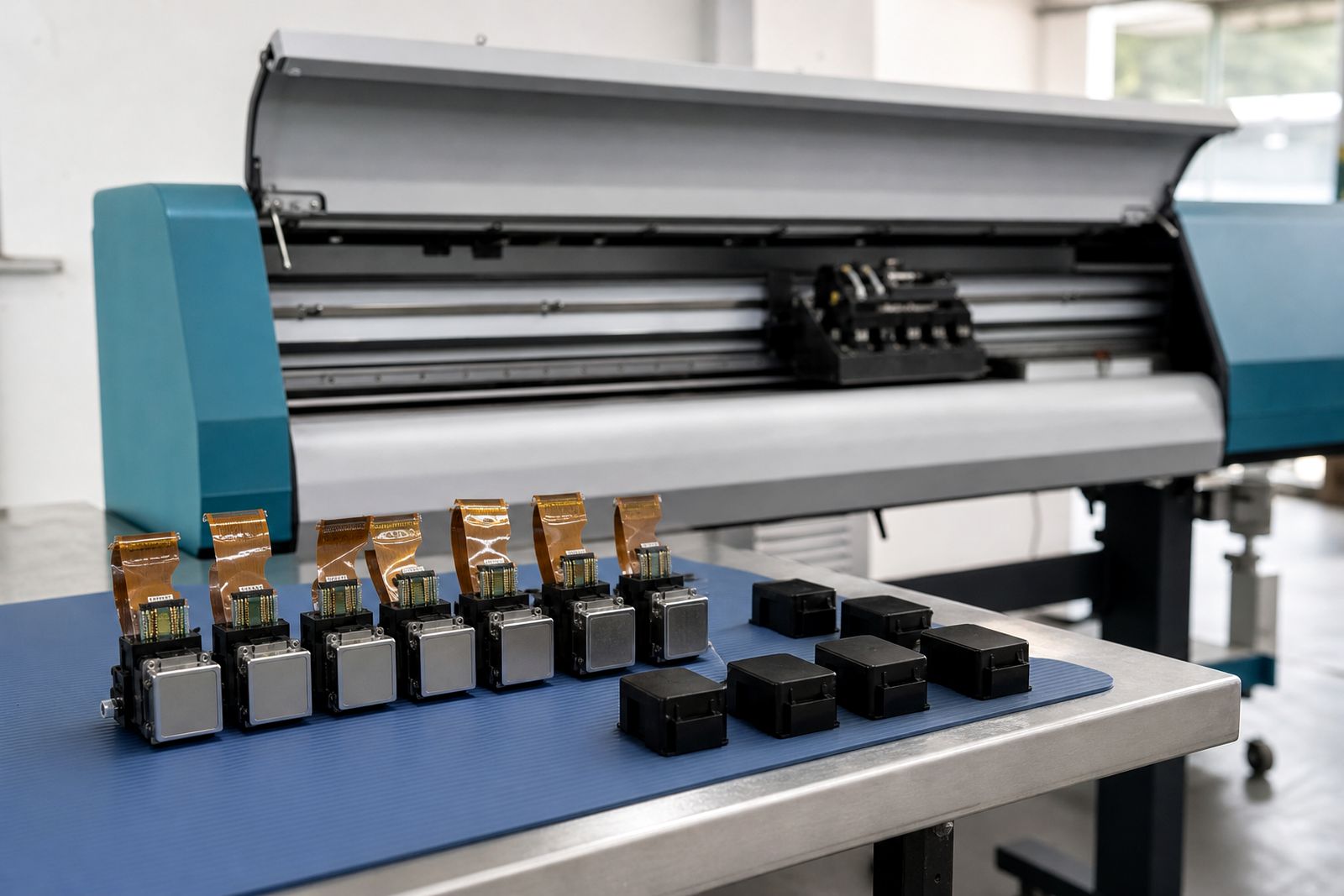
Replacement printheads
Replacement printheads matched to ink type, machine setup and the day-to-day demands of wide-format production.
Read more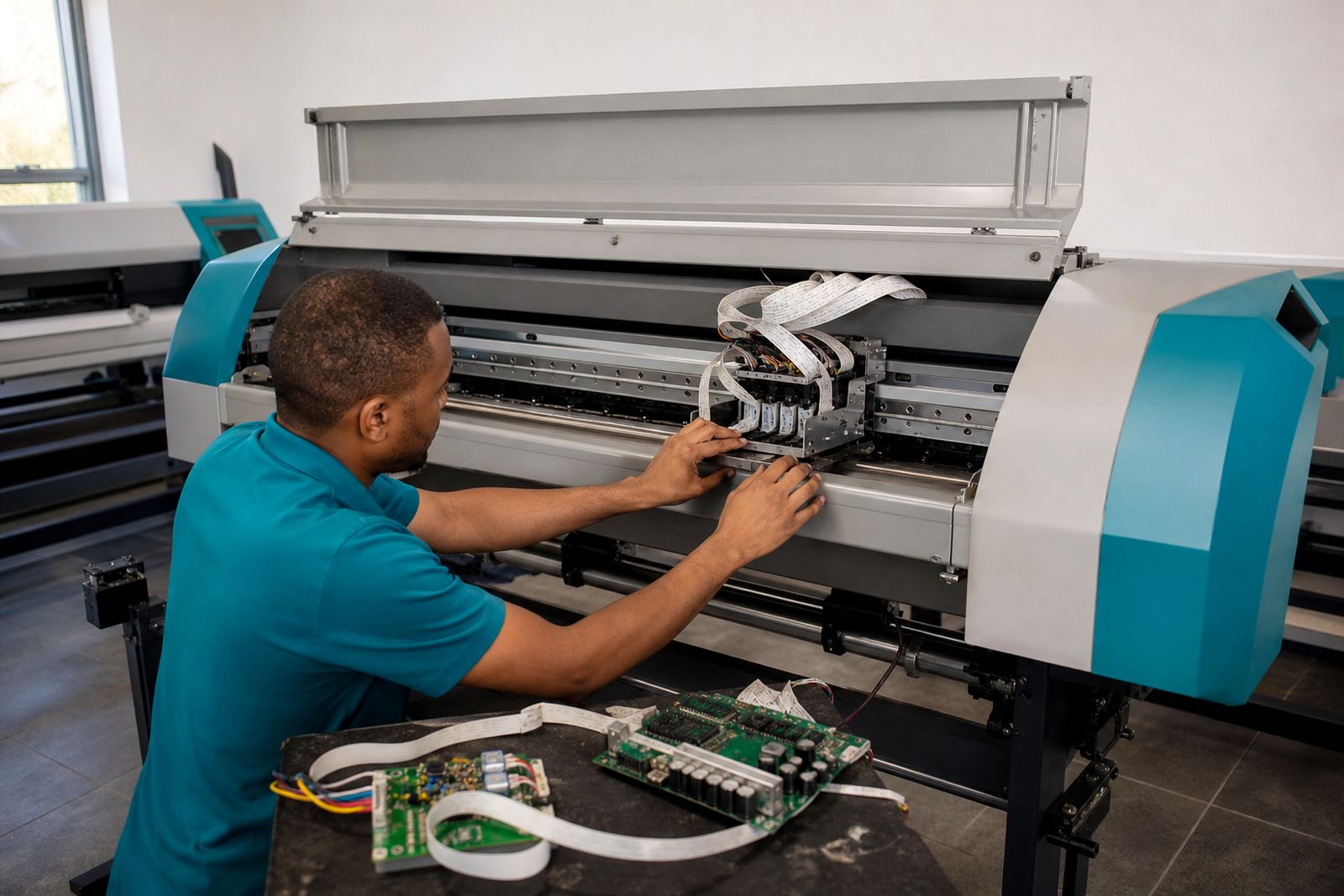
Inkjet print engines
Complete inkjet print engine assemblies for rebuilds, retrofits and new wide-format machine builds.
Read more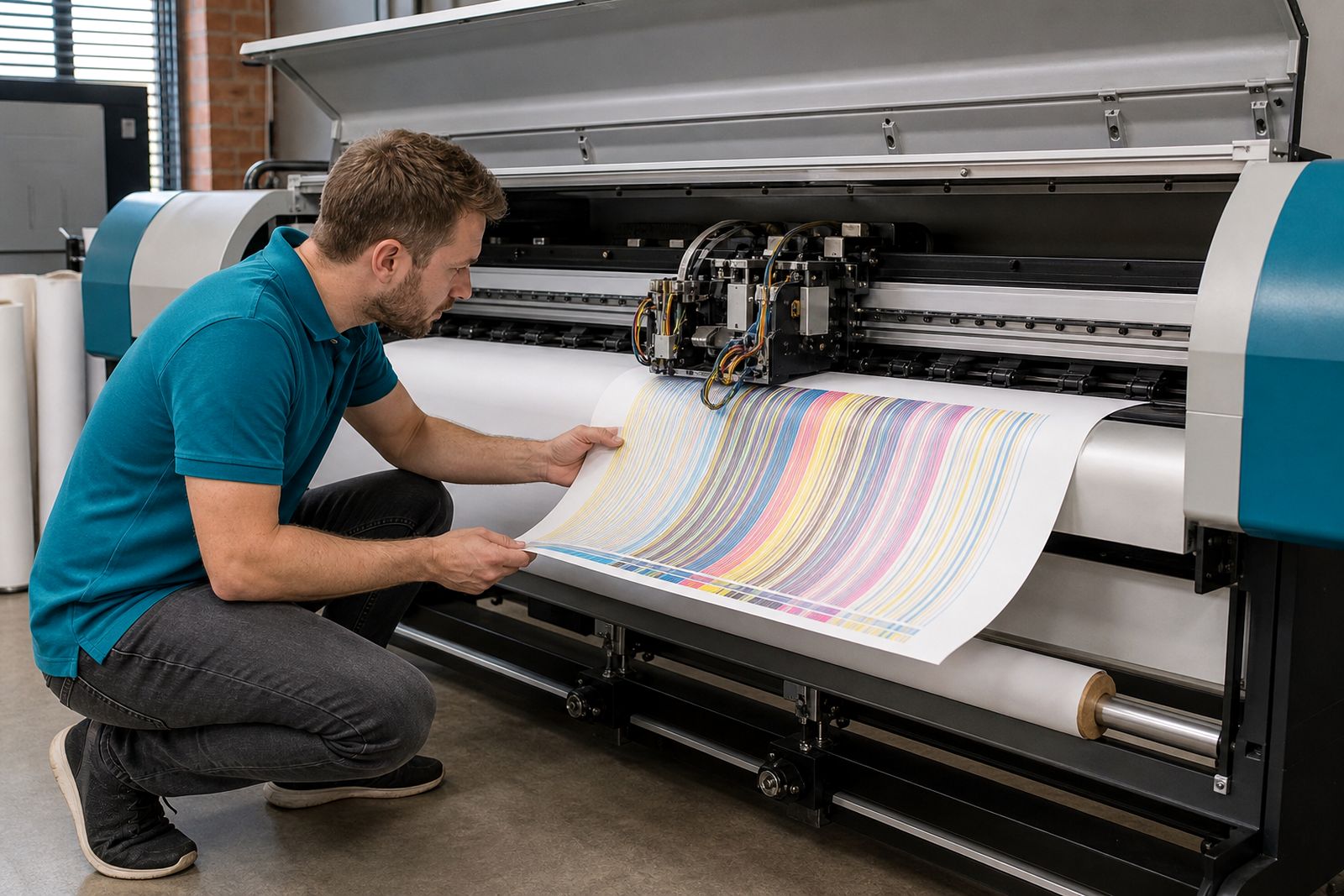
Fitting and support
Practical help for head changes, alignment checks and nozzle recovery on wide-format print systems.
Read more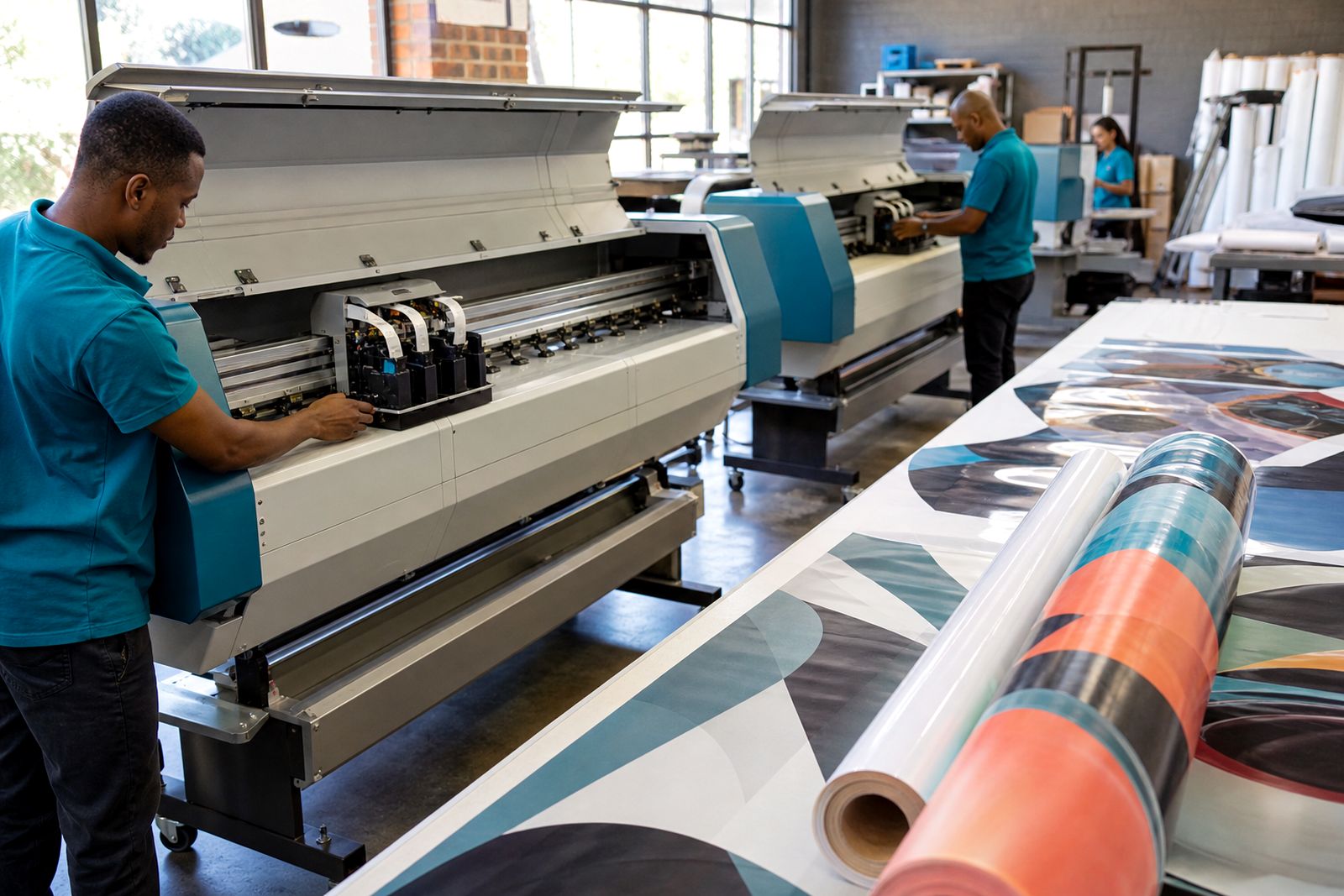
Where our heads work
A practical guide to matching heads and engines to signage, vinyl, banners, boards and artwork work.
Read more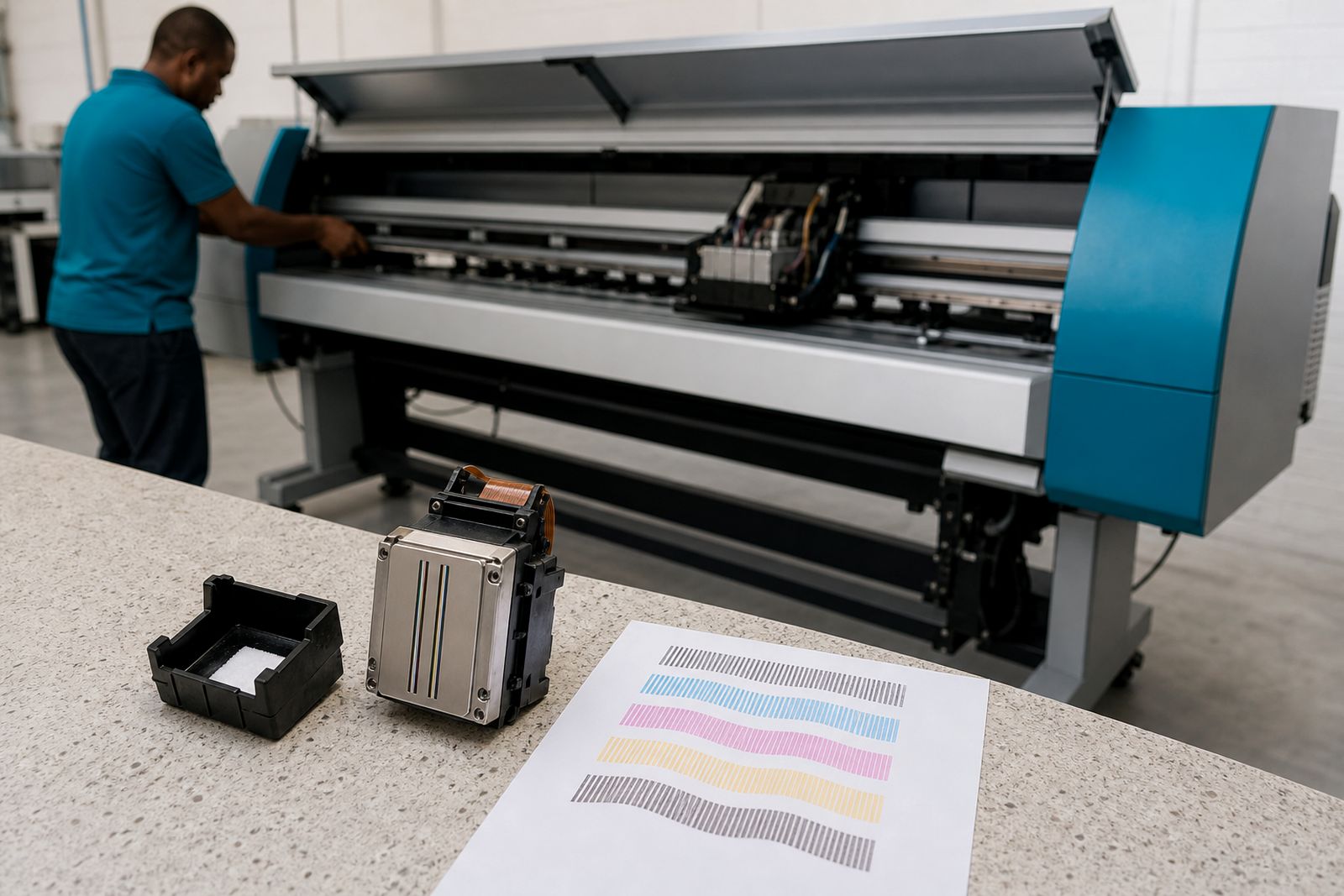
Printhead guides
Plain-language guidance on matching, handling and maintaining wide-format printheads and engine assemblies.
Read more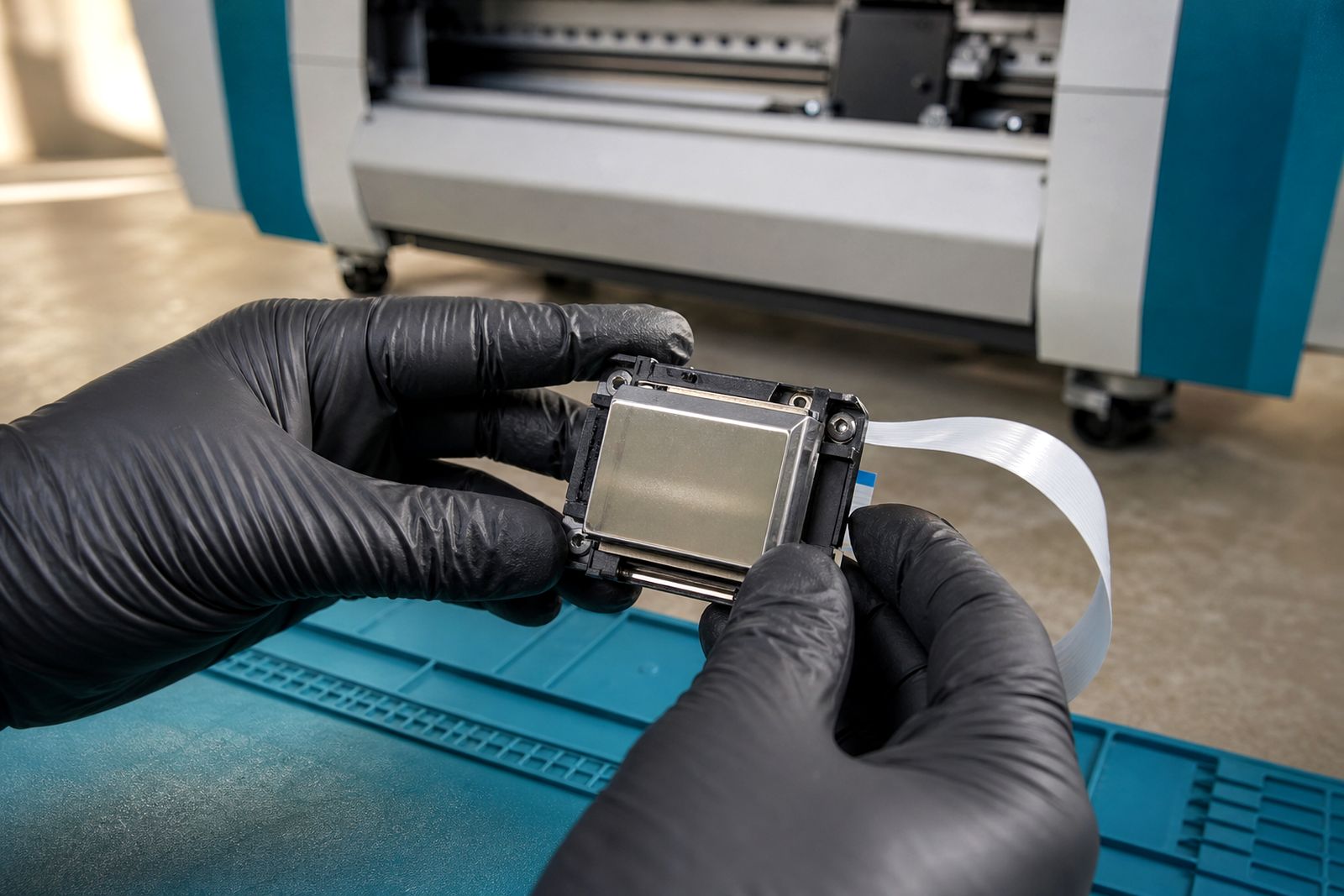
Built for sign rooms, print departments and integrators
Most customers reaching us are not looking for generic parts advice. They already know the machine is drifting, banding, flooding a colour channel, losing nozzles after standing, or throwing faults around the head circuit. Others are building a printer around a specific ink chemistry and need a head and carriage arrangement that makes sense from the start. Those are very different situations, so the useful part is not only the component itself but the match between the component, the ink and the expected duty on the floor.
For sign shops, that usually means reliable output onto vinyl, banner stock and display media with less wasted material during restart and cleaning. For print rooms handling artwork or short-run graphic work, the concern is often steadier nozzle health and cleaner edges over a long day. Integrators tend to need the electronics side explained properly so the head board, firing conditions and carriage assembly work together rather than becoming a fault-finding exercise later.
- Sign shops producing indoor and outdoor signage
- Print rooms handling posters, decals and artwork panels
- Machine integrators building or refurbishing wide-format equipment
- Service teams replacing failed head and board assemblies
How a typical printhead job runs
A good replacement starts with identification, not guesswork. We normally need the printer type, the ink family in use, the fault showing on prints or during startup, and clear photos of the current head area or electronics where needed. That helps separate a dead head from a capping problem, a damper issue, dried ink in the path, or a board fault that only looks like head failure. It also reduces the chance of fitting an expensive part into a machine with another unresolved cause.
Once the right route is clear, we supply the required head, board or engine assembly and guide the customer on handling, flushing and fitting points that affect first fire-up. On many machines, the work around the head matters just as much as the head itself. A worn cap top, weak seal, contaminated wiper or air leak through the ink path can spoil a new installation very quickly, so we often discuss those items in the same job.
- Confirm the printer application and ink chemistry
- Check the current fault, test pattern and service history
- Match the right replacement part or engine assembly
- Flag related service parts that can affect the new head
- Support fitting, alignment and nozzle-health checks after installation
Where a customer is not doing the fitment in-house, our fitting and support pages set out the kind of work involved. If you already know the fault path and only need the part, our contact form is the right place to send the machine details.
From Randburg to every province
Our base is in Randburg and most local collections and technical discussions start there, but the work is not limited to Johannesburg. We courier replacement printheads, engine assemblies and service parts to every province, with packing suited to sensitive components that should not rattle around in transit or sit exposed after opening. Customers range from busy metro sign shops to regional operators who may not have easy access to specialised head and board stock.
There is a practical difference between supporting a print room in Randburg and sending a head assembly to a coastal town. Inland air, coastal humidity and storage conditions all influence how a part should be handled before fitting. We take that into account when discussing storage, flushing fluid left in the machine, and whether the printer has been standing idle for too long. If a machine has sat with questionable maintenance, that context matters as much as the replacement part.
For teams outside Gauteng, detailed machine photos and a short note on the fault often give enough context to point the job in the right direction without wasting a shipment on the wrong item.
The service parts that usually decide head life
In this trade, many failed heads are not truly isolated failures. They are the end result of poor capping pressure, neglected wipers, dirty dampers, air ingestion or dried ink left to harden around the face of the head. That is why we keep the conversation close to the service station and ink path, not only the head block. A machine can look as if it needs a fresh printhead when the real cause sits in the maintenance parts.
There are a few patterns we see repeatedly. Solvent and eco-solvent setups can suffer if the cap no longer seals well during idle periods. UV systems can become troublesome where cured residue is allowed to build up around the head face or wipe path. Water-based machines are especially sensitive to standing conditions and contamination in lines or dampers. Ignore those points and even a correctly matched new head can start badly.
- Capping stations must seal evenly during parking and cleaning cycles
- Dampers should feed consistently without introducing air
- Wipers need to clean the head face without smearing debris back onto it
- Flushing should be done with the correct fluid and a measured hand
- Storage before fitting must limit contamination and drying
That is also why we advise on care after purchase. A head that is fitted cleanly but parked badly will not reward the spend for long, and thats usually where customers lose the most money.
When a full inkjet engine is the better route
Not every problem should be solved one component at a time. If the carriage, mounting, electronics and head setup have all been compromised, a complete inkjet print engine can be a better route than replacing parts one by one and hoping the machine settles. This is especially useful for integrators, retrofit work and machines where the original head area has seen repeated service interventions with mixed results.
A complete engine assembly brings the main print components into one matched unit, making it easier to work from a known mechanical and electrical starting point. That can reduce uncertainty during machine builds and simplify refurbishment where the existing setup has too many unknowns. For customers building equipment around a specific application, it also helps to discuss media type, ink family and expected print duty before settling on the engine path.
If you are weighing head-only replacement against a larger assembly change, send the machine details and the intended application through our contact form. We will keep the discussion centred on the print path, the service parts around it and the output the machine is expected to hold over time.
From our notes
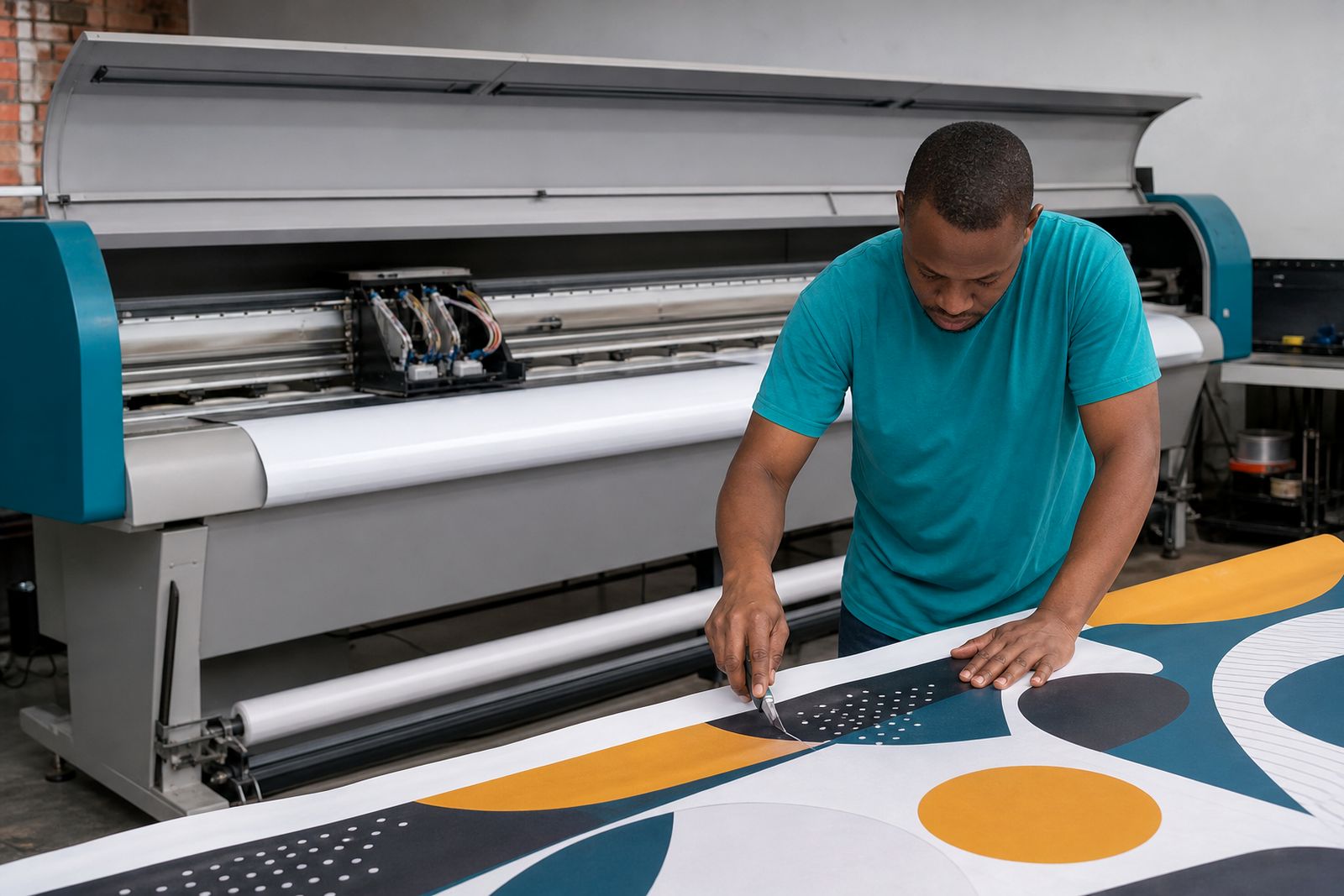
Questions we get asked
Do you sell complete wide-format printers?
No. We focus on replacement printheads, head boards, capping and damper parts, and complete inkjet print engines rather than complete printers.
Can you help me match a printhead to the printer and ink?
Yes. We help customers match the head to the printer platform and the ink family in use, including solvent, eco-solvent, UV and water-based systems.
Is fitting support available after I receive the part?
Yes. We assist with head fitting, alignment, nozzle-health checks, flushing guidance and practical care points that affect running condition.
Tell us about the job
Send sizes, materials and where you are through our contact form, and we will come back with the practical options.
Open the contact form