

Printheads for sign shops
Sign work only runs smoothly when the head choice suits the machine, the ink and the pace on the floor. This guide looks at the parts sign shops watch most closely when banner and vinyl output must stay clean and saleable.
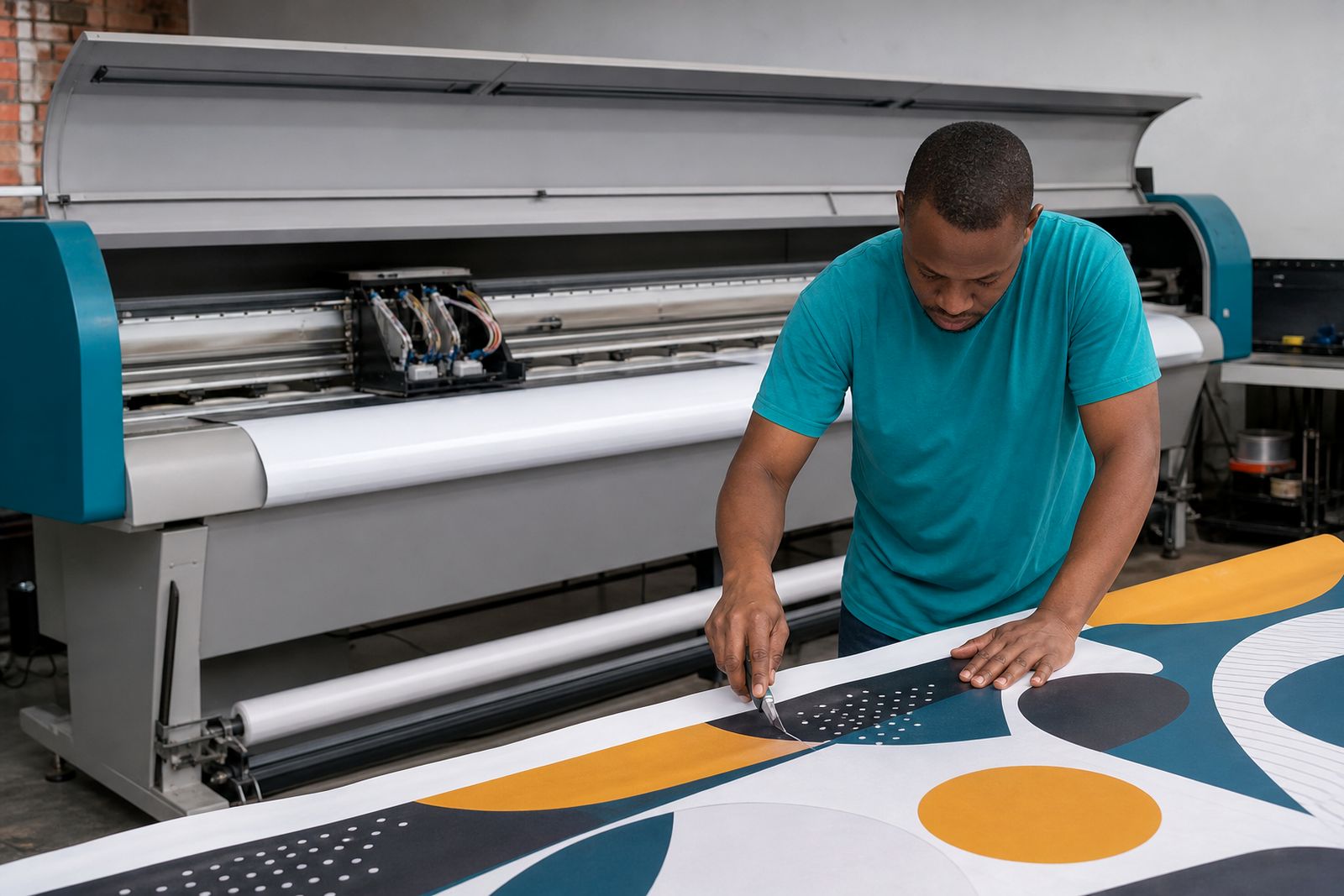
Banner work punishes weak head choices quickly
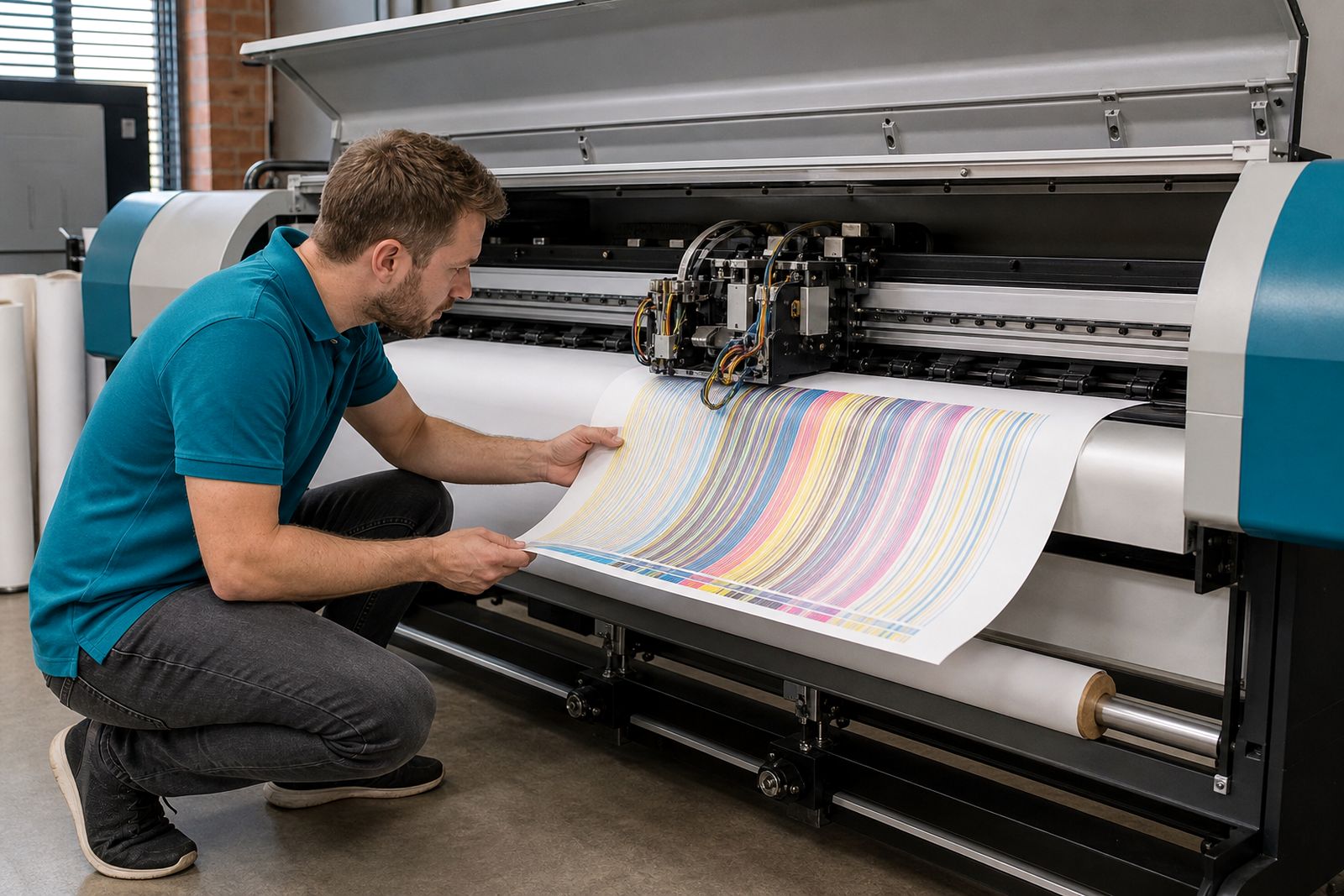
In a sign shop, the printhead is not an abstract spare. It sits in the middle of cash jobs, deadline pressure, roll changes, dusty media edges and long runs that can expose every small weakness in ink delivery. A head that looks acceptable on a short test can behave very differently once the machine settles into repeated banner lengths or dense colour blocks on self-adhesive vinyl.
Most shops in Randburg and greater Johannesburg balance several common jobs in one week: promotional banners, window vinyl, estate boards, point-of-sale panels and artwork panels. Those jobs place different demands on firing stability, drying behaviour and maintenance frequency. A replacement head has to match more than the carriage fitting. It needs to suit the ink family, the electronics driving it and the way the machine is used through a normal trading week.
When a shop swaps heads without checking the wider setup, the usual result is wasted media, repeat cleaning and operators chasing faults that are not actually caused by the head itself. That is why proper matching matters before the crate is opened.
What sign shops should match before ordering
The most reliable results usually come from checking the print system as a whole rather than looking only at the worn head. Solvent, eco-solvent, UV and water-based machines each place different demands on materials inside the head path, as well as on the capping station and ink feed parts. If one item is overlooked, the new component can be fitted into a problem that was already developing.
- Confirm the printer type and the ink chemistry currently in use.
- Check whether the head board and ribbon connections are clean and stable.
- Inspect capping, damper and wiper parts for swelling, hardening or poor sealing.
- Look at the service history for strikes, dry parking, long idle periods or contaminated ink lines.
- Note the media mix, especially heavy banner work versus finer decal or artwork output.
For a busy sign room, this matching step often prevents the wrong purchase more effectively than any test print can. Shops that run broad vinyl colour fields need consistency over distance, while artwork work can expose directional banding and weak channels much sooner. A practical conversation through our contact form normally starts with those details, not with guesswork.
The hidden cost of neglected capping and dampers
Many sign shops blame the printhead first, yet the feeding and parking parts often tell the real story. When the cap does not seal properly during idle periods, the face can dry unevenly. When a damper is tired or contaminated, the head may starve during long passes even though the ink tank still looks fine. Wipers that smear residue back across the nozzle plate create their own cycle of false symptoms.
This is especially common after heavy banner production, where lint, coating dust and overspray build up around the service area. A head replacement on its own may improve output for a short while, but the same faults return because the support parts were left as they were. In coastal areas humidity can help one day and make contamination messy the next, while inland winter air can dry a parked machine faster than operators expect.
- Replace worn capping parts when the seal is no longer even.
- Change dampers if flow has become inconsistent or ink has visibly aged inside them.
- Clean the service area carefully before fitting a new head.
- Check parking position and wipe path alignment after the fitment is complete.
Shops often try to stretch these items a bit too long, then wonder why nozzle checks drift after lunch. Keeping those support parts in decent condition protects the more expensive component you are actually trying to save.
A Randburg workshop example from a busy vinyl week
One local workshop had a familiar pattern. Morning nozzle checks were passable, banner jobs started well, then a coloured band would soften partway through a long roll and the operator would add extra cleaning cycles to force the machine through the day. Short decal work looked better than the banners, which made the fault harder to pin down.
On inspection the problem was not just head wear. The machine had been standing through a quiet spell, then pushed hard on promotional banner output once orders picked up. The capping assembly was no longer sealing evenly, one damper had begun to restrict flow, and the operator had compensated with repeated cleaning. That kept production moving for a while but increased ink waste and left the carriage area dirtier than it should have been.
The fix was a proper replacement path rather than a single part swap. The head was matched to the printer and ink set, the service parts were renewed, the ink path was flushed and alignment checks were done before production resumed. After that, long vinyl runs held colour more steadily and the shop spent less time rescuing jobs in the middle of the day. It wasnt glamorous, but it was the sort of correction that keeps a sign room profitable.
Storage, flushing and fitment habits that save money
Replacement printheads are sensitive components, and careless handling can shorten their useful life before the first proper job is even loaded. Sign shops that keep a spare on hand should store it in stable conditions away from heat, direct sun and workshop dust. The unopened packaging should remain intact until fitment is planned, and the machine itself should be prepared first so the head does not sit exposed while other faults are chased.
Flushing also needs judgement. Too little leaves contamination in the path, while aggressive cleaning on the wrong setup can create fresh trouble. A clean fitting routine matters just as much as the new part. Ribbon handling, carriage seating and meniscus checks all need a steady hand, and a rushed fit can ruin an otherwise sound head.
- Prepare tools, cleaning materials and service parts before opening the replacement unit.
- Keep the work area free of trimming dust, solvent residue and loose media fibres.
- Flush only with compatible fluids and only where the printer setup calls for it.
- Run alignment and nozzle-health checks before committing a sale job to the machine.
- Monitor the first production run rather than assuming the job is finished after installation.
For some shops it makes sense to have head-fitting support arranged at the same time as the part order, particularly where downtime on a main banner machine can affect several waiting jobs.
When a sign shop should look beyond the head alone
Not every output problem points to a failed printhead. If repeated replacements seem to age badly, the wider engine and electronics may need attention. Carriage issues, unstable head boards and poor ink supply conditions can all present as nozzle loss or weak channels. Shops building custom equipment or refurbishing older wide-format platforms often need a complete inkjet print engine rather than a head in isolation.
That broader view matters for print rooms handling steady commercial work. A machine used daily for banners, vinyl and display graphics needs stable mechanics, sound electronics and support parts that are not at the end of their service life. Replacing only the most obvious part can become the expensive route if it sends the same machine back into production with the same underlying fault still present.
Print Engines supplies replacement printheads, boards and service parts to sign shops across South Africa, with courier dispatch to every province. If your workshop needs help matching a head to the printer, the ink and the job mix on your floor, use our contact form on the contact page with the machine type, ink type and a short description of the fault pattern.
What our Printhead customers say
Verified Google reviews
Questions we get asked
Can a sign shop replace only the printhead and keep the old dampers and cap?
Sometimes, but it is risky where flow faults or poor parking have already been seen. If the cap does not seal or a damper is restricting feed, the new head can inherit the same problem straight away.
Do banner and vinyl jobs place different demands on a replacement head?
Yes. Long banner runs often expose feed stability and drying behaviour, while vinyl and finer display work can show banding, weak channels and alignment errors sooner. The media mix helps determine the most suitable replacement path.
Do you supply complete printers for sign shops?
No. We focus on replacement printheads, printhead boards, capping and damper parts, and complete inkjet print engines for wide-format systems, along with fitting and nozzle-health support.
Also worth a look
Tell us about the job
Send sizes, materials and where you are through our contact form, and we will come back with the practical options.
Open the contact form