Where our heads work
Wide-format print work puts different demands on a printhead depending on the media, ink set and daily production pattern. This section explains where our replacement heads and complete inkjet engines are commonly used, and how to narrow the choice before you send details through our contact form.
Print work changes the load on the head
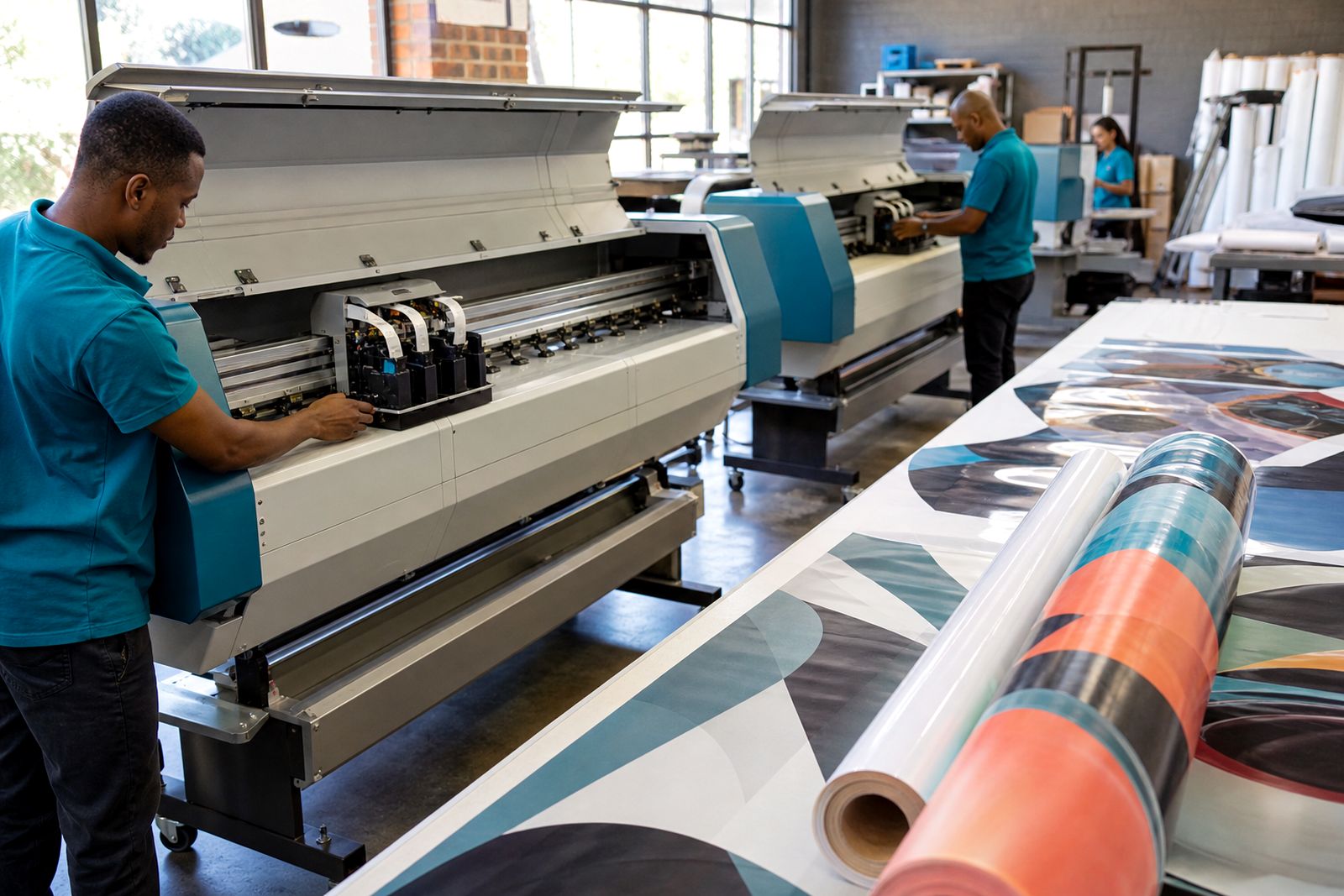
A replacement printhead is not chosen by machine size alone. The job matters just as much. A vinyl run for outdoor signage, a short batch of foam board panels, and colour-critical artwork on coated stock can all ask very different things from the same carriage system. Ink chemistry, print width, pass strategy, cleaning routine and the way the printer sits between jobs all affect what will last and what will drift.
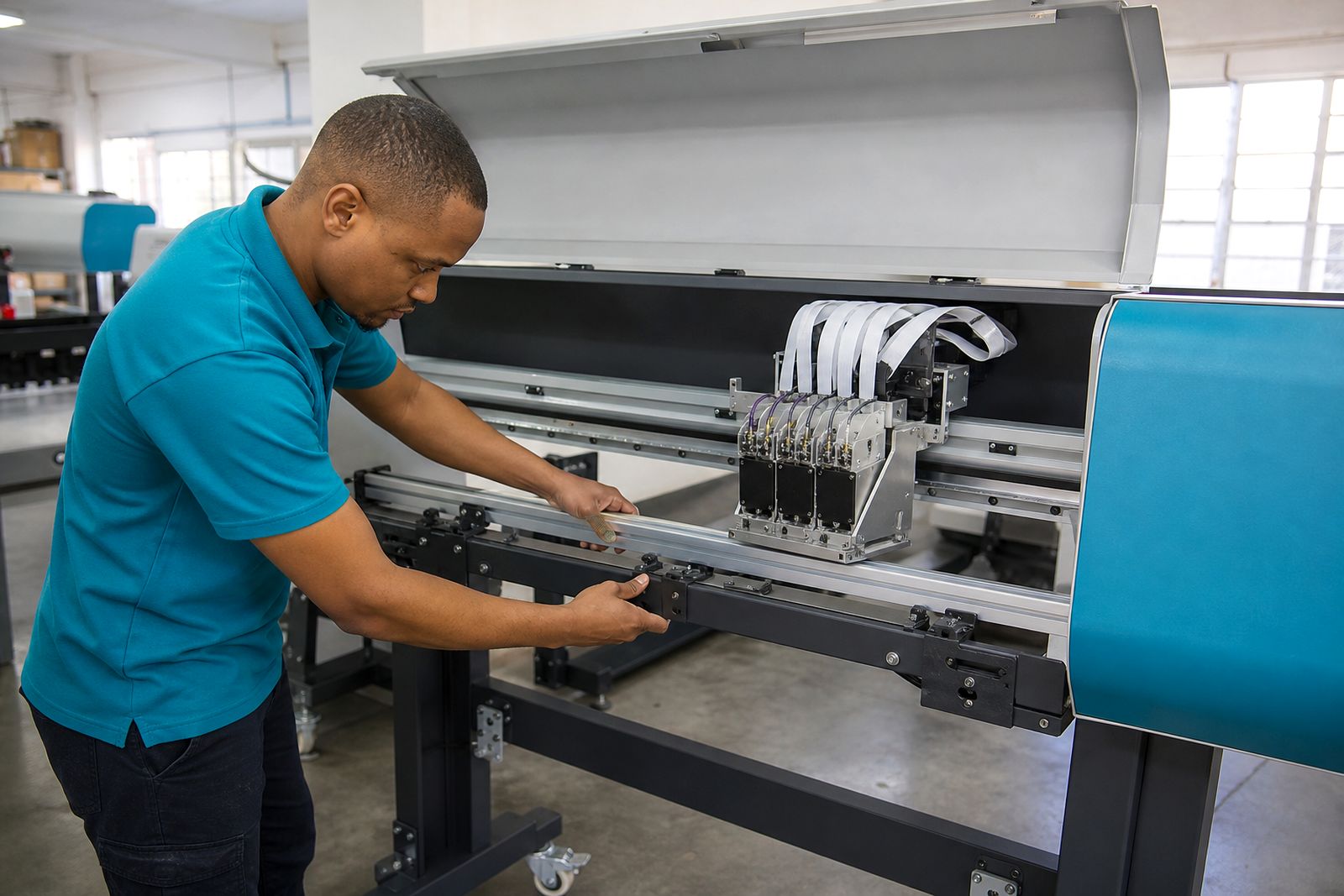
At Print Engines in Randburg, we help sign shops, print rooms and integrators look at the actual application first. That usually avoids fitting a head that can fire the ink, but is not the best match for stability, maintenance or board handling. It also helps when a business is rebuilding an older platform and needs the head, carriage and electronics to work together rather than as mixed parts.
Common applications we support
Most enquiries in this section fall into a handful of working categories. They overlap, but each one tends to point toward a different head style, ink path setup or engine arrangement.
- Signage and banners where outdoor durability and long production runs matter more than fine-art tonal detail.
- Self-adhesive vinyl for decals, wall graphics and window work where dot placement and drying behaviour both count.
- Board printing for display panels, point-of-sale pieces and short campaign work, often with repeated starts and stops through the day.
- Artwork and display graphics where smoother gradients, careful colour handling and steadier nozzle health are often the bigger concern.
- Integrator builds where the head must be matched to carriage travel, control electronics and the intended ink family from the start.
Some customers need only a replacement head and consumable service parts. Others are dealing with a wider failure on the carriage side, and that is where a complete print engine or head board set makes more sense.
Signage versus artwork: where the choice usually shifts
When customers compare options, the main split is often between production signage and image-led work. Both can use wide-format inkjet hardware, but the operating priorities are not the same. A shop doing daily banners and vinyl rolls may place more value on dependable firing over long shifts and straightforward maintenance. A studio outputting exhibition panels or artwork reproductions may put more weight on finer dot control and consistency after idle periods.
- For signage and banner production, we usually ask about media width, ink type, typical run length and how often the printer stands unused over weekends.
- For artwork and display output, we usually ask about substrate coating, colour sensitivity, environment control and whether nozzle dropout shows immediately in the final job.
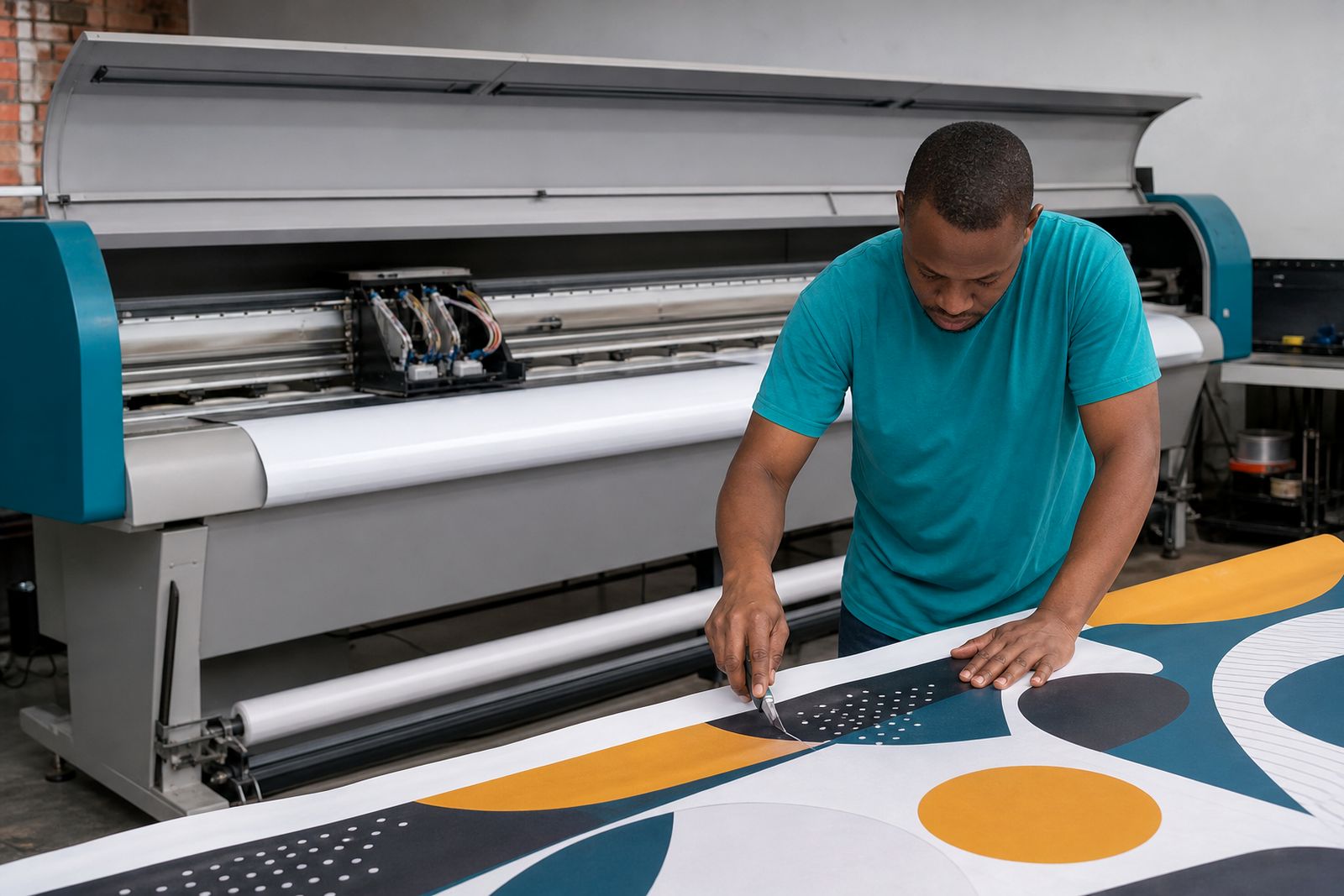
- For board work, we look closely at carriage height, strike risk, edge handling and whether the printer is seeing rigid material dust around the capping area.
- For retrofit engines, we ask for the present electronics layout, carriage arrangement and flushing practice because a mismatch there can waste a good head.
Those details matter more than broad labels. Two printers making banners can need different solutions if one lives in a coastal workshop with humidity swings while the other runs in a drier inland room and stands idle for stretches.
Matching the head to ink and media
The head has to suit the ink family first, then the daily workload. Solvent and eco-solvent systems often live in sign shops working with vinyl and banner media. UV setups are common where boards, specialty surfaces and instant handling are part of the job. Water-based systems tend to appear where coated papers, posters or artwork output are the main focus. We help customers sort through that match before parts are ordered, because the wrong fluid compatibility choice can turn a fitting job into a recovery job.
Media also changes how the head is treated in service. Rigid boards can bring more dust and a higher chance of carriage strikes. Thin films can show feed or firing issues quickly on solid colour. Fine coated stocks can expose weak nozzles that a rough outdoor job might hide for a while. A good match is not only about printing today, it is about keeping the nozzle plate and cap station healthy next month too.
When a full print engine is the better route
Not every fault stops at the printhead. In some machines the cleaner repair is a complete engine assembly with carriage and electronics included, especially where head boards, cabling or alignment problems have followed a previous failure. That is often the safer route for integrators and rebuild projects because it reduces guesswork between separate parts.
- Choose a replacement head when the rest of the carriage system is sound and the failure is isolated.
- Look at head boards and related electronics when firing faults, communication errors or repeated channel issues point beyond the head itself.
- Consider capping, dampers and wipers when poor nozzle health keeps returning after cleaning and flushing.
- Move to a complete print engine when several linked components are compromised or when a custom build needs a matched assembly.
If you are not sure which side of that line you are on, send the printer type, ink family, current fault symptoms and clear photos through our contact form. That usually gives enough context to point you toward the right page in this section.
Working across South African production floors
Applications in this section reflect the way wide-format equipment is used across South Africa, from Johannesburg print rooms to coastal sign production where humidity can change the maintenance picture. Inland dust, irregular use patterns and long courier routes for parts all influence how carefully a head should be stored, flushed and fitted before the printer returns to production.
This section links through to sign shop use cases and integrator builds, with related pages on head replacement, nozzle recovery and day-to-day care. If your work is split between banners, vinyl, rigid boards and artwork, include that mix in your enquiry rather than choosing only the most common job. That small detail can save a lot of chasing later, and it helps us point you to the head or engine option that fits the real workload not just the brochure version.
What our Printhead customers say
Verified Google reviews
Questions we get asked
Do you supply heads for sign shops and for custom printer builds?
Yes. We supply replacement printheads for working print rooms and sign shops, and we also supply complete inkjet engine assemblies and related electronics for integrators and rebuild projects.
Can you help if I am not sure whether the fault is the head or the electronics?
Yes. Share the ink type, the printer application, the symptoms and photos through our contact form. We can help narrow down whether the likely issue sits with the head, the head board, the capping side or a wider engine assembly.
Do you cover only Johannesburg?
Our base is in Randburg, and we courier replacement printheads, engine parts and related assemblies to customers in every province.
Tell us about the job
Send sizes, materials and where you are through our contact form, and we will come back with the practical options.
Open the contact form