
Printhead replacement service
A new printhead only performs properly when it is fitted cleanly, aligned correctly and matched to the ink path already on the machine. Our printhead replacement service covers the practical work around the swap, from pre-checks through to nozzle-health checks and aftercare guidance.
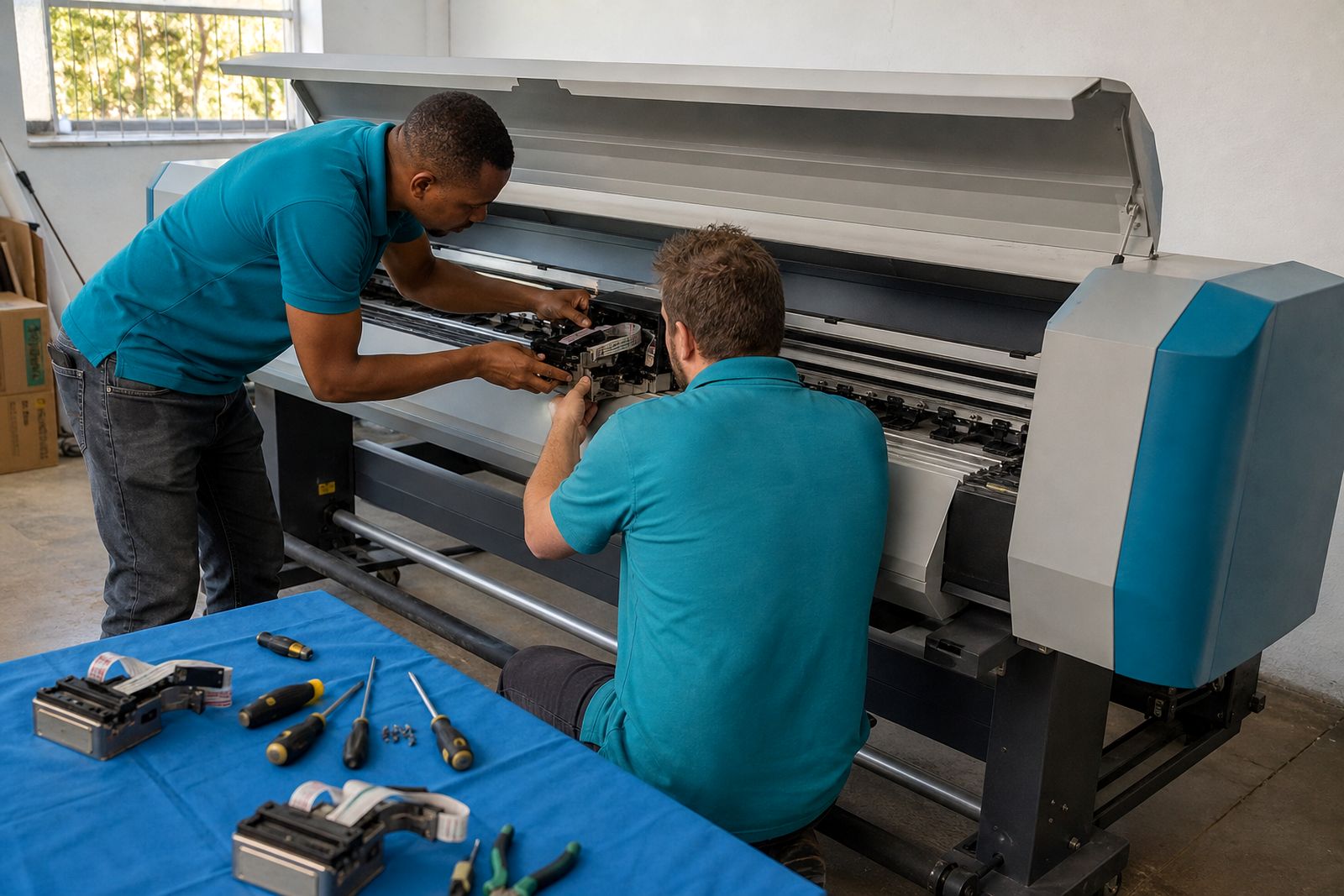
What the service covers on site or by arranged workshop intake
This service is for wide-format printers that need a replacement head fitted properly rather than simply dropped in and started up. We work on solvent, eco-solvent, UV and water-based systems used for banners, self-adhesive vinyl, posters, canvas and general display work, and we also assist printer builders and integrators using complete inkjet engine assemblies.
The job normally starts with confirming the existing ink type, head family, carriage arrangement and condition of the capping and ink feed parts. If the surrounding parts are worn, contaminated or air-prone, a new head can fail early or print poorly, so we look at the whole print zone not just the component in the box.
- Removal of the failed or worn head with contamination control around the carriage area.
- Inspection of cables, head board condition, dampers, caps, wipers and tubing before fitment.
- Installation of the replacement head or complete head assembly where required.
- Initial priming, flushing checks and safe first start-up procedures.
- Mechanical alignment and basic electronic set-up where the machine allows it.
- Nozzle-health checks, test output review and practical aftercare notes for the operator.
The fitting sequence from strip-down to first test output
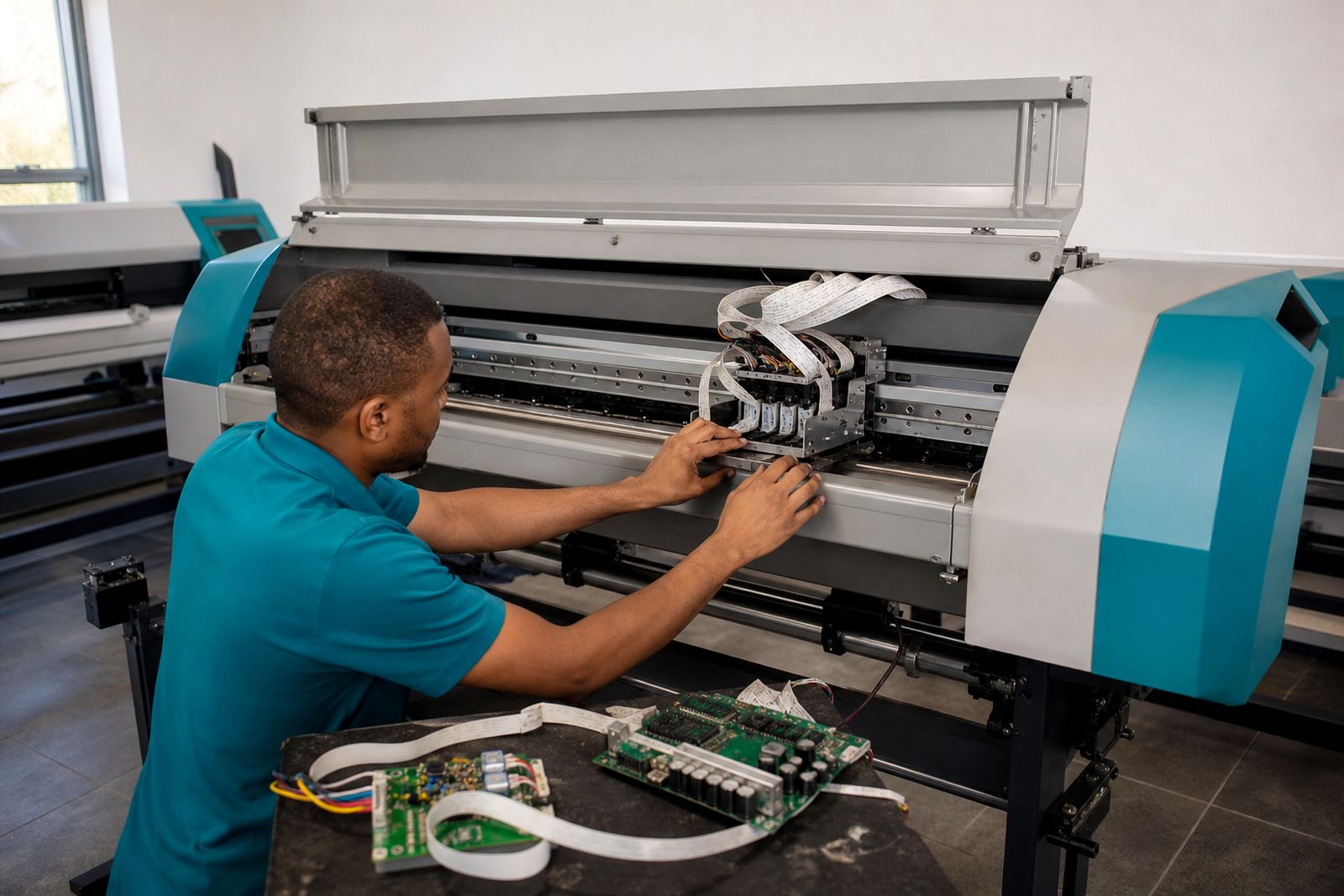
Printhead replacement is done in a set order so that ink contamination, static damage and alignment drift are kept under control. We isolate the printer, secure the carriage, and inspect the parking side first because poor sealing at the cap station often explains the failure pattern. Only once that area is understood do we remove the old head.
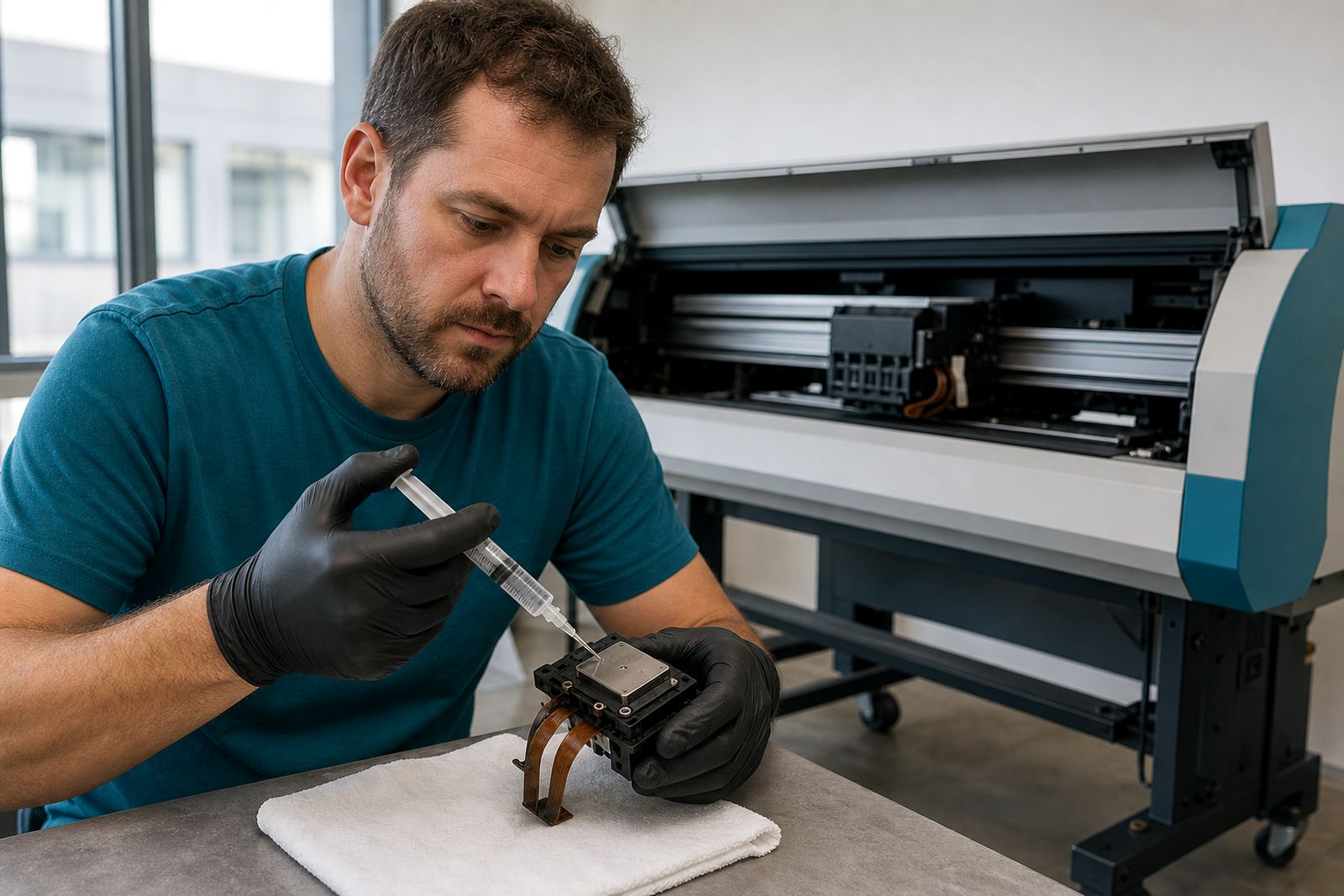
Mounting faces are cleaned carefully, ribbon connections are checked for pin damage, and the new head is seated without twisting the manifold or over-stressing the cable tails. On some machines the carriage height and side-to-side position need a physical adjustment before software values are entered, and if that step is skipped the print may look acceptable at first but break up on finer work later.
- Machine condition check and visual fault reading.
- Safe removal of the old head and contaminated consumable parts where needed.
- Fitment of the new head, related seals and ink path parts if specified.
- Controlled ink charging or flushing according to the ink type in use.
- Bi-directional and carriage position alignment where supported by the machine.
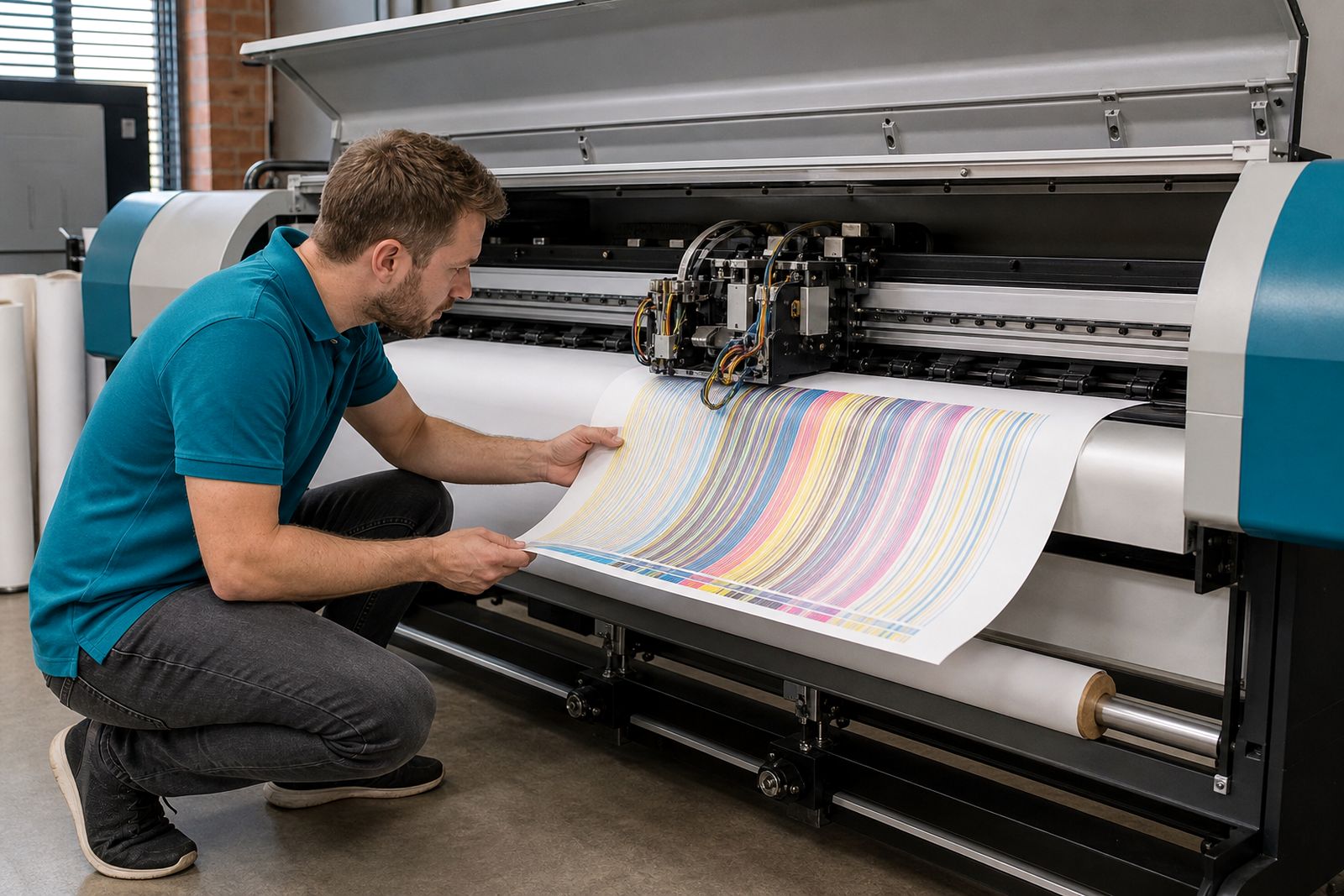
- Test patterns reviewed for missing nozzles, deflection and misting before handover.
Where the printer uses multiple heads, we also check whether one weak channel is masking a wider issue in the ink train or carriage electronics. That step matters a lot on busy sign-room machines where the print queue never realy slows down.
What you need to prepare before the booking
A cleaner visit starts with a few details from your side. We need the printer type, ink chemistry, the fault you are seeing and whether the machine has been idle, partially stripped or recently flushed. Clear photos of the carriage area and a recent nozzle test are useful, especially when a board fault may be involved rather than the head alone.
Please make sure the machine can be powered, the service area is accessible and there is space to remove covers without stacking them on wet media or dusty offcuts. If the unit is booked into a workshop intake, pack loose cables and small cover screws separately so nothing goes missing in transit.
- Send the printer application and ink type through our contact form.
- Include photos of the carriage, cap station and any visible ink leaks.
- Provide the latest test output if the machine can still fire.
- Tell us whether the printer is on site in Randburg or needs a couriered part and remote guidance.
- Advise if there have been recent board changes, flushes or long idle periods.
How service pricing is worked out
Pricing is based on the actual scope rather than a flat figure because head replacement can range from a straightforward fitment to a larger recovery job. The main variables are the head type, the number of heads being changed, access difficulty on the machine, whether related service parts are required and how much alignment or flushing work is needed after the fit.
Travel from Randburg, workshop handling, courier arrangements for parts and any electronics checks also affect the final amount. If a printer builder needs a complete engine assembly fitted and proven with their control setup, that is costed differently from a single-head swap on a production sign printer.
Where possible, we separate component supply from labour and note any likely extras such as capping parts, dampers or a head board check. That keeps the job practical to approve and easier to compare against the actual fault on the machine.
Aftercare once the new head is in
The first few production shifts matter as much as the fitting itself. Operators should monitor daily nozzle condition, keep the parking area clean and avoid unnecessary hard cleans that overwork the cap station and pull air through tired dampers. We explain the basic routine at handover so the new head is not put under avoidable strain.
Storage and idle care differ between solvent, eco-solvent, UV and water-based setups, so the aftercare notes are matched to the ink family and the way the printer is used. A machine running coastal humidity and salt air near the coast needs slightly different housekeeping from a dry inland print room in Johannesburg.
- Daily nozzle checks and a record of changes over the first production period.
- Correct parking, wiping and capping habits for the ink type in use.
- Advice on flushing fluid use and when not to over-clean.
- Checks for air ingress, ink starvation and early strike marks.
- Guidance on suitable storage if a spare head is being kept on hand.
Where this service fits in with the rest of your machine care
Printhead replacement is often only one part of returning output quality to normal. If the machine has suffered a strike, ink cross-contamination, persistent dropout or repeated overnight nozzle loss, we may recommend related work on capping parts, dampers, wipers or head electronics as part of the same visit. That avoids fitting a fresh head into a print path that is already causing trouble.
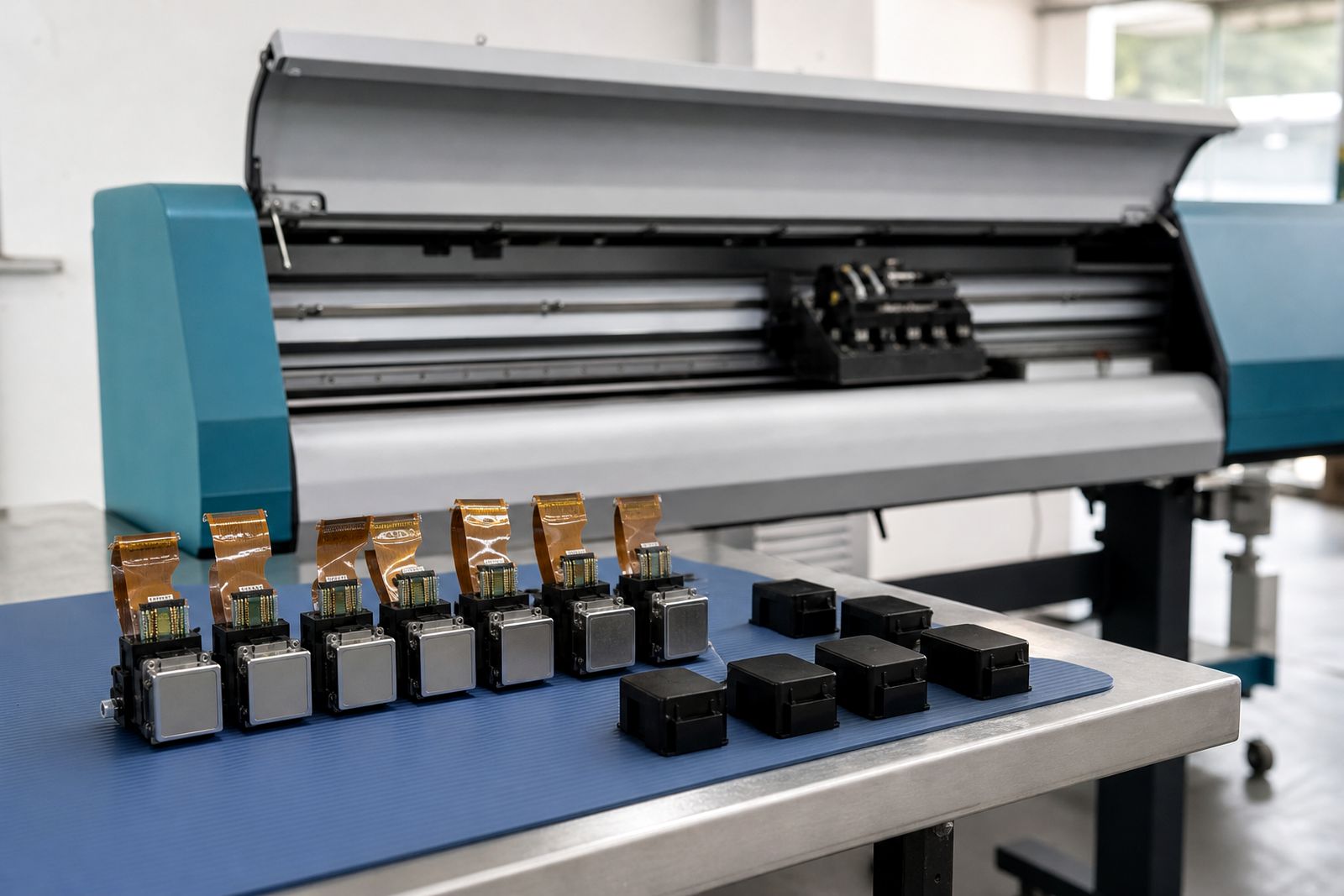
For workshops building custom printers or retrofitting wider carriages, we can also advise on complete inkjet print engines with matched head, carriage and electronics assemblies. For established sign shops the focus is usually different: getting the printer stable, aligned and ready for sellable output without guesswork. When you need the service assessed, send the machine details through our contact form and we will map the work around the actual print system in front of you.
What our Printhead customers say
Verified Google reviews
Questions we get asked
Do you replace heads only if we bought the part from you?
We can assess that on a case-by-case basis, but the main requirement is that the part is correct for the printer and ink setup. Matching errors and storage damage are common, so we prefer to confirm compatibility before the job is booked.
Can you help if the problem might be a board and not the printhead?
Yes. Head faults and electronics faults can look similar on test output, especially where channels drop out in patterns. We inspect the head board area, cables and surrounding parts so the machine is not misdiagnosed.
Do you work only in Randburg?
Our base is in Randburg, and we support customers there as well as print rooms and integrators in every province. Depending on the machine and the work needed, that may be done through workshop intake, an arranged site visit or couriered parts with fitting guidance.
Also worth a look
Tell us about the job
Send sizes, materials and where you are through our contact form, and we will come back with the practical options.
Open the contact form