Solvent and eco-solvent heads
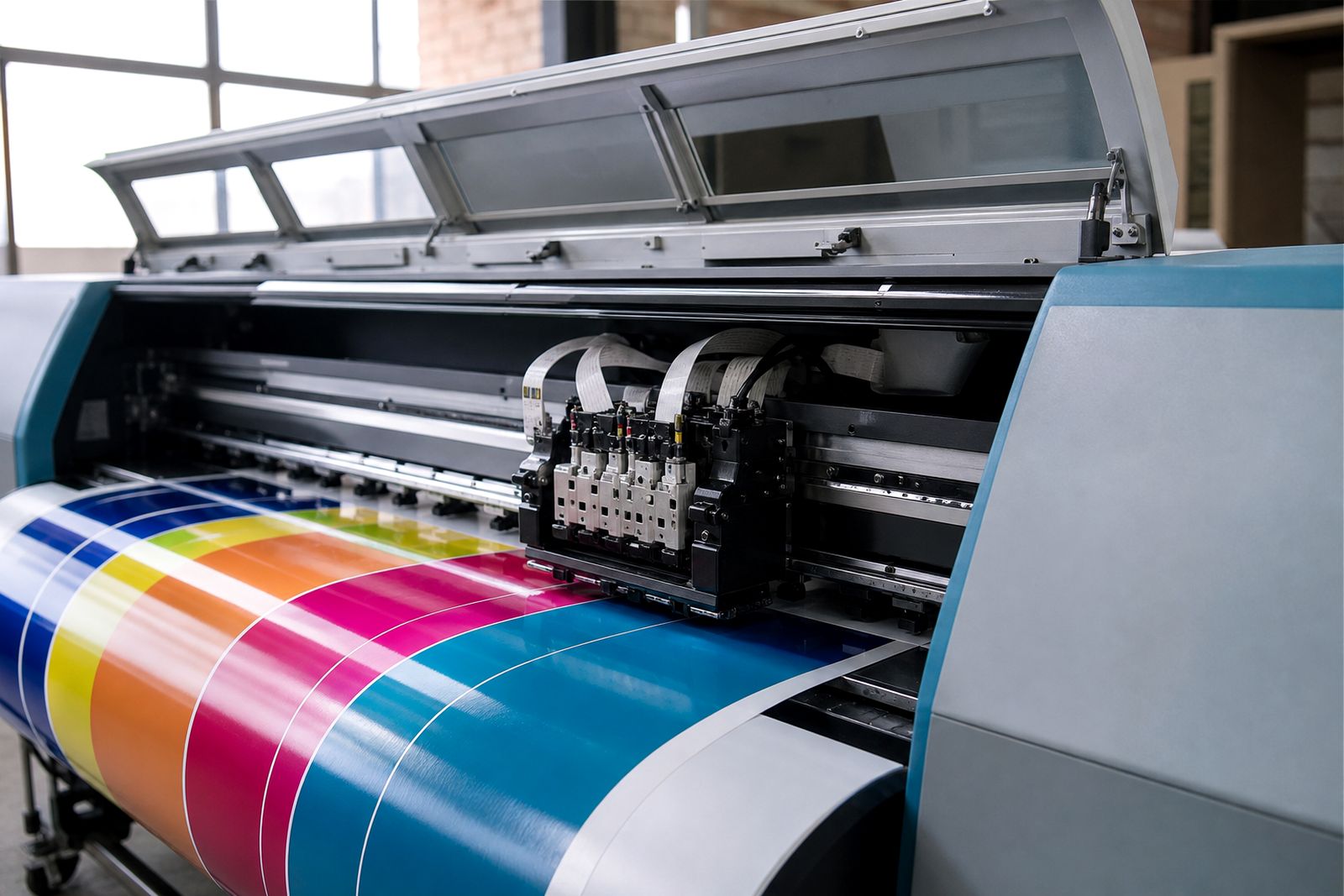
Solvent and eco-solvent heads are used where outdoor life, strong colour and steady vinyl handling matter day after day. We supply replacement heads for wide-format signage equipment and help you match the head, ink family and machine setup before fitment.
Built for banner, vinyl and sign production
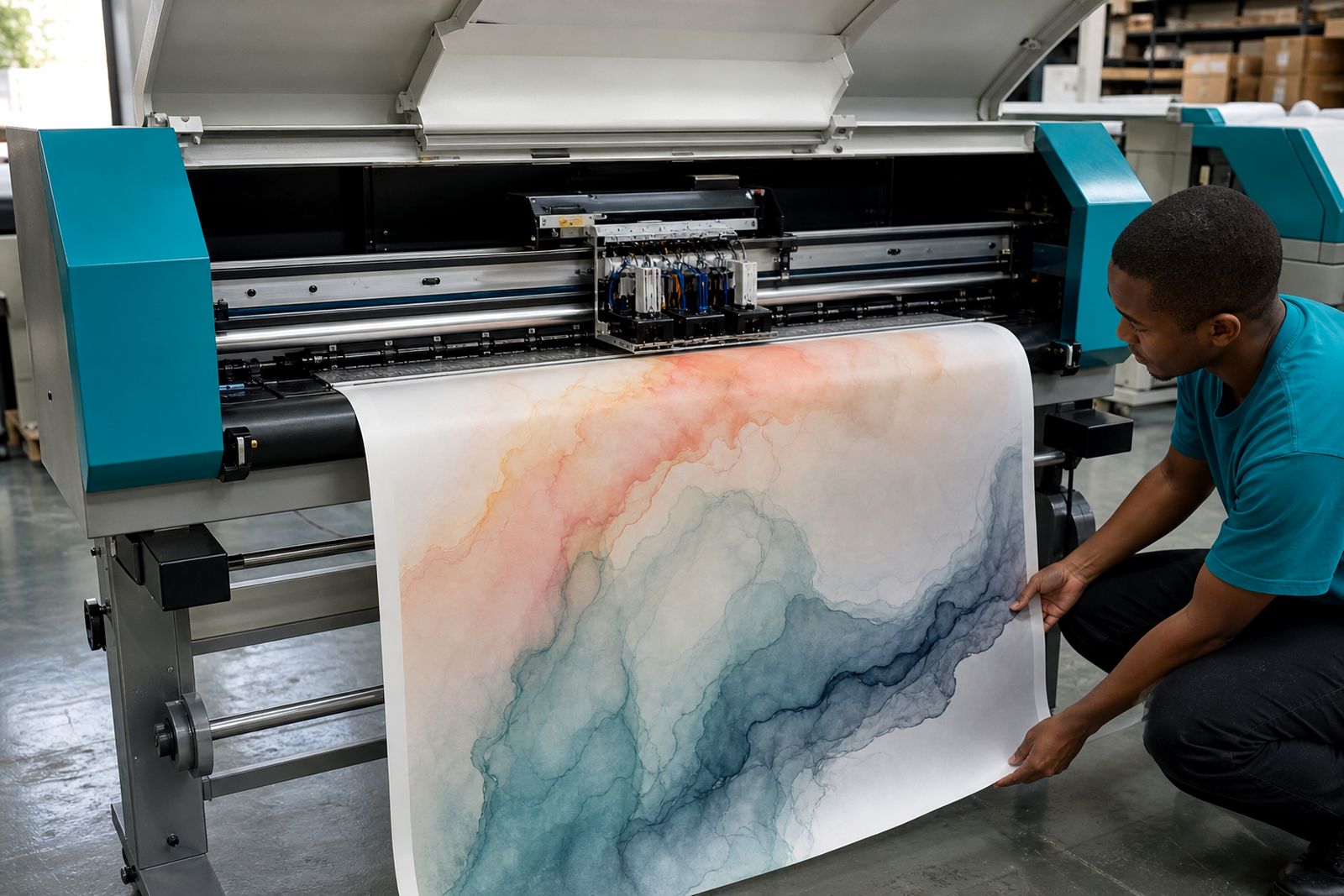
These heads are intended for wide-format printers running solvent or eco-solvent inks on media such as self-adhesive vinyl, banner PVC, poster stock and selected coated films. In most print rooms they sit in equipment producing shopfront graphics, vehicle decals, pull-up banners and outdoor promotional work where weather exposure and scratch resistance are part of the brief.
Compared with heads used in water-based systems, solvent and eco-solvent units need materials and seals that can live with stronger ink chemistry. That affects the head itself, the dampers, capping parts and flushing routine around it. We supply replacement heads for single-head setups, paired carriage layouts and larger multi-head configurations, as well as related service parts when the fault is not only in the head.
- Suited to outdoor signage and longer-life display work.
- Used in printers handling roll media from compact sign-room widths to grand-format banner production.
- Available as replacement heads only, or matched with related service items where needed.
Head options and the limits that matter on the floor
The right choice is not only about whether the machine takes a certain head body. Ink type, firing method, carriage speed, board compatibility and the condition of the ink path all matter. Some solvent heads are happiest in dedicated high-throughput banner lines, while others suit mixed daily work where colour detail and smoother gradients count more than absolute output.
We normally group options by printer type and duty rather than by brand name. There are heads for entry-level sign units, heavier print-room machines and complete engine assemblies for integrators or rebuilds. Working limits show up when a head is pushed outside its chemistry, voltage setting or cleaning regime. A head can fit physically and still fail early if the waveform, capping pressure or ink filtration is wrong, that catches many workshops out.
- Narrow, mid-width and grand-format carriage arrangements can require different head bodies or mounting plates.
- Solvent and eco-solvent inks are not interchangeable across every head type.
- Older electronics may need board checks before a new head is fitted.
- Heavy production environments need stronger attention to filtration and parking condition.
Where these heads suit the job, and where they do not
For sign shops, these heads suit decal runs, billboard panels, retail branding, event graphics and general outdoor display work. They are a practical match where media spends time on take-up reels, where prints are laminated after curing, and where the machine stands ready for repeated daily starts and stops.
They are less suitable where the printer was built only for water-based inks, where textile chemistry is involved, or where the machine has had long contamination from mixed ink families. We also do not recommend assuming a new head will solve banding if the real fault sits in the carriage cable, head board, pump line or capping station. In coastal areas, salt-laden air and high humidity can aggravate corrosion around connectors and carriage rails, so a machine near Durban or Gqeberha often needs a broader health check before fitment.
- Good fit for banners, SAV, posters and outdoor signs.
- Not the right route for complete printer replacements or a change to a different ink platform.
- Often paired with capping, damper or board inspection when print quality has dropped sharply.
Fitment conditions before a new head goes in
A replacement head should go into a clean ink path, a sound capping position and stable electronics. If the printer has been standing with dried solvent residue, or if there has been a head strike on warped media, fitting a fresh head without fixing the cause can waste the part. We can assist with head matching, pre-fit checks and alignment guidance so the new unit starts on a fair footing.
Your site does not need special premises, but the machine should be in a reasonably controlled room with clean power, low dust and sensible media handling. Solvent fumes, overspray residue and neglected wipers shorten service life. Integrators building custom equipment should also confirm carriage level, cable routing and parking pressure before first firing.
- Check capping seal, pump draw and damper condition.
- Inspect ribbons, connectors and head board outputs for damage.
- Flush correctly if the machine has stood idle or changed ink chemistry.
- Set alignment and carriage height before production work starts.
Care between production runs
Most early head failures trace back to storage, contamination or poor shutdown habits rather than a defect in the part itself. Solvent systems need regular wiping, careful parking and clean flushing fluid where the machine design calls for it. Leaving a printer uncapped over a weekend in a hot room is enough to start nozzle trouble, and repeated hard purges can create another problem if dampers or pumps are already weak.
If a spare head is being stored before fitment, keep it sealed in its protective packaging and away from heat, direct sun and workshop dust. Do not open it on a bench where vinyl offcuts, lint and old ink are floating around. Small handling mistakes are easy to make and expensive to fix, its one area where a tidy routine pays for itself quickly.
For ongoing care, we can advise on flushing, parking routines and nozzle-health checks suited to solvent and eco-solvent work.
What to send with your enquiry
When you contact us through our contact form, send enough detail for us to match the head properly and flag likely support parts. A clear fault description saves time, especially if the machine has recently had a strike, board repair, long shutdown or ink change.
- The printer type and whether it runs solvent or eco-solvent ink.
- What media you print most often, such as banner PVC or self-adhesive vinyl.
- The present fault, for example missing nozzles, deflection, colour dropout or repeated cleaning cycles.
- Whether the issue appeared after transport, storage, a head swap or an electronics fault.
- Any parts already replaced, such as dampers, cap tops, ribbons or boards.
- If you need supply only, or help with fitting, alignment and nozzle recovery.
If you are in Randburg we can often help with local fitment planning, and for other provinces we courier replacement parts with the same matching process done upfront.
What our Printhead customers say
Verified Google reviews
Questions we get asked
Can I fit a new solvent head without replacing any other parts?
Sometimes yes, but only if the capping station, dampers, pump draw and electronics are still healthy. Where the printer has been standing, had a strike or shows unstable firing, related parts should be checked first.
Do eco-solvent and full solvent heads use the same setup?
Not always. Even where a head looks similar, the ink chemistry, drive settings and surrounding service parts can differ, so matching by machine and ink system is important.
Do you help customers outside Johannesburg?
Yes. We work from Randburg and courier to every province, with matching advice, fitment guidance and care support arranged through our contact form.
Tell us about the job
Send sizes, materials and where you are through our contact form, and we will come back with the practical options.
Open the contact form