UV printheads
UV printheads are built for cured-ink production on rigid boards, acrylic, vinyl and other specialty media where placement and drop control matter. We help South African print rooms and integrators match the right head to the machine, ink set and duty cycle so the changeover is less risky.
Built for cured-ink production on difficult media
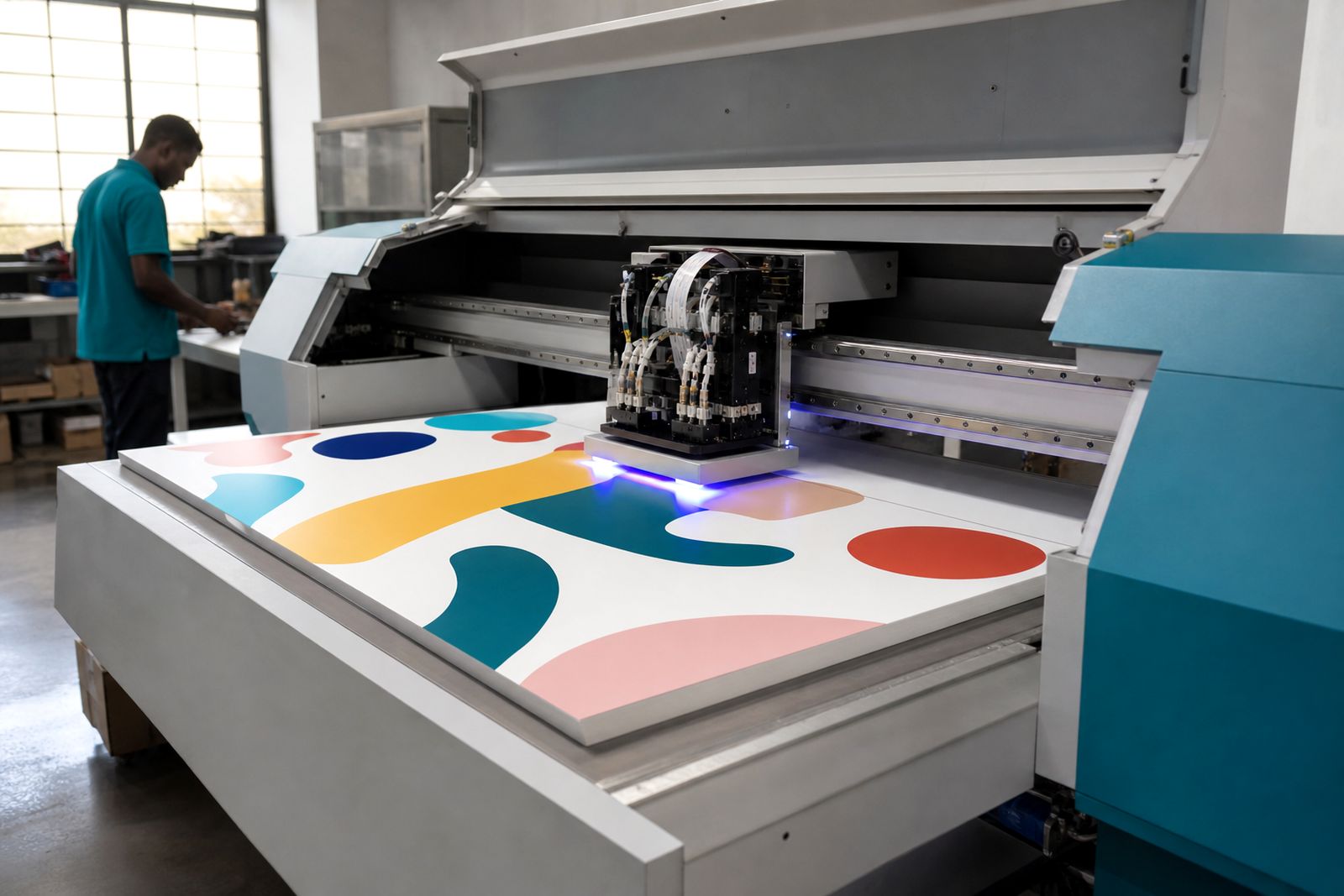
UV printheads are used where the printer lays down ink that cures under lamp output rather than drying by absorption or evaporation. That makes them common on flatbeds and hybrid machines handling boards, acrylic, coated panels, labels, short-run packaging pieces and speciality work that needs a cleaner hold-out on the surface. In these setups the head has to cope with more than image quality alone. Ink chemistry, lamp heat, carriage height and the stiffness of the media all affect whether a head will run cleanly through a shift.
At Print Engines we supply replacement UV heads for wide-format equipment used in signage and display production. We also help with the surrounding parts that often decide whether a new head settles in properly, including head boards, capping parts and dampers where the ink train needs attention. If your machine is used on mixed material sizes there is usually a working limit on head height, carriage speed and lamp setting that must be respected or the head face can foul on warped stock, which is an expensive mistake.
Head formats, mounting styles and working limits
Not every UV head suits every carriage or ink circuit. Some are arranged for narrower carriage systems with lighter movement, while others are intended for broader swath output or heavier production runs. Physical fit, connector layout, firing voltage range and meniscus behaviour all need to match the printer electronics and the ink being used. A head that appears close on paper can still be wrong for the board, the drive waveform or the negative pressure setting.
- Single-head replacements for existing flatbed or hybrid carriages.
- Heads supplied for paired or staggered arrangements where colour banks are split across the carriage.
- Options suited to rigid media lines, roll add-on systems and industrial assemblies built around UV curing.
- Parts selected to match solvent-resistant seals, UV-compatible dampers and the correct head board layout.
Working limits matter as much as fit. UV heads do not like neglected circulation, old ink contamination, poor flushing practice or long idle periods with lamp heat drifting into the carriage zone. They also do not suit machines with repeated head strikes from bowed board stock. If a printer regularly runs rough timber, badly cut corrugated or warped acrylic without proper height control, the safer route may be to address the media handling first and only then replace the head.
Where UV heads suit, and where they do not
These heads are usually the right choice for print rooms producing signs, display panels, branded boards, acrylic face pieces, decals on non-porous substrates and artwork reproductions on coated rigid stock. They also suit integrators building custom motion systems where cured inks are needed for adhesion on plastics, composites or treated metals. In South African conditions they are often chosen for work that must leave the printer dry to handle, which helps in busy finishing rooms.
- Good fit for rigid boards, acrylic, PVC, vinyl, coated panels and speciality media that need surface cure.
- Useful where immediate handling after print is important for cutting, packing or mounting.
- Common in flatbed and hybrid production lines for signage and display output.
- Suitable for custom-built print assemblies where the carriage, lamps and electronics are already specified around UV ink.
They are less suitable where the machine is only used occasionally and stands for long periods without proper flushing, or where the operator cannot maintain clean capping and controlled parking. UV systems also need disciplined light management. Stray lamp exposure and contamination around the head face can shorten service life quite quickly, and that catches some shops out.
Installation conditions that affect the result
A new UV head should never be treated as a drop-in part with no checks around it. Before fitting, the carriage plate needs to be inspected for level, the ink path checked for cured residue, and the capping and purge side assessed for leaks or weak draw. If the machine has had repeated nozzle loss on the previous head, that pattern should be understood before the replacement is powered up. Otherwise the same fault simply damages the next head.
We can guide you on head fitting, alignment and nozzle-health checks so the machine is commissioned with fewer surprises. For workshops in Randburg and elsewhere, that often means confirming carriage spacing, sub-tank condition, damper orientation and head board compatibility before ink is introduced. UV systems also need sensible room conditions. Excess dust, direct heat on parked heads and unstable mains on the printer electronics can all contribute to poor firing behaviour, even when the head itself is correct.
- Check carriage level and safe media clearance before installation.
- Inspect dampers, caps, wipers and ink lines for contamination or hardened residue.
- Confirm electronics compatibility, ribbon condition and board pairing.
- Run alignment and nozzle checks only after the ink path is stable.
Care, storage and flushing practice
UV heads reward careful handling. They should be stored sealed, clean and away from stray light until fitting. Once in service, regular parking discipline matters more than many operators realise. Dried contamination on the face plate, dirty wipes and poor capping will show up as missing jets, directional spray or unstable laydown. Leaving the printer idle without proper shutdown fluid or the correct park routine is another common cause of trouble.
For coastal shops, humidity and salt-laden air can affect exposed contacts and carriage areas if maintenance slips. Inland, dry dusty conditions can be just as damaging. We advise on flushing practice, storage position and the order of steps during a head change, because one careless prime can introduce air or debris into a fresh head. Small habits make a difference here and one bad clean can undo a careful install.
What to send with your enquiry
When you ask us to match a UV printhead, give as much machine and ink detail as you can. That reduces the chance of ordering a head that is physically similar but electrically or chemically wrong. If the printer has had recent board strikes, nozzle dropout, poor white ink circulation or intermittent firing faults, include that history as well so we can point you to the likely surrounding parts.
- The printer type, carriage arrangement and whether it is a flatbed, hybrid or custom-built system.
- The ink family in use and whether the set includes white, varnish or other speciality channels.
- Clear photos of the existing head, connectors, mounting face and any labels on the assembly.
- Notes on the fault, such as missing nozzles, deflection, electronic errors or repeated air ingress.
- Whether you need only the head or also head boards, capping parts, dampers or fitting help.
You can send those details through our contact form on the contact page. If the machine is part of a built-up industrial line rather than a standard sign printer, mention the motion system and curing layout too, as that changes the matching process quite a bit.
What our Printhead customers say
Verified Google reviews
Questions we get asked
Can a UV printhead be fitted to any wide-format printer?
No. The head has to match the carriage mount, electronics, ink chemistry and operating range of the machine. A unit that looks similar can still be the wrong choice if the board layout or ink path differs.
Do UV heads suit artwork printing as well as signage?
Yes, provided the printer, media and curing setup are configured for that finish level. Many shops use UV heads for artwork on coated rigid stock and acrylic where sharp detail and immediate handling are useful.
Should I replace capping or damper parts when changing a head?
Often, yes. If the old head failed because of contamination, weak capping, poor draw or air leaks, fitting only the new head may repeat the problem. We can help you judge what else should be changed at the same time.
Tell us about the job
Send sizes, materials and where you are through our contact form, and we will come back with the practical options.
Open the contact form