

Water-based heads
Water-based heads are used where colour detail, smoother tonal work and indoor presentation matter more than outdoor solvent resistance. We help print rooms and integrators match the head, fluid path and drive setup to artwork, posters and other coated-media work.
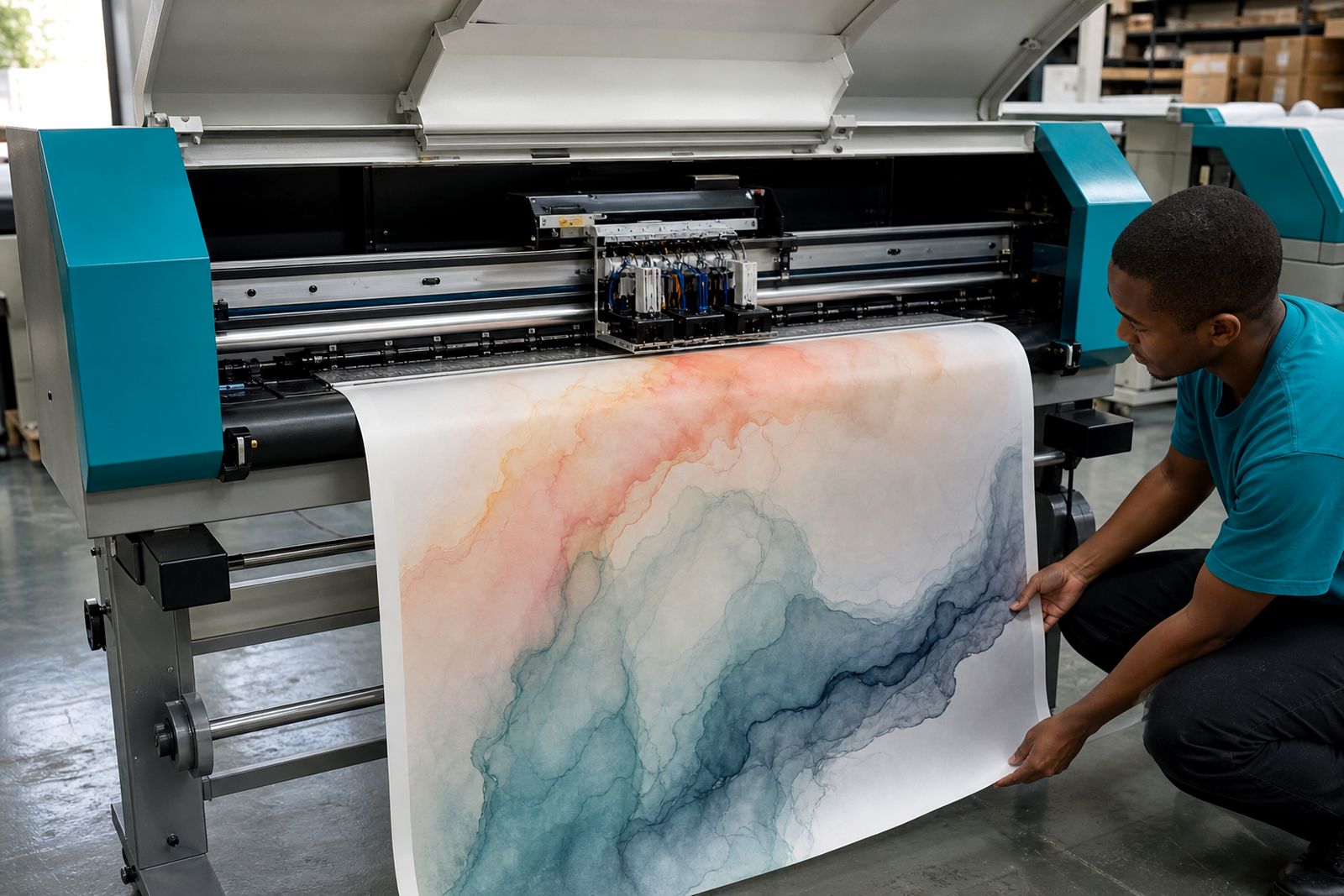
Built for coated media and indoor image work
Water-based printheads are suited to printers running aqueous dye or pigment chemistry on papers, films and other coated substrates used for artwork, posters, display panels and short-run indoor graphics. In this part of the market the head must place small drops cleanly, hold line accuracy across long carriage passes and stay stable during lighter production cycles where a machine may stand overnight or over a weekend.
Compared with heads used on harsher solvent systems, water-based heads usually work best in cleaner print rooms with controlled dust and steadier humidity. They are a good fit where customers care about smooth gradients, photo-style detail and colour consistency from one panel to the next, but they are not the first choice for uncoated banner stock, heavy outdoor decal work or rough handling in a workshop with airborne grit.
- Best suited to posters, art prints, proofing-style output and indoor point-of-sale graphics.
- Commonly used on coated paper, film, canvas and specialist display media.
- Less suitable for abrasive fluids, neglected capping systems or open workshop conditions.
Head formats, carriage layouts and practical limits
We supply replacement water-based heads in several physical formats, from compact units for narrower carriage printers to wider-array options used in production equipment and custom-built assemblies. The right choice depends on carriage weight, firing electronics, ink delivery pressure and the media speed you are trying to hold. A head that works well in a slower art printer may not cope in a higher-duty machine with long daily runs, and a heavier assembly can upset carriage balance if the rail and motor system were designed for a lighter part.
Working limits matter as much as compatibility. Some heads prefer warmer, more stable rooms and can struggle where air-conditioning cycles hard through the day. Others are less forgiving of dry starts after storage, especially if the cap top seal is poor or the dampers have gone stiff. If your machine prints across wider media widths, alignment tolerance becomes tighter and the board drive must match the head waveform properly or fine banding can creep in. That tends to show up first in skin tones and pale grey areas, which print rooms notice quickly.
- Single-head and multi-head carriage configurations are both supported.
- Options differ by firing method, drop size class, fluid type and electrical drive requirements.
- Long unattended idle periods are a risk unless the maintenance station is in good condition.
Where water-based heads fit well, and where they do not
These heads suit indoor print where image quality carries the job: gallery-style reproductions, retail posters, in-store panels, educational charts, photo-heavy displays and presentation graphics. They also make sense in specialist machines built for coated rolls or rigid sheets where odour control and indoor colour appearance are important. Integrators often use them in custom equipment for paper, board and film lines, provided the fluid system is kept clean and the carriage motion is properly tuned.
They are not the right answer for every print room. If the main workload is outdoor signage on vinyl, vehicle graphics or jobs that need aggressive weather resistance straight off the printer, a water-based head can be the wrong route even if the machine frame looks suitable. The same applies where substrate dust is high, where operators leave ink exposed for long periods, or where maintenance habits are irregular. In those cases the head may be blamed for issues caused by the wider system which happens often.
- Good fit for indoor visual quality and coated media handling.
- Not ideal for outdoor solvent work, rough banner production or dusty fabrication areas.
- Better in print rooms with regular maintenance and stable environmental control.
Installation needs around the printer and print room
Before fitting a replacement head, the printer should be checked for carriage play, encoder cleanliness, cap condition, damper flow and any signs of dried residue in the manifold path. Water-based systems are less tolerant of contamination than many operators expect. A small flake from an old damper, or staining left in a neglected cap, can affect nozzle health soon after installation. Where head boards or ribbon paths are suspect, we may recommend checking the electronics side first so a new head is not put at risk.
Stable mains power is important during fitting, charging and alignment cycles. Sudden interruptions while a carriage is parked off the cap or while the machine is part-way through a prime can create extra cleaning work and in some cases damage the fluid path. Print rooms near the coast should also watch humidity and salt-laden air around open machines, particularly if covers are left raised for long periods during service. A clean bench, lint-free handling and correct storage before fitting make a real difference.
- Check capping, wipers, dampers and tubing before installing the new head.
- Inspect carriage motion, encoder condition and ribbon connections.
- Keep the print room clean, with moderate temperature swings and controlled humidity.
Care, flushing and storage between jobs
Water-based heads reward consistent care more than heroic recovery attempts. If the machine will stand idle, the parking and capping system must seal properly and the fluid path should be left in the condition recommended for that ink set. Some setups prefer a short routine print each day, while others can stand longer if the cap top, suction and humidity are right. Leaving coated media dust around the platen or allowing dried overspray to build up under the carriage can shorten the useful life of seals and wipers.
We also advise on flushing when a head is being replaced, moved into storage or recovered after poor nozzle health. Flushing fluid must suit the chemistry that has been in the machine, and aggressive mixing of cleaners can do more harm than good. If a head has been out of circuit for too long, or if the face has been physically struck, recovery may not be sensible. In that case it is better to fit the correct replacement than chase faults through repeated clean cycles and wasted media.
What to send when you ask about a replacement
To match a water-based head properly we need details on the printer platform, the ink chemistry in use, the media type and the fault you are seeing. It helps if you can note whether the issue appeared after a strike, after a period of standing, following a board fault or after a fluid change. If the machine is part of a custom-built line, include the carriage layout, electronics arrangement and any photos of the head manifold area. That saves a lot of guessing.
Please send your details through our contact form with clear photos of the existing head, cable connections and a recent nozzle test if the machine can still print one. If a technician has already checked the machine, include what was found on dampers, capping pressure, board output and carriage alignment. We can then advise on the head type, related parts and whether fitting support or nozzle recovery steps should be considered first.
- Printer make or build type, plus the ink chemistry being run.
- Media used most often, from poster paper to coated film or canvas.
- Symptoms such as missing channels, deflection, banding or repeated drop-out.
- Photos of the installed head area, cap station and test output where available.
What our Printhead customers say
Verified Google reviews
Questions we get asked
Can a water-based head be used in a solvent printer?
Not as a direct substitute. The ink chemistry, seals, drive conditions and maintenance setup differ, so the head must match both the printer platform and the fluid system.
Do I need to replace dampers or capping parts with the head?
Often it is worth checking them at the same time. Restricted dampers, poor cap seals or worn wipers can cause faults that look like head failure.
Is a blocked water-based head always recoverable?
No. Some nozzle loss can improve with correct flushing and maintenance, but physical damage, long dry-out or contamination may mean replacement is the safer route.
Tell us about the job
Send sizes, materials and where you are through our contact form, and we will come back with the practical options.
Open the contact form